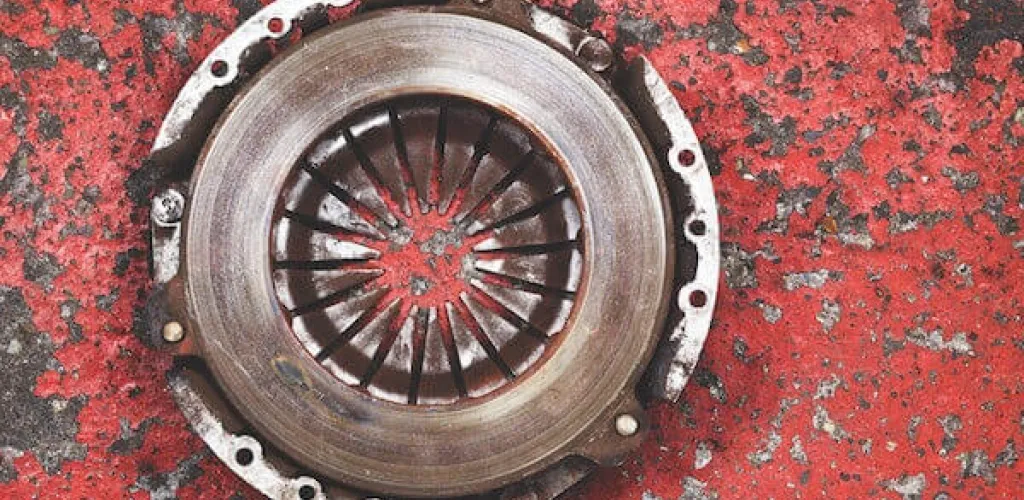
- Clutch wear ranges from about 48,000 to 280,000 km.
- Hot climates, mountains, and hill starts accelerate clutch wear.
- Aggressive driving and frequent gear changes speed wear.
- Avoid unnecessary clutch use; don’t regulate speed, keep bite point brief.
The clutch is one of the components that wears out most quickly on a manual transmission car, subjected to constant stress from repeated gear changes. Its lifespan varies dramatically—from 48,000 km in unfavorable cases to 280,000 km when used correctly.
The reality is that it’s impossible to give an exact lifespan for the clutch, because there are numerous variables that influence its wear. Some drivers report problems under 48,000 km, while others drive without issues even after 160,000 km.
Factors that Cause Premature Clutch Wear
Influence of Geographic and Climatic Conditions
Geographic location plays a surprisingly significant role in clutch lifespan. In hot climates, the transmission fluid overheats, subjecting clutch components to additional thermal stress that accelerates wear.
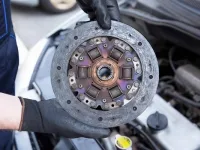
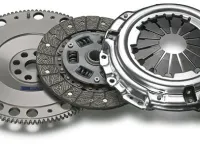
In mountainous areas, gravity places a constant load on the manual transmission. Hill starts, driving with a load, and frequent gear changes required on rough terrain contribute to accelerated wear of the clutch disc and clutch pressure plate.
Aggressive Driving Style
The more you use the clutch, the faster it wears. Drivers who shift gears unnecessarily often, who “play” with the gear lever, or who have a sporty driving style will experience much faster wear of the components.
Techniques for Preventing Clutch Failure
Avoiding Unnecessary Clutch Use
The biggest enemy of the clutch is the driver. While no one intentionally damages the clutch, many drivers use it incorrectly due to a lack of technical knowledge.
At a stoplight or in traffic, if you will stay stationary for more than 10 seconds, do not use the clutch to hold the car in position. The correct procedure is:

- Take the car out of gear
- Put your foot on brake
- Leave the transmission in neutral
Proper Use of the Clutch Pedal
Never use the clutch to regulate vehicle speed. While you can adjust pedal pressure between full engagement and full release, keeping the clutch in intermediate positions for speed control is highly damaging.

For speed control there are the accelerator pedal and the brake pedal. The clutch should be kept at the “bite point” only for the strictly necessary time to change gears. Prolonged staying in this position is called ‘clutch slipping’ and causes rapid wear of the clutch disc.
Signs of Advanced Clutch Wear
Mechanical Symptoms
- The pedal becomes softer or firmer than normal
- The engagement point changes (rises or falls)
- Unusual noises when pressing the pedal occur
- Vibrations in the clutch pedal
- Difficulties shifting gears
Slipping Symptoms
- Engine RPM rises without a corresponding increase in speed
- Power loss on climbs
- Smell of burnt material in the cabin
- Weak acceleration in higher gears
Realistic Clutch Lifespan
By following proper driving techniques, you can expect at least 90,000 km of trouble-free clutch life. Experienced drivers who consistently apply efficient driving rules have reported lifespans of up to 280,000 km.
Achieving maximum durability requires:
- Avoiding unnecessary slipping
- Rapid and decisive gear changes
- Avoid prolonged engagement at the bite point
- Regular transmission system maintenance
- Adapting driving style to road conditions
In conclusion, clutch life largely depends on driving technique and understanding how it works. With a bit of common sense and adherence to basic principles, the clutch can offer a remarkable lifespan.