- Clutch transfers engine power to the gearbox, enabling smooth gear changes.
- A clutch kit includes disc, pressure plate, release bearing, and related parts.
- Avoid riding the clutch, starting in second gear, and skipping the handbrake on hills.
- Unusual pedal noises and hard-to-shift gears signal clutch wear.
Driving a car isn’t just about pressing the accelerator pedal and turning the wheel. Knowing the essential components of your vehicle can make the difference between a smooth journey and a costly breakdown on the roadside. Having at least basic knowledge of auto mechanics, you’ll be able to identify issues early and avoid major repairs.
Understanding how your car works isn’t a mystery reserved only for mechanics. With a little attention and time invested in learning, any driver can become more aware of their vehicle’s needs.
The clutch: the heart of the transmission system
What it is and how the clutch works
The clutch represents one of the vital components of any manual transmission vehicle. Without this system, the engine couldn’t transmit power to the wheels in a controlled manner. Its main role is to ensure the connection between the engine and the gearbox, allowing gear changes and a smooth start from a standstill.
Technically, the clutch transmits the rotational motion of the engine to the gearbox via the flywheel. When you press the clutch pedal, this connection is completely interrupted, allowing gear changes. When you release the pedal, the clutch re-engages, resuming power transmission.
The components of a clutch kit
Any quality clutch kit contains the following essential elements:
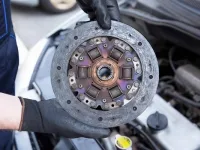
- Clutch disc — the component that wears the fastest and provides the necessary friction
- Pressure plate — applies the force to engage the disc
- Release bearing — allows smooth operation of the disengagement mechanism
- Auxiliary components — shift fork, housing and mounting bolts
Each of these parts must match exactly the technical specifications of your car model for optimal operation.
Mistakes that ruin your clutch
Harmful habits to avoid
- Overloading the release bearing happens when you keep your foot on the clutch pedal while stationary. This habit can significantly shorten the life of the components.
- Starting in second gear is a common mistake that strains the system. First gear is designed especially for starting from a stop and provides the necessary torque without overloading the clutch.
- Ignoring the handbrake on a hill causes many drivers to force the clutch to hold the car in place. This practice can lead to overheating and premature wear of the disc.
Correct usage techniques
- Use the clutch pedal only when necessary
- Always move off in first gear
- Use the handbrake on hills
- Avoid riding the clutch in traffic
Signs of clutch problems
Wear and failure symptoms
Recognizing problems early can save thousands of lei in repairs:
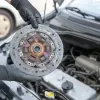
- Unusual noises are the first alarm signal. A loud whine when pressing the pedal usually indicates wear of the clutch disc or the flywheel. These are sounds you should not ignore.
- Difficulty shifting gears can indicate issues with the pressure plate or the hydraulic circuit of the clutch. If gears grind or do not engage smoothly, it’s time for a check.
- Clutch slipping shows up as engine RPM rising without a corresponding increase in vehicle acceleration.
- Hydraulic circuit problems can show as a soft pedal or one that sinks to the floor. They can be caused by fluid leaks or air in the system.
When to schedule service
Don’t delay a service visit if you notice any of these signs:
- Unusual noises when using the clutch
- Shifting gears becomes difficult
- The clutch pedal has an abnormal travel
- Burning smells under heavy use
- Vibrations when engaging the clutch
Choosing the right replacement parts
When it’s time to replace, the quality of parts makes the difference. The LUK BR 0241 clutch kit is a specific set that can be useful when the old one fails. It includes the release bearing, clutch kit, dual-mass flywheel, and a flywheel mounting bolt set. Other important technical data are the following: automatic adjustment type, 7 teeth, maximum play – 2.9, maximum free play angle – 18, mounting holes – 6.
Criteria for selecting parts
When choosing a clutch kit, always verify:
- Compatibility with the model and year of manufacture
- Brand quality (LUK, Sachs, Valeo are trusted brands)
- Completeness of the kit (all required components)
- Exact technical specifications
The benefits of knowing your car
The knowledge of your vehicle’s components and operation brings concrete advantages:

- Increased safety by early identification of issues that could cause accidents
- Substantial savings by avoiding major repairs and enabling preventive maintenance
- Confidence on the road knowing you can recognize the signals your car gives you
- Better negotiating power with mechanics, understanding which parts and repairs are truly necessary
Investing time in understanding your car isn’t just a passion for technique — it’s a practical decision that can save you problems and costs over the years.