- Labor is the biggest cost, 300–1200 RON depending on car and drivetrain.
- Clutch and flywheel cost rise with horsepower, materials, and dual-mass designs.
- RWD is cheaper; FWD costs more due to restricted access; DIY parts under 500 RON.
Replacing the clutch is one of the major repairs you’ll encounter in a manual transmission car. While it may seem costly, it’s important to understand all the factors that influence the final price and know what to expect when this repair comes due.
Clutches are similar to brake pads in many ways — they’re made from the same type of abrasive material and wear out with use. The good news is that, although a clutch replacement costs more than many other vehicle repairs, it is far from as expensive as replacing an automatic transmission.
Main factors influencing clutch replacement cost
Labor costs - the biggest price factor
The number one factor in the cost of replacing a clutch is clearly labor. This is due to the operation’s complexity — mechanics must remove much of the transmission to reach the clutch.
The replacement operations include:
- Removing the driveshaft
- Dismantling the starter
- Removing the hub (on front-wheel-drive cars)
- Dismantling and reassembling many other auxiliary parts
- Precise alignment of components during reassembly
We did a small market study and, depending on how new your car is, for such a maneuver you can expect a price between 300 and 1200 RON. This wide variation is due to several factors that influence the final price.
The price of the clutch and flywheel itself
As a general rule, the more horsepower a car has, the more expensive the clutch and flywheel will be. This is due to:
- Larger sizes: Higher torque capacity
- Superior materials: Clutches for high-performance engines use advanced and more durable materials
- Technical complexity: Modern systems may include dual-mass flywheels or multi-disc clutches
Vehicle drivetrain type
If you drive a rear-wheel-drive car, it’s much easier for the mechanic to access the clutch than in a front-wheel-drive setup. In front-wheel-drive vehicles, access is more restricted, which increases the work time and, consequently, the cost.

Rear-wheel drive:
- Easier access to the clutch
- Shorter work time
- Lower labor costs
Front-wheel drive:
- Restricted work space
- Need to remove more components
- Longer work time
- Higher costs

Options for replacing the clutch
DIY repair - for experienced mechanics
If you have advanced mechanical experience and the necessary tools, you can try to do the job yourself. In this case, you only need to look at the cost of replacement parts for the clutch, which can be less than 500 RON for small-class cars.
Attention: This is a complex operation that requires:
- Advanced mechanical knowledge
- Specialized tools (hydraulic jack, stands, torque wrench)
- Adequate workspace
- Plenty of time and patience
Local shop vs authorized service
You can certainly choose to have the clutch replaced at a friend’s garage, although we recommend doing it somewhere that offers a warranty. If unexpected problems occur, you can rest easy that you haven’t wasted your money.
Advantages of authorized service:
- Warranty on parts and labor
- Qualified staff
- Professional equipment
- Adherence to technical procedures
Local shop:
- Possibly lower prices
- Personal relationship with the mechanic
- Scheduling flexibility
- Higher risk regarding quality
Time required for clutch replacement
The effective time required to replace the clutch varies with the complexity of the vehicle and the mechanic’s experience, but generally:
- Simple vehicles (rear-wheel drive): 4–6 hours of work
- Complex vehicles (front-wheel drive, transverse engine): 6–10 hours of work
- Vehicles with complications (seized parts, corrosion): up to 2 days
A good service finishes the operation by the next day so you don’t stay without your car for long. Most professional services plan to minimize the time the client is without a vehicle.
Tips for saving costs
Replace the entire kit at once
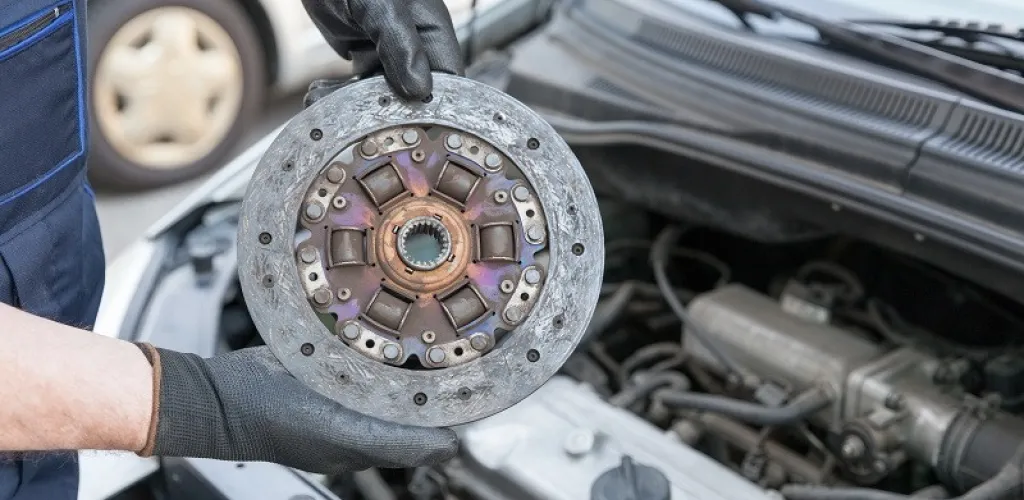
When you replace the clutch, it is recommended to replace the entire kit, which includes:
- Clutch disc
- Pressure plate
- Release bearing
- Pilot bearing
Although the initial cost is higher, you will save in the long run by avoiding another disassembly in the near future.
Check the flywheel
Take advantage of the fact that the clutch is removed and check the flywheel’s condition. If there are signs of wear or overheating, it is time to recondition or replace it.
Compare offers
Request quotes from multiple service shops and compare not only the price but also the warranty offered, the service’s reputation, and the quality of parts used.
Signs that the clutch needs replacement
To avoid unpleasant surprises, watch for the following symptoms:
- Clutch slipping: The engine revs but the car does not accelerate properly
- Pedal engagement feels stiff or soft: The pedal feel has changed significantly
- Noises when pressing the pedal: Squeaks or metallic sounds
- Difficulties shifting gears: Gears “grind” or don’t engage smoothly
- Burning smell: Especially with heavy clutch use
Replacing the clutch is a significant investment in your vehicle, but with the right information and a trustworthy service, you can be confident you’ll receive a quality repair that will serve you for many years to come.