- Clutch discs typically last 50,000–100,000 km in normal use.
- Symptoms: slipping, power loss, poor engagement, and potential transmission damage.
- Release bearing wear causes pedal noise, vibrations, and harder gear shifts.
- Replacing clutch and flywheel together is most economical and ensures even wear.
Many transmission problems from the engine to the wheels are related to the clutch and flywheel condition. These two components work together in a complex system that enables smooth gear changes and efficient transfer of engine power. Understanding their relationship and the optimal timing for replacement can prevent costly repairs and unexpected disruptions in driving.
The clutch and flywheel are two vital components for the proper operation of any manual transmission vehicle, and damage to one inevitably affects the other.
Components and operation
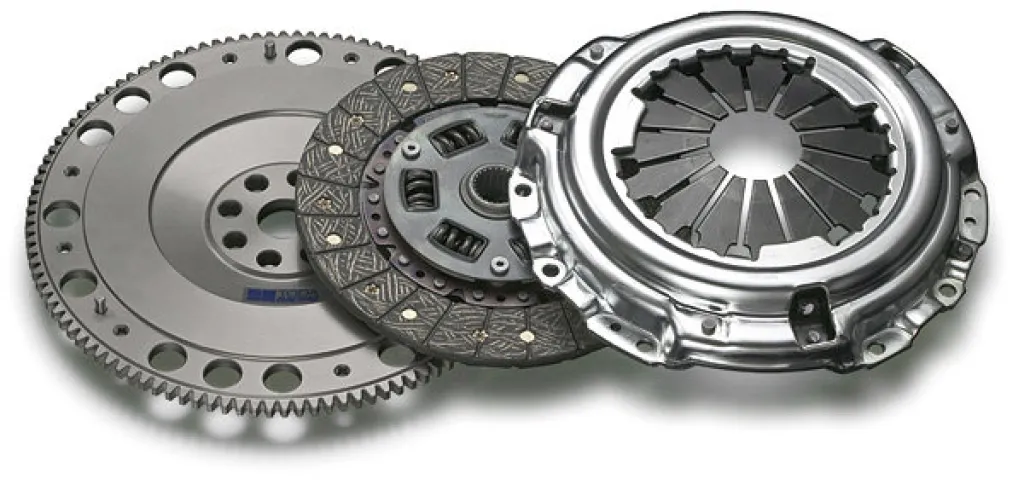
Structure of the clutch assembly
- Clutch fork and cable - the actuation system that transmits force from the pedal
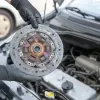
- Clutch disc and pressure plate - the component that provides actual engagement/disengagement
- Release bearing - the element that provides the pressure needed for engagement
Role of the flywheel in the system
The flywheel serves as the interface between the clutch mechanism and the transmission system. This component is a heavy metal disk with a series of teeth arranged around its outer circumference, similar to a large gear.
Two essential functions of the flywheel teeth:
- Allow the starter motor to engage for engine start
- Provide a uniform surface for contact with the clutch disc
Lifespan and wear of components
Normal replacement intervals
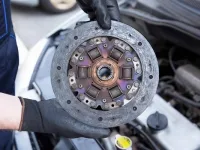
In normal operating conditions, the clutch disc is a durable component that can last between 50,000-100,000 kilometers. This duration varies significantly depending on:
- Driving style (hard starts, aggressive acceleration)
- Traffic conditions (city vs. highway)
- Quality of original components
- Adherence to the maintenance schedule
Signs of wear of the clutch
A worn clutch gradually loses its ability to transmit power efficiently. The main symptoms include:
- Clutch slipping — the shifter pops out of gear
- Loss of power at strong accelerations
- Poor engagement with the flywheel
- Potential damage to the transmission
These problems not only affect vehicle performance but can pose safety risks on the road.
Problems with the release bearing
When the release bearing begins to wear, the mechanism becomes progressively stiffer. Characteristic signals are:
- A distinct noise that disappears when you press the pedal
- Strong vibrations felt through the floor and steering wheel
- Increased difficulty in gear shifting
When to replace the flywheel and clutch
Simultaneous replacement — the most economical option
The best approach is to replace both components at the same time, for practical and economic reasons:
Technical advantages:
- Components wear evenly over time
- Perfect compatibility between new parts
- Optimal operation of the entire system
Economic advantages:

- Labor cost is paid only once
- Lower costs for disassembly/reassembly
- Avoiding future repairs
Flywheel replacement frequency
Normally, the flywheel does not require very frequent replacement due to its robust construction. However, it is recommended to inspect and potentially repair every time the clutch is replaced to ensure:
- Uniform contact surface
- Proper function of the ring gear teeth
- Elimination of uneven wear
Maintenance recommendations
Optimal inspection intervals
For most cars, clutch problems should not appear before 60,000-70,000 kilometers. However, these figures can vary depending on:
- Vehicle type and make
- Quality of initial parts
- Operating conditions
- Individual driving style
Consulting a specialist
The best advice is to periodically consult a trusted mechanic who can assess the state of the components. An experienced professional can identify early wear signs and recommend the optimal replacement moment before problems become severe and costly.
Conclusion
Simultaneous replacement of the flywheel and clutch is the most technically and economically sensible approach. Although the components themselves are not very expensive, labor costs can be significant, which is why kit replacement planning is essential. Regularly monitoring wear signals and adhering to maintenance intervals will ensure optimal operation and prevent unforeseen costly repairs.