- Put the car in neutral at lights; use the brake to hold.
- Don’t rest your hand on the gear lever; causes wear and noise.
- On hills, avoid bite-point clutch; use handbrake and throttle.
- Drive at proper revs; avoid low-rev high-gear driving.
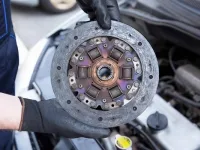
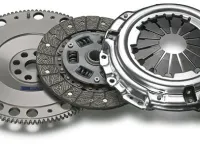
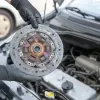
Clutch is one of the essential components of any manual transmission vehicle, forming the link between the power produced by the engine and the gearbox. How you use this system directly affects the longevity and performance of the entire engine-transmission assembly. Unfortunately, many drivers have developed harmful habits that can significantly shorten clutch life and lead to substantial repair costs.
A healthy clutch can last between 100,000 and 200,000 kilometers, but incorrect driving habits can reduce this to as little as 50,000-80,000 km. Understanding the correct way to operate the clutch will not only save you money but also improve your driving experience.
Waiting at the traffic light with your foot on the clutch
One of the most common mistakes drivers make is keeping the gear in gear while waiting at a red light or in a queue, with the foot resting on the clutch pedal. This practice subjects the system to continuous and unnecessary stress.
When you hold the clutch pedal pressed for a long time:
- The release bearing (thrust bearing) works continuously
- Premature wear of the clutch disc occurs
- The pressure plate wears more quickly
- Fuel consumption increases
- The leg gets fatigued unnecessarily
Correct solution: Put the gearshift in neutral and use the foot brake or handbrake. Even if you gain only a few seconds at start-up, you will avoid repair costs that can reach 2000-4000 lei for replacing the clutch kit.
Resting your hand on the gear lever
Many drivers have the habit of resting their hand on the gear shifter during driving, believing this position is more comfortable. In reality, this practice is highly detrimental to the gearbox.
Inside the gearbox, a selector fork engages the desired gear by contacting the gears. When you apply pressure to the shifter:

- The selector fork experiences constant pressure
- The synchromesh components wear prematurely
- Gears can develop play
- Noises arise and shifting becomes difficult
Repairing a gearbox can cost between 3000-8000 lei, depending on the vehicle type and damage degree.
Starting on a hill with the clutch at the bite point
When you’re on a steep incline and traffic is heavy, many drivers use the clutch at the bite point to prevent the car from rolling backward. This technique stresses the system excessively.
At the bite point:
- The clutch disc slips continuously
- Temperature rises rapidly due to friction
- The friction material wears quickly
- The pressure plate can deform from the heat
- The characteristic burnt-clutch smell becomes evident
Correct technique: Use the handbrake to stop the vehicle, then release it gradually while applying throttle and engaging the clutch. This method protects the system and provides better vehicle control.
Driving at low revs in high gears
Driving with the engine under-revved is another harmful practice for both the engine and the clutch. When cruising at 50 km/h in fifth gear, the engine runs at very low RPM, below its optimal operating range.
Consequences of driving at low revs:
- The engine experiences detonation (pinging)
- Fuel consumption increases
- Carbon buildup accelerates
- The clutch is forced during aggressive acceleration
- The gearbox synchromesh wear increases
Optimal RPM for each gear
For most gasoline engines:
- Gear I: 1500-2500 rpm
- Gear II: 2000-3000 rpm
- Gear III: 2000-3500 rpm
- Gear IV: 2000-3500 rpm
- Gear V: 2000-4000 rpm
Diesel engines operate best at lower revs, typically 1500-2500 rpm across most gears.
Incorrect gear changes
Gear-shifting technique directly affects clutch wear and driving comfort. A correct change requires perfect coordination between the clutch pedal, gear lever, and accelerator.
Steps for a correct shift:
- Lift off the accelerator — allow the RPM to fall naturally
- Fully press the clutch pedal — ensure complete disengagement
- Shift quickly — don’t prolong the process
- Smoothly release the clutch — avoid abrupt motions
- Accelerate simultaneously with engagement — synchronize the actions
An incorrect shift can cause:
- The car lurching
- Premature wear of the synchronizers
- Overheating of the clutch disc
- Abnormal engine loads
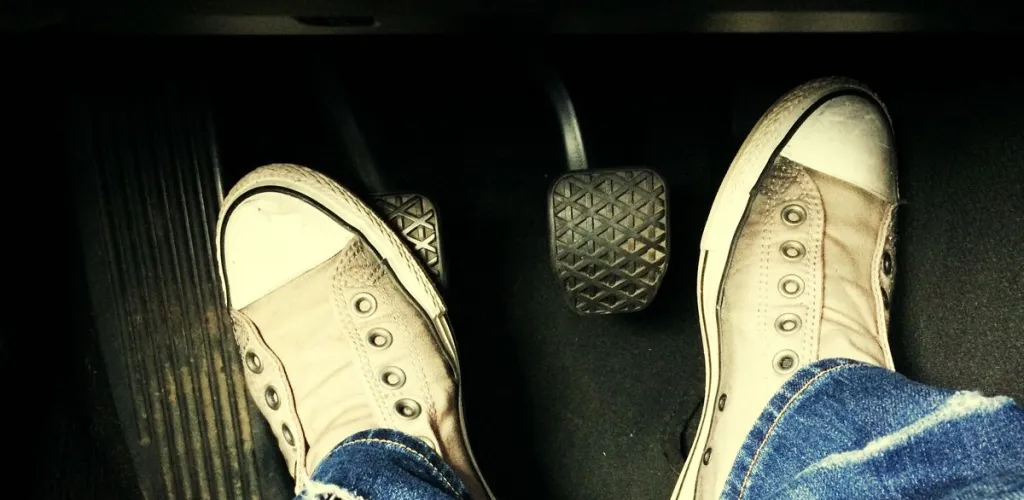
Keeping your foot on the clutch pedal
Some drivers tend to keep their foot lightly on the clutch pedal, either from fatigue or the habit formed on automatic transmissions. This practice, often called “riding the clutch,” is highly detrimental.
Effects of keeping your foot on the clutch:
- The release bearing works continuously
- The clutch disc slips slightly, generating heat
- Fuel consumption increases
- Power transmitted to the wheels decreases
- Premature wear of the entire system
Parking the car in gear
Returning to the initial question: does leaving the car parked in gear damage the clutch? The answer is no — parking with the car in gear does not affect the clutch. When the engine is off, the clutch does not operate, and leaving a gear engaged simply provides an extra braking effect on slopes.
Benefits of parking in gear:
- Additional safety on hills
- Prevents accidental roll-away
- Does not affect any transmission components
Rule for parking in gear:
- Uphill: 1st gear
- Downhill: 5th gear (reverse on some vehicles)
- On level ground: any gear, preferably first
Signs of a worn clutch
Early recognition of issues can prevent major damage and extra costs:
Common symptoms:
- Clutch slipping: RPMs rise without speed increase
- Very high or very low engagement point
- Noises when pressing the pedal: squealing release bearing
- Vibration at engagement
- Difficult gear changes
- Smell of burning while driving normally
When to visit a service:
- At the first sign of slipping
- When shifting becomes difficult
- If abnormal noises appear
- If the pedal “drops” to the floor or sticks up
Repair and maintenance costs
Understanding costs can motivate you to take better care of the clutch:
- Complete clutch kit: 800-2500 lei (parts)
- Labor for replacement: 1000-2000 lei
- Flywheel resurfacing: 200-400 lei
- Release/input shaft bearing: 150-500 lei
Total for a complete repair: 2150-5400 lei for most vehicles.
Recommendations to extend clutch life
To maximize clutch longevity:
- Avoid sudden starts and aggressive accelerations
- Do not keep your foot on the clutch pedal
- Use the handbrake on slopes
- Drive at the correct RPM for each gear
- Make quick and precise gear changes
- Do not rest your hand on the shifter
- Learn to feel your car’s engagement point
- Perform periodic checks
Following these simple tips will help your car’s clutch operate optimally for many years, saving money and ensuring a pleasant driving experience. Remember that prevention costs less than repair.