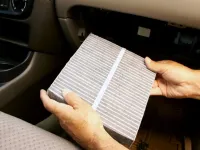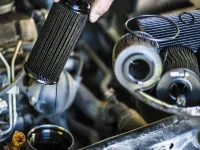
The Diesel Particulate Filter, or DPF as it’s commonly known, is truly a remarkable component for protecting the ozone layer surrounding our planet. In this article, we’ll delve into what the DPF warning light actually means, its function, and what steps you should take when the DPF light illuminates on your Mazda CX-5. We’ll also cover some interesting details about this warning light.
What is the DPF?
As mentioned earlier, the DPF is a diesel particulate filter that plays a crucial role in diesel vehicles. While some may see it as a minor invention, most view it as an essential and environmentally beneficial feature. The introduction of the particulate filter started with Euro 4 emission standards, but not all vehicles were equipped with it. From Euro 5 onwards, all diesel vehicles were required to have a DPF, and with Euro 6 and later standards, AdBlue was also introduced, which we’ll cover in a separate article.
According to physics, burning fuel releases particles ranging from 1 to 12 microns in diameter into the environment. Since these particles can enter the respiratory system, they pose a risk of lung cancer.
The primary role of the DPF in an Mazda CX-5 is to capture exhaust particles larger than 2 microns, successfully trapping up to 99% of these particles. However, over time, the filter can become clogged and will need “regeneration” to continue functioning properly. Regeneration involves burning off and cleaning the filter so it can be used again.
When does the DPF on an Mazda CX-5 regenerate?
Regeneration typically occurs automatically every 1,000 kilometers. Essentially, all harmful and non-beneficial particles are captured in the particulate filter to prevent environmental damage.
Regeneration process of the particulate filter in an Mazda CX-5
Regeneration happens under certain conditions, mainly when you drive a longer distance of at least 100 kilometers on a high-speed road outside the city. The regeneration process is not overly complex. By maintaining the car at 3,000 RPM for 20-25 minutes, the harmful particles are burned off and reduced to smaller sizes before being expelled into the atmosphere. This process requires temperatures exceeding 800 degrees Celsius.
How often should the particulate filter be replaced on an Mazda CX-5?
A DPF can usually handle about 3,000 to 3,500 regenerations over the life of the vehicle. If you mostly drive in urban environments, you might see a DPF warning light indicating the need for filter regeneration. Ignoring this warning could lead to serious issues requiring a complete replacement of the particulate filter.
Particulate filters are commonly found in diesel vehicles, whereas gasoline vehicles emit up to 40 times fewer pollutants.
The cost of replacing a DPF can be quite high, ranging from 1,000 to 2,000 euros. Many owners opt to sell their car or remove the particulate filter altogether, though it’s important to note that removing the DPF is illegal. It can lead to problems with the vehicle’s registration and make it impossible to pass the periodic technical inspection.
What to do when the DPF warning light appears on your Mazda CX-5?
Like any warning light, you should address the issue. Check the level of clogging on a diagnostic tester. If the car has requested multiple regenerations that couldn’t be performed, remove the filter and have it cleaned. Cleaning the DPF on an Mazda CX-5 typically costs up to 100 euros. Once reinstalled, the DPF warning light should turn off on its own. If it doesn’t, clear the error with a tester.
To avoid frequent cleaning or having to buy a new filter, it’s advisable to drive the car at higher RPMs occasionally, both in the city and on highways, for about 20 minutes every few months.