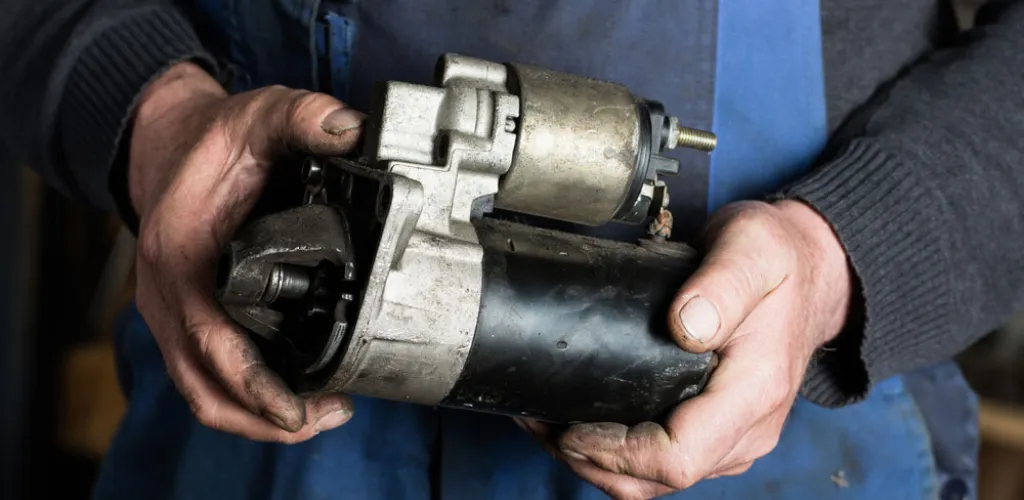
- Repeated clicks usually indicate battery or alternator problems in the starting system.
- A single click points to a faulty starter motor or a stuck relay.
- Diagnosis steps include jump-start tests, checking battery cables, cleaning/secure terminals, and voltage checks.
- Starter replacement requires safety, access, removal, wiring disconnection, and new part installation.
Every mechanical component of a vehicle produces specific sounds that help us understand its operating condition. Some sounds are normal, while others warn of potential issues. Noises can range from squeaks and bangs to distinct clicks.
Although a clicking sound may have multiple causes, including suspension problems, the most common scenario occurs when you turn the key to start the engine. This phenomenon usually indicates a problem in the vehicle’s starting electrical system.
Why does the engine make a clicking noise?
When the engine won’t start and a single click or repeated clicks are heard, the problem is most likely in the starting electrical system or at the starter motor. These sounds are clear signals that the flow of electrical energy to the starting components is interrupted or insufficient.
Repeated clicks: electrical supply problems
If you hear repeated and rapid clicks, this almost certainly indicates a problem with the battery or the alternator. The starter motor does not receive enough electrical energy to operate correctly, and the system’s repeated attempts to initiate starting produce this characteristic sound.
Steps for correct diagnosis:
-
Test starting with a jump start: Try to start the car with the help of another car (the “jump start” method). If it starts and then stalls, the problem is probably the alternator. If it starts and runs normally, the battery needs recharging.
-
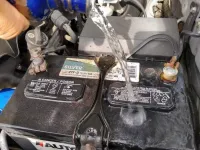
Inspect battery connections: Check that all cables are in good condition and properly connected to the battery terminals.
-
Check battery terminals’ condition:
- If corroded, clean them with a baking soda and water solution
- If loose, tighten them accordingly
-
Measure voltage with a multimeter: A fully charged battery should read 12.6 volts with the engine off. With the engine running, the voltage should be between 13.7 and 14.7 volts. Lower values indicate the battery needs recharging or replacement.
-
Check the alternator: If after charging or replacing the battery the problem persists, the alternator may be defective and not charging the battery properly.
A single click: starter motor problems
A single strong click usually indicates a faulty starter motor or a stuck starter relay. In this situation, the starter motor receives current but fails to perform the starting function.
Starter motor replacement procedure:
- Safety: Disconnect the battery terminals to prevent short circuits
- Access: Raise the front of the car with a jack and stands
- Location: Identify the starter motor (consult the vehicle manual or look up model-specific information)
- Removal: Remove components that block access to the starter
- Disconnection: Carefully disconnect all wires attached to the starter, marking their positions
- Replacement: Install the new starter in the position of the old one

- Reconnect: Connect the wires to the new starter in the correct order
- Reassembly: Refit all removed components
- Finalization: Lower the vehicle and reconnect the battery
- Test: Start the engine (may require several attempts)
Repair costs for starting system components
Battery replacement
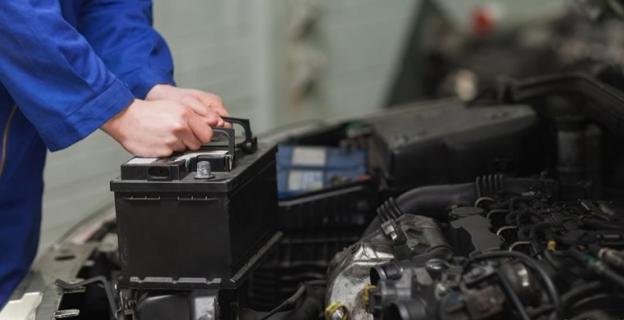
The cost of a car battery typically ranges from 300 to 1000 lei (RON), depending on:
- Battery capacity (Ah)
- Technology type (lead-acid, AGM, gel)
- Brand and product quality
- Vehicle-specific dimensions
Starter replacement
The price of a new starter motor typically ranges from 1000 to 5000 lei (RON), depending on:
- The complexity of the starting system
- The power required for the specific engine
- The vehicle make
- Availability on the market
In addition, labor costs can range from 200-500 lei.
Common causes of starter motor failure
A starter motor can fail for several reasons:
- Contamination: Oil, dirt, and metal debris can reach the starter motor and affect moving components
- Corrosion: Moisture and road salts can corrode electrical contacts
- Mechanical wear: Moving parts wear over time, especially on high-mileage vehicles
- Overuse: Repeated starting attempts can overheat windings
- Age: Starters over 10-15 years of use are prone to failures
Replacing the alternator
The cost of replacing an alternator varies between 800 and 3000 lei for the component, plus 300-600 lei labor. The price depends on:
- Alternator power (amps)
- Electrical system complexity
- Vehicle make and model
- Quality of the replacement part
Myths and common misconceptions
Does disconnecting the battery solve the problem?
No, disconnecting and reconnecting the battery will not solve the starting-click problem. This action may temporarily reset some electronic modules, but it will not correct mechanical or electrical faults causing the underlying issue.
Preventing starting problems
To avoid these unpleasant situations:
- Regularly test the battery, especially before the cold season
- Clean the battery terminals periodically to prevent corrosion
- Avoid full battery discharge
- Have the alternator checked at regular service intervals
- Do not ignore early signs of weak starting
The clicking problem at start-up, while frustrating, can be resolved through proper diagnosis and timely intervention. Understanding these mechanisms helps you make informed decisions and avoid costly repairs through proper preventive maintenance.
Photo sources: readersdigest.ca, liveabout.com, 247breakdown.ie