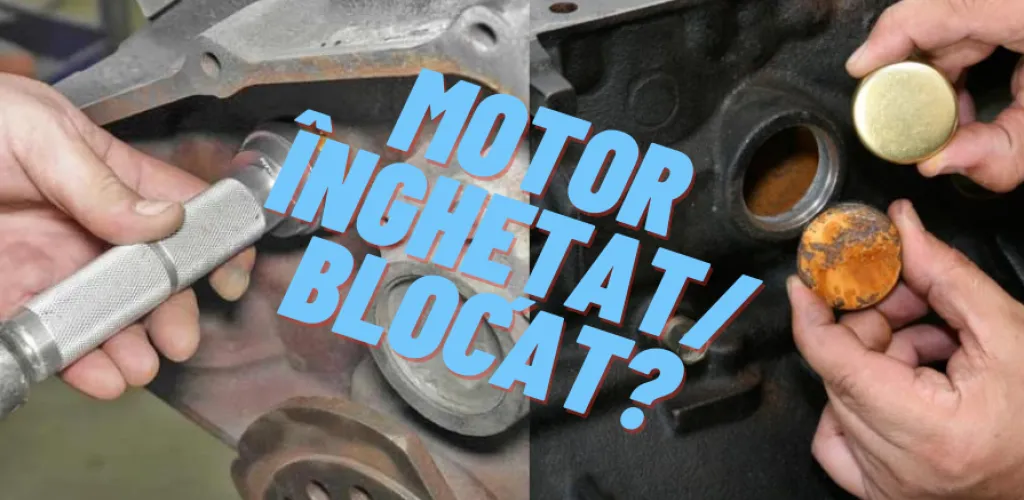
- Engine seizure occurs when oil is insufficient or lubrication fails, causing severe internal damage
- Main causes: low oil, water ingress, rust from idle, or faulty parts
- Early warning symptoms include check engine light, knocking, poor performance, and oil warning
- Regular oil changes (4,000–5,000 km) help prevent seizures and reduce repair costs
Engine seizure is one of the most serious failures a car can face. This problem can turn a functional car into an unusable vehicle, and repair costs can often exceed the vehicle’s current value. Understanding the causes, symptoms, and available options is essential for any car owner.
Owning a car is a major responsibility. These are high-performance machines with strong demand that require regular maintenance, the most important being engine care. It is recommended to change the oil every 4,000 to 5,000 kilometers.
What does engine seizure mean?
Practically, engine seizure occurs when there isn’t enough oil reaching the internal parts. If the internal components are no longer properly lubricated, friction will arise between them. When metals rub against each other, iron shavings appear and the engine can seize in a short time. The newer cars will shut the engine off to prevent further damage, while others may only alert you with a dashboard light.
Motor oil is by far the most important liquid you’ll find in the engine’s geartrain. When it is insufficient or has lost its physicochemical properties, the damage can be irreversible. Engine seizure is one of the most severe scenarios you can face. It can also occur when the oil pan is damaged or there are leaks from other causes.
Seized engine or dead battery - differences
Often, when an engine won’t start, many people think the problem is the battery. In some cases, this is true. If you left the lights on overnight or a door wasn’t fully closed, it can discharge the battery, preventing the car from starting.
The difference between a discharged battery and a seized engine is what works and what doesn’t:
- Dead battery: the car won’t start and electronic components don’t work
- Seized engine: electronic components may work, but the car won’t start
Main causes of engine seizure
Most engine failures stem from improper maintenance, specifically a lack of oil in the engine. The main causes include:
Insufficient oil level
When the oil level is low, the engine overheats, parts overheat, and bearings eventually suffer damage. Regular oil maintenance can help extend the life of your engine.
Water ingress
Water is not as compressible as gasoline and can cause engine seizure. It can enter through various engine openings under extreme weather conditions.
Rust buildup
When a car is idle for a long period, rust can accumulate, leading to engine seizure when you attempt to start it again.
Faulty parts
This is rare, but it has happened, so drivers should be aware of recalls for their vehicles.
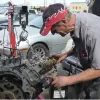
Symptoms of engine seizure
Before the engine completely stops functioning, there should be several indicators showing it might seize soon. It’s important to note that it is incredibly unlikely to have a seized engine without warning.
Early warning signs
- Check engine light coming on
- Knocking noises from the engine
- Poor engine performance
- Oil light illuminated
Symptoms of a complete seizure
Loud grinding noises: this is due to the starter hitting the flywheel when there isn’t enough lubrication.
Visible piston: when you look under the hood, the piston might become visible as loosened components shift to other parts of the engine with enough force.
Steam/Smoke: since the engine cannot start, steam, smoke, and even fire may appear — all signs of a major engine failure.
Nothing: the most telling sign of a seized engine is when nothing happens. When the car won’t start no matter how hard you try.
Diagnosis and repair options
If a mechanic has diagnosed your engine as seized, unfortunately there are few immediate options available. Depending on the severity of the damage, most mechanics will suggest a full replacement rather than attempting a repair.
Why is repair difficult?
Understand that in a seized engine, most parts may already be damaged. Even if only some components are ruined, it requires substantial work to disassemble the entire engine. Even if only a few components must be replaced and they are not very expensive, the labor costs can be enormous.
Replacement vs repair
Moreover, a repaired engine never performs like a factory-new one. It is generally better to replace the entire engine. This may be due to the fact that, in the end, repairs are usually more costly than replacing the engine.
Preventing engine seizure
Based on the causes listed above, an untreated car is more likely to seize than one with proper oil and maintenance. To prevent this costly issue:
- Regularly check the oil level
- Adhere to oil-change intervals (4,000–5,000 km)
- Do not leave the car unused for long periods
- Be attentive to warning signs
- Schedule periodic checks at specialized service centers
Currently, there is debate about whether to use conventional or synthetic oil in your car. Either option has pros and cons, and professional mechanics can guide you to the right choice for your vehicle.
Conclusion
There are situations where a car can be repaired fairly easily and others where this is almost impossible. Moreover, when facing a serious fault, if the repair cost is higher than the car’s current value, it may not be worth fixing. Engine seizure is, unfortunately, one of those extreme scenarios where prevention is far more effective than treatment.