A significant drawback of diesel cars is the particulate filter. If you’ve purchased an Ford Ranger and are experiencing issues with the particulate filter, read this article word for word to avoid future costly problems. In this article, we will discuss all the options for cleaning the particulate filter, even if you want to do it yourself at home.
Let’s start the article with a brief presentation of the diesel exhaust filtering system. What is the DPF?
The particulate filter is an exhaust gas filtering device located on the post-combustion side. It is designed to capture particles emitted by the engine as small as 0.01 μm. The DPF can be found before or after the catalytic converter, and in rare cases, it can be installed between two catalytic converters.
Why is the particulate filter installed before the car’s catalytic converter?
The DPF requires a high temperature to regenerate. Its efficiency ranges from 95% to 100%, significantly reducing emissions of unburned particles and ash from combustion gases. These particles are directly harmful to humans as they are easily inhaled, remain suspended, and can adhere to lung walls, posing carcinogenic risks.
When did the particulate filter first appear?
For Diesel engines, the first vehicles equipped with DPFs appeared starting with Euro 4 emissions standards, and from Euro 5 emissions standards (2009 in the European Union), it became mandatory for all diesel engines.
Having a car with a particulate filter sounds good, in a way, as it may seem like you’re saving the world from pollution, right? In no way does the filter eliminate pollution; at best, it merely masks it. We’ll provide more details at the end of the article.
But before that, let’s address a very common question. What is the lifespan of a particulate filter (DPF) on an Ford Ranger?
From experience, we can tell you that after 10 years, any particulate filter is nearing the end of its life, and problems start becoming more frequent and costly. When you reach this point, the filter needs either cleaning or replacement. Replacement is expensive, ranging from several thousand lei to several thousand euros. Cleaning costs around 100 euros, plus labor for installation and removal. There are also many workshops in Romania that claim to physically remove or disable the filter.
We do not recommend doing this because it’s illegal. Your car will no longer pass the technical inspection (ITP), and if you’re stopped by the RAR (Romanian Auto Registry) in traffic, your license plates and registration will be confiscated. Once you go to the RAR for reinspection, you will need to reinstall an original DPF on your car; otherwise, you won’t be able to drive the car in Romania.
Can you clean the DPF on an Ford Ranger at home?
Yes, there are many solutions available online that cost less than 10 euros and work wonders. Pour the solution into your car’s fuel tank and let it work. Be sure to read the solution’s instructions; some require a full tank for effective cleaning.
How do you know how loaded the particulate filter is on an Ford Ranger?
We’ve mentioned it in many articles. Our recommendation, which we believe is a healthy one, is to choose a mechanic, service center, or workshop that works extensively or exclusively with the brand of the car you own. Like in any profession, there are people who specialize in specific operations, brands, etc. Like in medicine, I want to go to an orthopedist when my leg hurts, not a general practitioner. If you own an Ford Ranger, take it to a service center, mechanic, or local workshop that generally repairs only that brand.
They will put your car on a diagnostic tester, and they will see real-time parameters, including the particulate filter’s loading level, when it last regenerated, how long it took, how much fuel it used while doing so, etc.
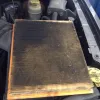
You can use Protec’s solution after putting your car on the tester. See the results before and after.
How is forced DPF regeneration done on an Ford Ranger?
Forced regeneration should only be done by a specialist. The car must meet certain mandatory conditions, and it must be done outdoors, not indoors, because it emits so much smoke that it becomes unbearable inside the garage, and there’s also a risk of fire. Forced regeneration is done through a diagnostic tester and is quite dangerous. We do not recommend doing this unless it is the last possible solution.
How is on-the-road regeneration of the particulate filter (DPF) done on an Ford Ranger?
Like forced regeneration, on-the-road regeneration must meet certain conditions. The logic behind on-the-road regeneration is that it occurs outside cities to reduce pollution in urban areas. In essence, the filter collects deposits every day in the city and eliminates them on its first longer drive outside the city. Thus, pollution ends up outside the city.
To perform on-the-road regeneration on an Ford Ranger, you must drive the car at high RPM (we recommend on a highway) between 3,000 and 3,500 RPM for 20-30 minutes. This raises the temperature in the filter to over 800 degrees Celsius and effectively breaks down and eliminates deposits into the atmosphere.