Cars with diesel engines come equipped with a particulate filter that, over time, can develop a range of issues as the vehicle ages. If you’ve purchased an Jeep Compass and are experiencing problems with the particulate filter, read this article carefully to avoid future costly problems. In this article, we will discuss all the ways you can clean the particulate filter, even at home. We will also talk about the cost of replacing the particulate filter.
First, let’s provide a brief overview of the diesel exhaust filtering system. What is the DPF?
The DPF (Diesel Particulate Filter) is an exhaust gas filtering device located on the post-combustion side of the engine. It is designed to capture large particulate matter from exhaust gases, as small as 0.01 μm. DPFs can be found before or after the catalytic converter, and in rare cases, they can be installed between two catalytic converters.
Why is the particulate filter located before the car’s catalytic converter?
The particulate filter requires high temperatures to go through a regeneration process. Its efficiency ranges from 95% to 100% in effectively reducing emissions of unburned particulate matter and ash from combustion gases. The particles it captures are directly harmful to humans, as they are easily inhaled and can remain suspended in the atmosphere and lodge in lung tissue, posing carcinogenic risks. This is why regeneration is performed in non-urban environments.
A brief history: When did the particulate filter (DPF) first appear?
For compression ignition engines, the first cars with DPFs appeared with Euro 4 emissions standards, and from Euro 5 emissions standards (starting in 2009 in the European Union), they became mandatory for all diesel engines.
It sounds great that your car has a particulate filter that stores and eliminates carcinogenic particles outside urban areas. However, it merely shifts pollution from cities to rural areas. We’ll provide more details about pollution at the end of the article.
By the end of the article, let’s answer a question often asked by diesel vehicle owners: What is the lifespan of a particulate filter (DPF) on an Jeep Compass?
A particulate filter can start clogging up and causing increasingly frequent and costly problems after 10-15 years. When it reaches this point, the filter needs cleaning (although cleaning may not have a long-term effect) or replacement. A new particulate filter is expensive, ranging from several thousand lei to several thousand euros.
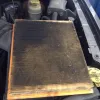
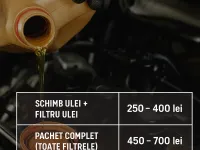
Cleaning it is done with a special machine, removed from the car, using very high pressure. Cleaning costs around 400 lei, and you’ll also need to pay for the labor to remove and reinstall it. It’s important to know that there are many garages in Romania that break the particulate filter and disable it.
Do not do this because it’s illegal; your car will fail its technical inspection (ITP), and if stopped by the RAR (Romanian Auto Registry) in traffic, your license plates and registration certificate will be confiscated. In addition to these risks, your car will emit a strong and unpleasant odor, and exhaust emissions will enter the interior.
When you go to the RAR for a vehicle check, you will need to install an original and new particulate filter (which is extremely expensive, as mentioned above) to continue driving in Romania. Essentially, if you disable the filter and get caught, you’ll need to replace it.
Can you clean the DPF at home for an Jeep Compass?
Yes, you can. Liquid solutions like those from Protec are poured into your car’s fuel tank (often with a full tank), and you let them work on their own. Often, they do a good job, and you can use them as a preventive measure to prevent the filter from clogging. Don’t assume that pouring a miracle solution into a clogged filter will instantly solve the problem.
How do you find out how loaded the particulate filter is on an Jeep Compass?
As we’ve said before and continue to emphasize, choose a mechanic, a skilled technician, a reputable service center, or a local workshop – it doesn’t matter where, as long as they consistently work on your car when needed and specialize in your car’s make. Just like any profession, there are specialists in the field of mechanics who focus on specific car brands.
Go from one service center to another, but many may blame their predecessors for any issues. If you have a serious problem, they may not want to help because it doesn’t make financial sense for them to spend three days working on it, so they’ll send you elsewhere, and the cycle may continue. If you’re here, it means you own an Jeep Compass; take it to a service center, technician, or local workshop – it doesn’t matter where. However, remember that they should generally specialize in your specific car brand.
How do service professionals determine the level of particulate filter clogging without dismantling it?
Everything is done with a professional diagnostic tester that monitors real-time vehicle parameters, including the level of particulate filter clogging, the timing of the last regeneration, the distance covered since the last regeneration, whether regeneration commands were blocked by the computer due to the vehicle not meeting necessary conditions, the amount of fuel used during the last regeneration, when the next regeneration should be performed, and more.
You can use a solution like Protec’s for cleaning after your car has been tested. After using it, put the car back on the diagnostic tester and compare the before-and-after differences. See how much of the particulate filter loading percentage the solution removes after a full tank of fuel.
How is forced DPF regeneration done on an Jeep Compass?
We do not recommend this technique, which is why we explain it here. Forced regeneration should only be performed by someone specialized in DPFs. It is a dangerous operation, and if the car has major defects, it can catch fire. The operation must be carried out outdoors with a fire extinguisher nearby. Forced regeneration is done using a diagnostic tester and is quite risky. We do not recommend doing this unless it is the last possible solution.
How is on-the-road regeneration of the particulate filter (DPF) done on an Jeep Compass?
The car will perform on-the-road regeneration by itself when all conditions are favorable, but it’s good for you to know how to initiate it if necessary to clean the filter when desired.
Like forced regeneration, on-the-road regeneration must meet certain conditions. The logic behind on-the-road regeneration is that it occurs in non-urban environments to reduce pollution in cities.
The particulate filter accumulates particles in the city because it runs at low revs, and the temperature in the filter cannot rise. During its first longer drive outside the city, it heats up to over 800 degrees Celsius, reducing deposits considerably and emitting them as thick white smoke. This way, pollution is shifted outside the city, as mentioned above.
What do you need to do to initiate on-the-road regeneration for the particulate filter?
To perform on-the-road regeneration on an Jeep Compass, drive the car at high RPM (we recommend on a highway or somewhere you know well, a national road, etc.), rev the engine between 3,000 and 3,500 RPM for 20-30 minutes, at speeds over 100 km/h to allow the engine to cool down with air. The temperature in the particulate filter reaches over 800 degrees Celsius within the first few minutes, initiating regeneration. During this time, the filter effectively breaks down and eliminates deposits in the form of white smoke.
If your car often performs DPF regeneration, say every 10 km, it means the filter is almost constantly close to maximum load. Check why it’s consistently highly loaded; there’s a good chance the problem doesn’t originate from the filter itself.