As automotive technology advances, the comfort and safety provided by personal vehicles also improve. If you own a newer car and have had it for some time, you’ve likely understood that technology comes with both benefits and drawbacks, especially when small issues arise with sensors, the electrical system, and so on.
One of the annoying minor problems is the Start-Stop option. What does the Start-Stop function do on the Fiat 500? It was designed to save fuel in the city and make the car more economical and eco-friendly. But is it really a perfect feature that can single-handedly save the planet? Or does it come with disadvantages?
In this article, we will discuss how the Start-Stop system works, the logic behind it, and the issues that can arise with the system, and most importantly, the problems that Start-Stop can cause for your car.
How Does the Start-Stop System Work on the Fiat 500?
More than 10 years ago, manufacturers began equipping new cars with this feature, which at the time seemed very revolutionary. The Start-Stop system aims to limit fuel consumption in the city, especially at traffic lights, and to reduce vehicle emissions. The Start-Stop system only functions when the car is at a standstill and meets certain conditions. Studies show that city-driving cars can spend 35% of their time idling with the engine running at traffic lights, in traffic jams, queues, parking lots, etc.
The Start-Stop function on the Fiat 500 promises that the car will use between 5% and 15% less fuel overall. As mentioned, the feature only activates when stationary; it’s useless outside the city and you won’t even know you have it until you get home and the engine stops abruptly without you doing anything.
What Is Different About a Car with Start-Stop?
- A more advanced starter motor or a state-of-the-art alternator with a starter built-in.
- If you drive the car in eco mode and put it in neutral or press the clutch, the engine will stop.
- As soon as you press the brake, accelerate, or shift gears, the engine will restart.
- In newer cars, the Start-Stop system can even stop the engine while driving if you don’t accelerate at all.
Advantages and Disadvantages of the Start-Stop System on the Fiat 500
We all know the advantages: reduced pollution, less noise in the city at traffic lights, parking lots, and wherever you stop the car. Lower fuel consumption, and at the end of the day, you can feel good about making a small effort to save the planet.
But what are the disadvantages? Don’t equip your car with Start-Stop if you buy a new one and plan to use it mainly outside the city or live in a less congested area or the countryside. You’ll spend 500-1500 euros in vain if you won’t use the system.

If you have the Start-Stop system on the Fiat 500, the car battery will last less, 1-2 years, and will cost nearly twice as much as a regular battery.
Think of the engine as a pump. The more you start and stop it, the faster it wears out. Imagine a book: opening it 100 times a year versus 10,000 times a year. The engine is heavily stressed, needing to stop and restart constantly. Would you manually turn off a non-Start-Stop car every time you had to wait 20-30 seconds and then turn it back on? It’s not healthy for the engine at all.
For turbo cars, Start-Stop can significantly reduce the lifespan of the turbocharger. A turbocharged car, if driven aggressively for a few minutes, needs to cool down afterward. Few cars have separate coolers for the turbo that can operate after the engine stops. So if you have a turbo car, drive it hard for a few minutes, then stop at a traffic light, the hot oil will remain in the turbo and eventually cause deposits that will prematurely destroy the turbocharger. If you plan to drive aggressively, disable the Start-Stop function for a while.
How to Disable the Start-Stop System on the Fiat 500?
You’ve probably come to this article because the Start-Stop feature annoys you and you want to disable it. If you often drive outside the city and the engine stops when you least expect it, like at a stop sign or a railroad crossing, and you find the option useless and want to disable it, we can provide some tips.

Maybe you find Start-Stop unnecessary in the city or don’t want to spend three times more on a battery. All these factors validate your idea that you don’t need Start-Stop on the Fiat 500.
In this article, we will discuss two methods to disable the Start-Stop system on the Fiat 500:
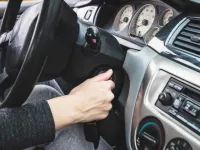
Classic Method: The Start-Stop system comes with a button that controls it. Depending on the car’s age, the button might be labeled Eco, Start and Stop, or two S’s. As you start the car, you can press the button to deactivate the system. If you want to stop and restart it immediately, you will need to press the button again. Basically, if you want to disable it this way, you need to make it a habit, just like fastening your seatbelt, and do it every time you start the car.
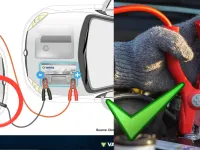
If you’re still annoyed by having to press a button every time, know that the Start-Stop system can be disabled in the car’s software. You can try using the OBD Eleven app. Another option, though less recommended: it’s not advised because it may lead to warning lights on the dashboard. Start-Stop car batteries have a computer on the terminal that analyzes the battery’s condition. If the battery is weak, Start-Stop won’t function. Disconnect the plug from that computer. If you’re not skilled with electronics, don’t attempt this yourself. The logic is that when you disconnect the plug, the car won’t receive information from the battery and will think it’s weak, thus not activating Start-Stop until the car receives information from a battery in good condition.
Problems with the Start-Stop System on the Fiat 500
In our opinion, the Start-Stop system is annoying and not as eco-friendly or cost-effective as it seems. The short-term results (fuel savings, reduced pollution) mask the long-term negatives.
What are we talking about? Do you think saving 50 lei on fuel per month will make you richer if you have to replace the battery more often because of Start-Stop, paying three times as much as for a regular battery? A simple calculation at the end of the year shows you’ll end up around the same place or even spend more.
In addition to more frequent battery replacements (global battery production is a major polluter and offsets the seconds the engine is stopped at traffic lights, making you think you’re saving the planet) and more frequent alternator replacements, you may face dangerous situations, as mentioned above. The engine stops at a railroad crossing and a delayed throttle response. According to us, you shouldn’t think twice before disabling the Start-Stop system on the Fiat 500.