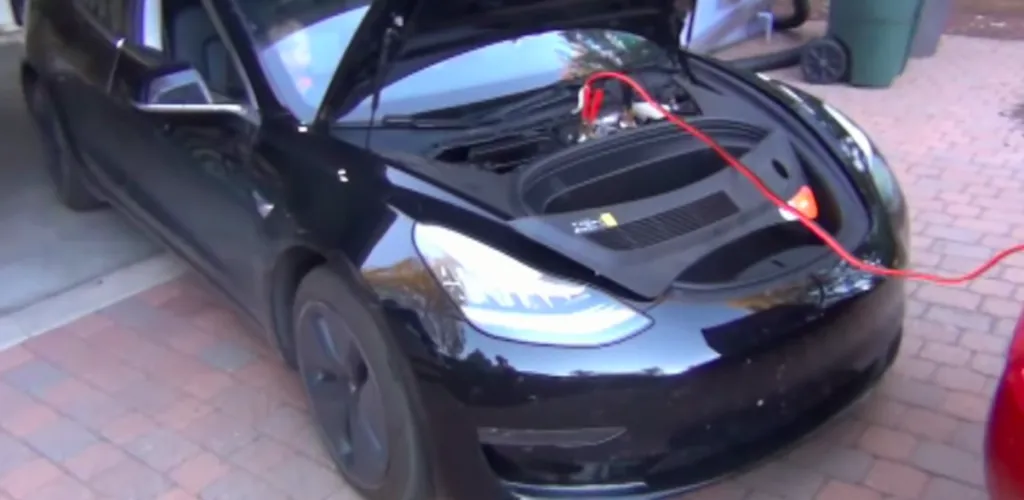
- EVs have a high-voltage propulsion system and a separate 12V auxiliary battery.
- You can jump-start only the 12V battery, not the main HV pack.
- Never start the HV system, use another EV, or charge while jumping; wear protective gear.
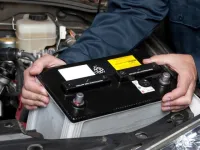
- 12V battery location varies: Tesla frunk/front; Leaf front; BMW i3 trunk.
A question on the minds of many current or prospective electric-vehicle owners is whether the traditional cable jump-start method can be used to start an EV with a discharged battery. While electric cars operate differently from internal-combustion engine vehicles, they still rely on an auxiliary 12V electrical system that may occasionally need a current boost.
Unlike conventional cars, EVs rely on a high-voltage battery pack for propulsion, but their 12V auxiliary system still plays a critical role in everyday operation and can sometimes need a power top-up.
The dual electrical system of electric cars
Electric cars use two distinct electrical systems that operate independently. In addition to the high-voltage battery pack (typically between 300-800V) that powers the electric motors, there is also a 12V auxiliary system identical to that found in conventional vehicles.
The role of the 12V battery in electric vehicles
The 12V battery in an electric car powers:
- Lighting systems (headlights, taillights, indicators)
- Central locking and safety systems
- On-board computers and ECU modules
- Standby climate control
- Displays and user interfaces
- Communication and navigation systems
When this battery becomes discharged, the vehicle will not start, just as in a conventional car, even if the high-voltage main battery is fully charged.
Can you jump-start an electric car?
The answer is yes, but only for the 12V auxiliary battery. The process is similar to that used for internal-combustion engine vehicles, with a few important additional precautions.
Situations when the 12V battery can discharge
- Leaving some electrical loads connected overnight
- Long periods of vehicle inactivity
- Faults in the auxiliary charging system
- Extreme temperatures affecting battery performance
- The battery reaching the end of its life cycle
Essential safety measures
What NOT to do ever
- Do not attempt to start the high-voltage system — these batteries operate at hundreds of volts and are extremely dangerous
- Do not use another electric vehicle as a power source — the risk of damage to electronic systems is very high
- Do not perform the operation while the vehicle is charging — always unplug the charger from the outlet or charging station
- Do not touch orange components — they indicate high voltage presence
Required protective equipment
- Eye protection safety glasses
- Rubber insulated gloves
- Non-synthetic clothing
- Quality jump cables in good condition
Location of the 12V battery
The location of the auxiliary battery varies by manufacturer and model:

Tesla Model S/3/X/Y
- On newer models: under the hood, in the front area (frunk)
- Typically located near the windshield, protected by panels
Nissan Leaf
- Under the hood, at the front of the engine bay
- Easily accessible, similar to traditional positioning
BMW i3/iX
- In the trunk, under the cargo area floor
- Protected by a cover that must be lifted
Volkswagen ID.3/ID.4
- Under the hood, on the right side of the front compartment
- Accessible by removing a protective cap
Recommendation: Always consult the owner’s manual for the exact location, as it can vary even between versions of the same model.
Step-by-step procedure for jump-starting with cables
Initial preparations
- Position the vehicles close to each other, but not touching
- Completely switch off both vehicles and set them in Park
- Engage the parking brake on both vehicles
- Turn off all electrical loads (lights, radio, climate control)
- Put on your protective gear
Connecting the cables
-
Connect the red positive cable:
- First end to the positive (+) terminal of the discharged EV
- Second end to the positive (+) terminal of the donor vehicle
-
Connect the black cable:
- First end to the negative (-) terminal of the donor vehicle
- Second end to a grounding point on the electric car (NOT to the negative terminal of the battery)
Starting the vehicles
- Start the donor vehicle and let the engine idle
- Wait 2-3 minutes for initial charging
- Try to start the electric car
- If it doesn’t start immediately, wait another 5-10 minutes and try again
Disconnection
- Disconnect the cables in the reverse order
- Let the electric car run to recharge the 12V battery
- Schedule a service check to identify the cause of the discharge
Alternatives to jump-starting with cables
Portable jump starters
These devices are ideal for electric vehicles because:
- They remove the need for a second vehicle
- They are safer for sensitive electronic systems
- They can be stored in the car for emergencies
- Many models include additional features (flashlight, USB)
Roadside assistance services
Many EV manufacturers offer:
- Free roadside assistance for the first years
- Technicians specialized in electric vehicles
- Towing services to the nearest service station
Preventing 12V battery discharge
Regular maintenance
- Regularly check the battery voltage (should be between 12.4-12.8V at rest)
- Have the battery tested during periodic service
- Proactively replace the battery every 3-5 years, depending on usage
Best usage practices
- Avoid leaving electrical loads connected when the vehicle is off
- Use the car regularly — at least once a week
- During long non-use periods, disconnect the battery or use a maintenance charger
- Ensure all doors, trunk, and hood are fully closed
In conclusion, while electric cars are technologically advanced, their 12V auxiliary system operates similarly to that of conventional vehicles. Jump-starting with cables is possible and safe if the proper procedures and safety measures are followed. However, it’s important to recognize you are working with a complex vehicle, and if in doubt, it is best to call in specialists.