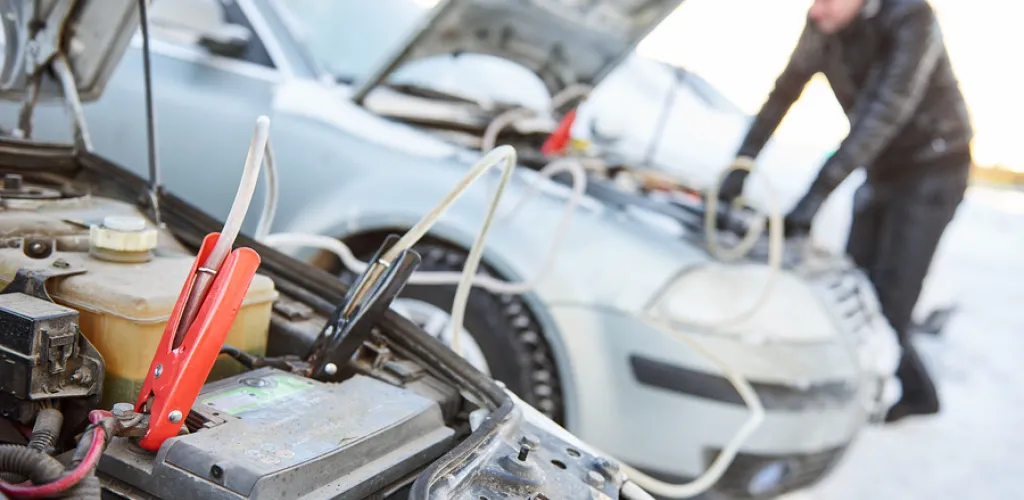
- Cold weather reduces battery power; at -18°C a battery can lose up to 50%.
- Engine oil thickens in cold, increasing engine resistance during starting.
- Water in fuel lines can freeze; diesel can gel in cold.
- Prevent cold starts by keeping the car warm, e.g., park in a heated garage.
Low temperatures pose one of the biggest challenges for vehicle owners, turning a simple morning start into a real test. Problems with the battery, oil, and fuel can make starting the car difficult when the weather is cold, but with the right preparation and knowledge, these situations can be avoided or resolved efficiently.
Chilly mornings are the most inconvenient times for starting problems. Unfortunately, on these frosty mornings there is the highest chance that certain issues will occur, due to the physics and chemistry of automotive components.
Why Cold Weather Makes Starting the Car Difficult
Car batteries don’t handle the cold
Cold weather and car batteries simply don’t mix. Every battery, including your car’s, produces less current (i.e., electrical power) when it is cold—sometimes much less.
This phenomenon is due to the slowing of chemical reactions inside the battery at low temperatures. At -18°C, a battery can lose up to 50% of its normal starting capacity, which explains why many cars refuse to start on very cold mornings.
Motor oil becomes more viscous
In cold seasons, motor oil becomes thicker and doesn’t flow as well, so the movement of its components is harder. The increased oil viscosity means the engine offers more resistance at start.
This means your car’s battery, already weakened by the cold, has to work harder to move the engine and start the car. It’s a vicious circle: the weak battery has to overcome greater mechanical resistance.
Fuel problems in freezing temperatures
If there is water in the fuel lines (it shouldn’t be, but it happens), subzero temperatures can cause the water to freeze and block the fuel circuit.
This can occur in the fuel lines, which are thin and can clog easily with ice. A car with a frozen fuel system may start but not run properly.
Diesel users should know that diesel can gel in cold weather, i.e., it will flow more slowly due to the cold and make starting the engine more difficult. Diesel begins to gel at roughly -7°C to -15°C, depending on fuel quality.
Carburetor problems in older cars
Cars built before the 1980s generally used carburetors to mix small amounts of gasoline with air in the engine. Carburetors are very delicate devices that don’t work as well in the cold, because tiny jets can become clogged with ice or gasoline may not evaporate properly inside them.
This issue does not occur in cars without carburetors, so you don’t need to worry if your car was built in the last 20 years. Drivers of older or classic cars should, however, be mindful of carburetor problems in cold weather.
Preventing Cold-Weather Starting Problems
The best way to solve cold-start problems is to avoid them in the first place. Here are some effective preventive measures.
Keep the car warm
Batteries and motor oil don’t tolerate the cold well, so the obvious approach is to keep them warm whenever possible.
Parking in a heated garage A heated garage is great, but even an unheated garage will be more efficient for your car than parking outside. Temperature differences can be 5–10°C, which can make the difference between an easy start and a difficult one.
If you don’t have a garage, you can park under or next to something large—for example, under a tree or next to a building. The reason lies in heat transfer physics: a car parked overnight in an open carport or under a large tree can be a few degrees warmer the following morning than a car parked in an open outdoor space.

Battery and engine block heaters Use a battery heater or a block heater. In very cold climates, it is common and sometimes necessary to keep the engine block warm overnight.
This can be achieved with an electrical heater to maintain a higher temperature, helping the oil and other fluids stay fluid (this is especially important for diesel engines). If this option isn’t possible, an electric battery heater can be used.
Use winter-grade oil
Check the owner’s manual to find [best motor oil for your car]. Modern synthetic oil flows well in the cold, provided you choose the right type.

You will need multi-grade engine oil, represented by two numbers (for example, 10W-40, which is common). The first number, the one with the letter “W”, stands for winter; a smaller number means easier flow.
Winter oil recommendations:
- Oils 5W-30 or 0W-30 are ideal for very low temperatures
- Synthetic oils maintain better fluidity in the cold
- Always check the manufacturer’s specifications before changing
This is even more important if you use conventional oil for your car, not synthetic.
Avoid fuel-related issues
Auto parts stores and gas stations sell fuel additives, each helping prevent icing in the fuel system and, in the case of diesel engines, preventing diesel gel.
Consider using a bottle of additive from time to time (for diesel engines, one bottle per fill). These additives contain isopropyl alcohol or ethylene glycol, which absorb moisture and prevent ice formation.
Note: Fuel can already contain additives; check with the gas station staff before adding anything to the fuel tank.
How to Start the Car When It’s Very Cold
How do you actually start a cold car? You might get away with a simple cranking of the key, but when the weather is very cold, be a bit more careful.
Preparation for Start
Turn off all electrical accessories More specifically, headlights, heater, defogger, etc. The car battery needs to be fully engaged to start the engine, so turning off all electrical accessories allows it to operate with maximum amperage.
Correct starting technique
- Turn the key and leave the starter connected briefly
- If the engine starts immediately, that’s great
- If not, crank the starter a bit more, but then stop — the starter can overheat if run for more than ten seconds
- Wait 1–2 minutes and try again — things may have settled a bit
For carbureted cars
If you have a carbureted car (older than about 20 years), you can try starting fluid. It is found in an aerosol can for air intake purifiers.

Note: It’s not ideal to rely on starting fluid often, but it can be useful in extreme situations.
If the Engine Starts Slowly
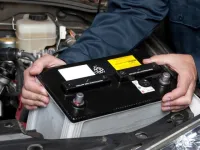
If the engine starts but the RPM is lower than normal, warming the battery could be the solution. Unfortunately, this requires removing the battery; if you don’t know how to do this, go to the assisted starting section.
Other checks, if you have the proper tools and know-how, are battery cables and clamps. Any corrosion on clamps or cracked cables can impede electricity flow.
Important checks:
- Corrosion on battery terminals (blueish or greenish)
- Cracked or damaged cables
- Loose or oxidized clamps
- Electrolyte level in maintenance batteries
If you see corrosion, clean it with a wire brush, and replace cracked cables. It’s advisable to leave this to a qualified mechanic if you haven’t dealt with this before.
Assisted Start Step by Step
If the engine won’t start at all or isn’t running correctly and you’ve tried everything, you’ll need an assisted start.
Materials needed
- Another vehicle that runs well (donor car)
- Another driver
- Eye protection
- Battery jumper cables (minimum 400A capacity)
Assisted Start Procedure
1. Safety measures Wear eye protection. Battery acid incidents are rare, but when they happen they can be very serious.
2. Check the cables Get a good set of battery cables (not cracked or frayed). Cables should have enough cross-section to carry the required current.
3. Position the vehicles Position the other vehicle (the one that runs normally) close enough to use the full length of the cables, but without the cars touching.
4. Start the donor vehicle Start the donor vehicle and keep it running throughout the process.
5. Connecting the cables - order is crucial

Correct order to connect:
- Positive terminal (+) of the car that won’t start
- Positive terminal (+) of the donor vehicle
- Negative terminal (-) of the donor vehicle
- Important: Connect the last cable to a metal part of the engine block (not to the negative terminal of the faulty battery)
6. Check the connection Get into the affected car and check the electrical connection by turning the key to the “on” position, not “start.” The dashboard lights should come on.
7. Charging process Start the other car for a few minutes, with the engine at about 2000 rpm. You may need to raise the engine speed slightly to ensure sufficient current.
8. Start the affected car Now, with the other vehicle running at 2000 rpm, try to start the affected car.
9. Disconnecting While the affected car is running, disconnect the cables in the reverse order of the connection:
- Ground cable from the engine block
- Negative terminal of the donor vehicle
- Positive terminal of the donor vehicle
- Positive terminal of the car that was faulty
10. Keeping it running Let the car run for at least 20 minutes or drive 5–10 km to allow the alternator to recharge the battery.
Battery Status Check After Cold Spells
Note: It’s important to understand that cold not only temporarily disables batteries but can also permanently damage them. Therefore, if you already needed a assisted start, you should check the battery performance as soon as possible.
Signs the battery has deteriorated
- Difficult starting even at moderate temperatures
- Dim lights when starting the engine
- Battery older than 3–4 years
- Excessive corrosion on terminals
- Battery drains quickly when the car is parked
Preventive maintenance
To avoid future problems:
- Test the battery before the cold season
- Clean terminals and cables regularly
- Check electrolyte level (on maintenance batteries)
- Consider replacing batteries older than 4–5 years
- Use a maintenance charger for vehicles used infrequently
With this knowledge and proper preparation, winter starting problems can be minimized or resolved quickly and safely. Investing in the right equipment and understanding automotive systems will save you time, money, and frustration during the cold months.
Sura foto: bellevilletowingservices.com, admiral.com, globalcarsbrands.com, ericpetersautos.com, thewirecutter.com, hubautoparts.com