- Tires cost 200–4000 euros; maintenance saves money and boosts safety.
- Choose tires with correct load index and speed rating to avoid overload.
- Driving style dramatically affects wear; gradual acceleration, gentle braking, careful cornering.
- Check pressure monthly and before trips; incorrect pressure causes wear and safety risks.
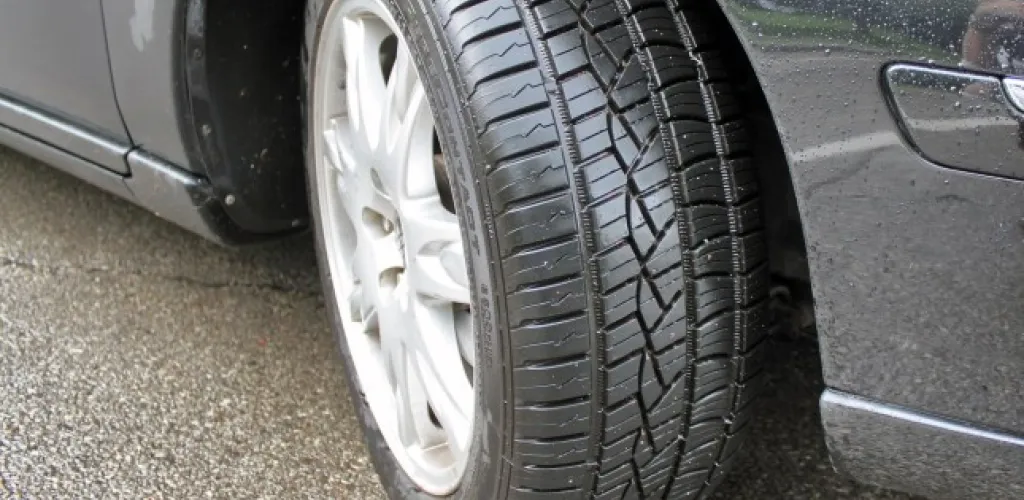
Tires are among the most important safety components of your car, being the only contact with the road. A new set of tires offers maximum grip, enhanced safety, and smooth ride. Unfortunately, all tires wear inevitably from contact with asphalt, gradually becoming louder and less capable. Given that a full set can cost between 200 and 4000 euros, depending on size and brand, proper maintenance not only saves substantial money but also guarantees safety for you and your family.
Choosing the Right Tires for Your Car
Before discussing maintenance, it is essential to ensure you use tires that match your vehicle’s specifications. All tires carry on the sidewall two crucial marks:
Load Index
This index indicates the maximum weight a tire can support. For example, if the index is 91 (corresponding to 615 kg per tire) and your car weighs 1800 kg, the tires will be overloaded and wear faster. More seriously, there is a risk of a blowout at high speeds or under extreme load conditions.
Speed Rating
This alphabetic code (from A1 to Y) indicates the maximum sustained speed the tire can handle. A tire with a speed rating of H (210 km/h) is not suitable for aggressive highway driving at high speeds. Tires with a higher speed rating are built with materials more resistant to friction, heat, and deformation.
Driving Style - Direct Impact on Wear
The way you drive dramatically affects tire life. The basic principle is simple: any loss of grip accelerates wear.
Driving techniques to extend tire life:
- Gradual acceleration: Avoid abrupt accelerations that cause wheel spin. For front-wheel-drive cars, this is vital for preserving the front tires.
- Controlled braking: Apply braking gradually, and when possible, use engine braking to reduce speed.
- Proper cornering: Slow down before entering a curve, not during the turn.
- Obstacle avoidance: Curbs, potholes, and stones can cause instant damage.
Technical impact on the tire
When the wheels slip, the rubber heats up quickly from the friction with the road. High temperatures degrade rubber compounds, making them softer and more prone to wear. Slipping also creates uneven wear, which can compromise wheel balance.
Checking and Maintaining Optimal Air Pressure
Tire pressure is probably the most important maintenance factor. Check the pressure monthly and before every long journey.
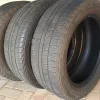
Effects of incorrect pressure:
Underinflation:
- Accelerated wear on the edges
- Increased rolling resistance (higher fuel consumption)
- Risk of overheating and blowouts
- Reduced braking and handling performance
Overinflation:
- Accelerated wear in the center of the tread
- Reduced ride comfort
- Diminished grip on wet surfaces
- Increased risk of damage from impacts
Proper checking procedure:
- Check pressure when tires are cold (at least 3 hours after last use)
- Use a quality gauge – those at gas stations can be inaccurate
- Follow the manufacturer’s specifications (door jamb label)
- Don’t forget the spare wheel
Tire Rotation for Even Wear
Rotate every 10,000–15,000 km or according to the manufacturer’s recommendations. This practice ensures even wear across the entire set.
Why rotation is necessary?
In front-wheel-drive cars, the front tires:
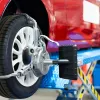
- transmit power to the road
- support the engine and transmission weight
- are subjected to steering and braking
- wear 1.5–2 times faster than the rear tires
Types of rotation:
For front-wheel-drive vehicles:
- The front tires move to the rear on the same side
- The rear tires cross to the front
For rear-wheel-drive vehicles:
- The rear tires move to the front on the same side
- The front tires cross to the rear
Checking Wheel Alignment
Romanian road conditions, with numerous potholes and bumps, can affect wheel alignment. Check alignment annually or after strong impacts.
Wheel alignment parameters:
Toe angle (toe-in):
- Determines whether wheels are parallel or slightly angled
- Incorrect alignment causes wear on a single edge
- Noted by uneven wear and steering pull
Camber angle:
- Tilt of the wheel relative to vertical
- Affects the contact patch with the road
- Important for cornering stability
Caster:
- Angle of the steering pivot
- Influences high-speed stability
- Affects steering return after turns
Advanced Maintenance for Maximum Durability
Monthly visual inspection
Visually inspect tires for:
- Cracks in the sidewall: Indicate aging rubber or internal damage
- Unusual bulges: Sign of internal structural damage
- Uneven wear: May indicate geometry, suspension, or balancing issues
- Foreign objects: Nails, screws, or stones embedded in the rubber
Cleaning and protection
- Regular cleaning: Use water and mild soap to remove harmful chemicals (salt, oils, fuels)
- UV protection: Avoid prolonged sun exposure when the car is parked
- Stone removal: Use a dull-tipped tool to remove stones from tread grooves
Wheel Balancing
Improper balancing causes:
- Steering vibration at 80–120 km/h
- Uneven wear in patches
- Premature wear of wheel bearings and suspension components
When to balance:
- When mounting new tires
- After puncture repairs
- If vibrations appear
- Annually as preventive maintenance
Proper storage (seasonal tires)
For tires on rims:
- Store horizontally, stacked (max 4 tires)
- Reduce pressure by 0.5 bar
- Rotate periodically to avoid deformation
For tires without rims:
- Store vertically, rotating monthly
- Avoid stacking
- Use special stands if possible
Storage conditions:
- Constant temperature (10–25°C)
- Low humidity
- Shield from direct sunlight
- Away from ozone sources (electric motors, welding)
Warning Signals – When to Replace Tires
Critical wear indicators:
Tread depth:
- Below 1.6 mm: Illegal and extremely dangerous
- Below 3 mm: Reduced performance in rain
- Below 4 mm: Replacement recommended for winter tires
Uneven wear:
- Edge wear: Chronic underinflation
- Center wear: Overinflation
- Wear on a single edge: Geometry problems
- Patch wear: Imbalance or suspension issues
Structural damage:
- Deep cracks in the sidewall
- Bulges or blisters
- Separation of tread from belt
- Bead damage (rim contact area)
Coin test
Use a 1-leu coin to check tread depth. Insert the coin into the main groove – if you can see the entire golden edge, the tire needs immediate replacement.
Long-Term Savings
By applying these maintenance practices, you can extend tire life by 30–50%. For a set of premium tires worth €1000, this translates to savings of €300–€500 per replacement cycle.
Additional benefits:
- Increased safety: Optimal grip in all conditions
- Lower fuel consumption: Properly maintained tires reduce rolling resistance by up to 10%
- Improved comfort: Smoother, quieter operation
- Consistent performance: Predictable braking and handling
Maintaining tires properly is an investment in your safety and savings. Combining the right tire choice, responsible driving, and regular checks, you can achieve maximum performance and durability. Using engine braking will protect not only tires but also brake discs and pads, contributing to the overall maintenance of your vehicle.
Remember: tires are the only contact between the car and the road, and investing in their proper maintenance is, in fact, an investment in your safety and that of your loved ones.