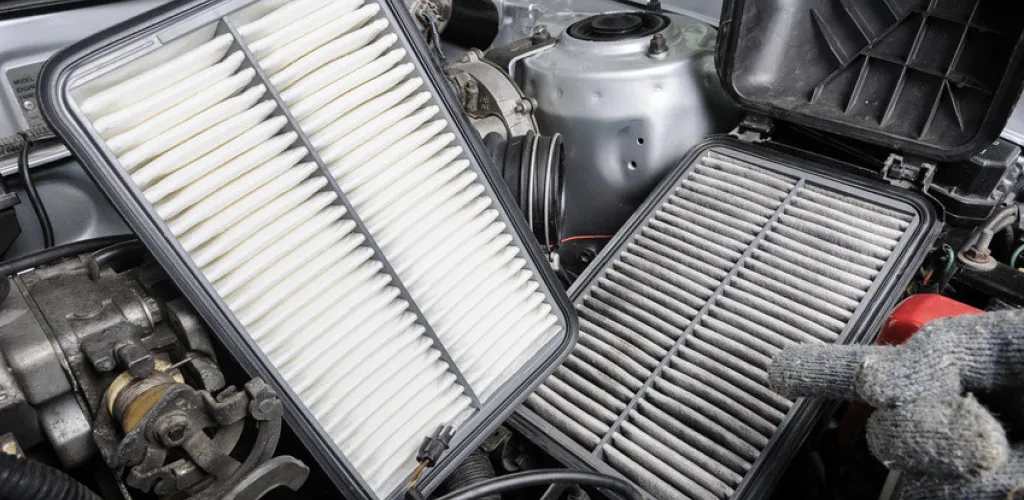
- Quality air filters capture 95–99% of particles, including 5.5–176 microns.
- They must provide optimal airflow without over-restriction, preserving engine performance.
- Common media include pleated paper, cotton, synthetics, and foam.
- Theoretical lifespan is 60,000–70,000 km in ideal conditions; real dust accelerates clogging.
The engine of a car consumes a remarkable amount of air — for every 4 liters of fuel burned, about 4,000 liters of air are required. This 1:1000 ratio underscores the crucial importance of clean air for the engine’s optimal operation over hundreds of thousands of kilometers.
Air filter represents the sole protective barrier between the impurity-laden environment and your engine’s combustion chamber. Therefore, choosing a quality filter is not just a maintenance matter, but an investment in the engine’s longevity.
Characteristics of a quality air filter
Filtration efficiency
A high-performance air filter should capture between 95% and 99% of the particles in the air. The best filters can stop particles sized between 5.5 and 176 microns. For reference, a strand of human hair is about 70 microns in diameter, which means quality filters can retain much finer particles than the naked eye can perceive.
Filtration efficiency is measured by:
- Retention capacity: the percentage of particles blocked
- Filtration uniformity: maintaining performance across the entire filter surface
- Resistance over time: preserving efficiency throughout usage
Optimal airflow
In addition to effective filtration, a quality filter must not overly restrict air flow. The engine needs a constant and adequate air supply for:
- Complete combustion of fuel
- Maintaining power and torque
- Preventing overheating
- Reducing fuel consumption
A filter that restricts air too much can cause:
- Decreased engine performance
- Higher fuel consumption
- Uneven idle operation
- Problems with acceleration
Materials used in filter construction
Types of filter media
Air filters today use various materials for the filtering membrane:

Pleated paper: The most common solution, offering a good price-to-performance ratio and decent filtration efficiency.
Cotton: Used in premium filters, offering excellent filtration and can be cleaned and reused in some cases.
Synthetic materials: Combine durability with efficiency, being resistant to moisture and extreme temperatures.
Foam: Used less often, in special applications where high flexibility is required.
Contact surface
A crucial aspect of a quality filter is a large contact surface. This is achieved through:
- Dense pleating of the filtering material
- Optimized geometry
- Maximizing the space available in the filter housing
A larger surface area allows:
- Retaining more impurities
- Maintaining airflow over a longer period
- Extending the filter life
Lifespan and replacement intervals
Theoretical capacity vs. practical reality
Although high-quality air filters can effectively retain particulates for 60,000–70,000 kilometers under ideal conditions, road realities in some environments differ. Dust, pollen, construction particles, and other impurities common to urban and rural settings accelerate clogging of the filter.
Recommended replacement interval
For conditions in Romania, it is recommended to replace the air filter every 20,000–30,000 kilometers or once a year, depending on:
- Driving conditions (city vs. highway)
- Season (summer with more dust vs. winter)
- Geographical area (rural vs. urban)
- Air quality in your area
How to identify a quality air filter
Selection criteria
Certifications and standards: Look for filters that comply with OEM standards or are certified by recognized automotive organizations.
Brand and reputation: Established manufacturers invest in R&D, offering superior products.
Price: Quality filters are pricier upfront but offer longer life and better protection.
Construction: Check the quality of materials, seals, and bonding.
Signs of a poor-quality filter
- Thin filtering material or uneven pleats
- Low-quality sealing gaskets
- Fragile construction or defective bonding
- Suspiciously low price
- Lack of producer information or specifications
Quality-price ratio
Although quality filters are more expensive at purchase, they offer significant long-term benefits:
- Superior engine protection
- Longer lifespan
- Consistent performance throughout use
- Maintenance savings on engine components
- Better energy efficiency
Investing in a quality air filter pays off quickly by protecting expensive engine components and maintaining optimal vehicle performance.
Photo credit: autopartspro.co.uk