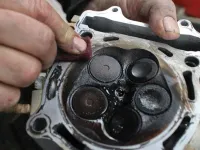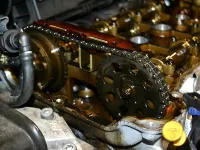
- Inline-six engines offer exceptional reliability, durability, smooth operation, and efficiency.
- Compared to V6, inline-sixes have simpler layout, cheaper parts, faster maintenance.
- European leaders include BMW and Mercedes-Benz with iconic inline-sixes.
When it comes to the cars we see on the streets every day, most drivers focus on exterior design and the performance figures shown in brochures. Very few check what sits under the hood—the engine, the heart of any vehicle. In Romania, the auto landscape is dominated by three-, four-, and six-cylinder powerplants, with occasional V8 engines, though these remain rare.
Among the engine configurations available, the inline-six stands out for its technical robustness, smooth operation, and efficiency, earning it a prominent place among European automakers.
Why the inline-six engine is the reliability champion
Among all engine configurations available on the market, the inline-six engine stands out for its technical superiority in multiple aspects. This type of engine offers a unique combination of advantages:
- Exceptional reliability - failures are rare and generally minor
- Remarkable durability - lasts hundreds of thousands of kilometers without major problems
- Lower weight compared to other power configurations of similar output
- Natural balance - vibrations are minimal thanks to the layout of the cylinders
- High efficiency - it delivers steady power at a reasonable fuel consumption
Inline six vs V6: The Battle of Configurations
Maintenance Cost Advantages
A key aspect in evaluating an engine is how much maintenance will cost in the long run. In this regard, the differences are substantial:
Inline six engine:
- Parts are easily accessible due to the simple layout
- Mechanical interventions are faster and simpler
- Labor costs are considerably lower
- Replacement parts are generally more affordable
V6 engine:
- Access to components is difficult due to the compact configuration
- Servicing requires more time
- Labor is more expensive due to complexity
- Some repairs may require partial dismantling of the engine
Technical simplicity = Increased reliability
Main advantage of the inline configuration is its constructive simplicity. Cylinders arranged one after another mean:

- Linear operation - forces are more naturally balanced
- Fewer moving components that can develop problems
- Simpler camshaft design - easier to maintain and repair
- More efficient cooling system - cooling agent has uniform access
- More direct lubrication - oil reaches all components more easily
Manufacturers dominating the inline-six segment
This engine configuration is not new — it has been used for decades by the most prestigious automakers. Inline-six engines are especially common in:
- Sports and GT models
- Premium and luxury sedans
- Performance SUVs
- Vehicles requiring power and reliability over long distances
European leaders: BMW and Mercedes-Benz
On the European market, two names dominate when it comes to high-performance inline-six engines:
BMW has built a legendary reputation with its line of straight-six engines. From the classic M20 of the 1980s to the modern B58, the Bavarians have honed this configuration to the smallest detail.
Mercedes-Benz is not far behind, with its ninth-generation M256 engines that combine the inline configuration with modern technologies such as mild-hybrid and electric turbochargers.
Global reliability champions
Although BMW and Mercedes-Benz produce exceptional engines in terms of performance, when it comes to absolute reliability, Japanese manufacturers keep the crown:
Toyota is renowned for engines such as the JZ family (2JZ) that can easily exceed 500,000 km without major repairs.
Honda has also demonstrated technical excellence with engines such as the K-series and J-series, known for remarkable longevity.
Superior performance through optimal placement
Thanks to the longitudinal configuration (inline with the car’s axis) of these engines, weight distribution in the vehicle is optimized. This translates to:
- Better, more balanced handling
- Improved traction at the driven wheels
- More efficient power transfer
- More predictable behavior in corners
Conclusion
The inline-six engine represents the apotheosis of classic automotive engineering—a perfect blend of performance, reliability, and reasonable maintenance costs. For those seeking a vehicle capable of lasting hundreds of thousands of kilometers without major issues, cars equipped with this powerplant remain the ideal choice. Whether you opt for the German refinement of BMW and Mercedes-Benz or the legendary reliability of Japanese brands Toyota and Honda, an inline-six engine is the guarantee of a long-lasting, enjoyable driving experience.