- It powers essential components: alternator, power steering, AC, and water pump on some cars.
- Belt life varies: rubber belts ~90k km; EPDM belts up to ~160k km.
- Durability depends on material quality, operating conditions, maintenance, and driving style.
- If it fails, power steering, AC, and alternator stop; engine may shut down.
The accessory belt is a vital part of the engine, responsible for powering all essential vehicle accessories. Although it may seem simple, its role in the correct operation of the car is fundamental and cannot be neglected.
The engine cannot run on fuel and the transmission system alone. To ensure a complete and safe driving experience, it relies on a series of accessories that support its optimal function.
The vital role of the accessory belt
The accessory belt connects the engine to all essential components via a driving pulley that is driven directly by the engine. When this pulley turns, the belt transfers mechanical power to all attached accessories.
Among the accessories powered by this belt are:
- Alternator — provides electricity for the vehicle’s electrical system
- Power steering — facilitates vehicle handling
- Air conditioning compressor
- Brake servo pump
- Water pump (on some vehicles)
In the past, cars had two or even three separate belts for different systems. Today, most modern vehicles use a single accessory belt, also called the drive belt, that powers all accessories.
How long does an accessory belt last?
The lifespan of an accessory belt varies considerably depending on the material it is made from and operating conditions. Technological advances have brought significant improvements in this area.
Traditional belts vs. modern belts
Traditional rubber belts lasted about 90,000 km under normal operating conditions. These belts were more susceptible to wear and required more frequent checks.
EPDM belts (Ethylene Propylene Diene Monomer) can last up to 160,000 km, representing a substantial improvement over their predecessors. EPDM material offers superior resistance to extreme temperatures, oils, and chemicals.
Factors influencing durability
To achieve the maximum belt life, consider:
- Material quality — branded, reputable belts last longer
- Operating conditions — extreme temperatures affect longevity
- Regular maintenance — periodic checks can prevent premature wear
- Driving style — abrupt accelerations and decelerations can stress the belt more
The importance of regular checks
The accessory belt runs continuously from engine start to stop. This constant load inevitably leads to wear, which is why regular inspections are essential.
Experts’ recommendation is to check the belt at every maintenance interval, ideally at every oil change. This practice can prevent unexpected failures and the additional costs they bring.

Consequences of a broken accessory belt
If the belt snaps while driving, the effects will be immediate and dramatic:

- Power steering will stop functioning, making handling extremely difficult
- Air conditioning system will cease to cool
- Alternator will stop producing electricity
- Battery will begin to discharge rapidly
- Finally, the engine will shut down completely when the battery is depleted
This situation can leave you stranded on the roadside and can generate significant towing and repair costs.
Warning signs of a faulty belt
Early recognition of wear signs can prevent unpleasant situations. Here are the main indicators that the belt needs attention:
Visual signs
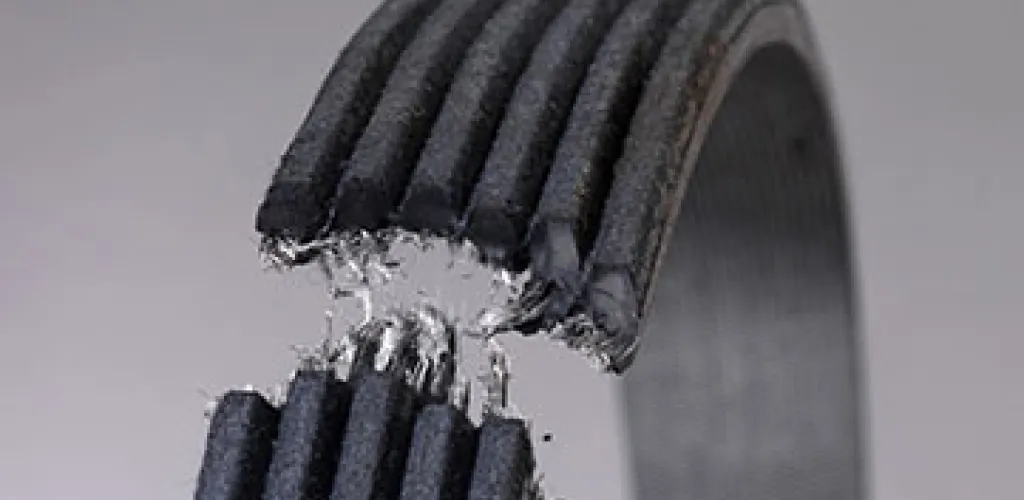
- Visible cracks on the belt surface
- Fraying, cuts, or tears of any size
- Missing grooves on the belt’s inner surface
- Uneven wear of the material
- A glossy appearance of the belt indicating overheating
Audible signs
- Squeaks under the hood, especially on cold starts
- Unusual noises coming from the engine area
- Sharp noises when accelerating
Functional signs
- Power steering becomes heavy or does not function properly
- Battery light on the dashboard during driving
- Air conditioning no longer cools effectively
- Voltage fluctuations in the electrical system
Maintenance recommendations
To maximize the life of the accessory belt:
- Schedule regular checks at the auto service
- Observe warning signs and act promptly
- Use quality parts for replacement
- Check other related components (tensioners, idler pulleys)
- Keep the engine clean to reduce contamination
Replacing the accessory belt is a small investment compared with the costs of a complete system failure. By paying attention to this seemingly simple component, you can avoid unpleasant situations and keep the vehicle in optimal running condition.
Photo sources: allstate.com, gatestechzone.com, youtube.com