- Oil leaks mainly come from damaged gaskets or seals under heat, pressure, vibration.
- Lubrication system comprises oil pan, engine block, and cylinder head with seals.
- Common leak sources: oil pan gasket, crankshaft seals, valve cover gasket, oil filter.
- Leaks can start small but cause costly engine damage if ignored.
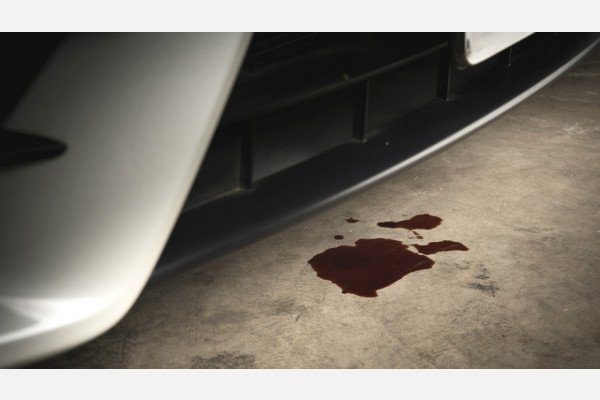
Oil spots under the car can be a wake-up call for any responsible driver. While it may seem like a minor issue at first, oil leaks can indicate serious failures of the lubrication system and can lead to costly damage if ignored.
The engine operates as a closed system, meaning oil and antifreeze must circulate continuously through components without ever leaving the engine block. When this balance is disrupted, the consequences can be devastating for the engine’s longevity.
Anatomy of the lubrication system
To understand why leaks occur, it is essential to know the engine structure. It consists of three main metal sections:
- Oil pan — the reservoir that stores oil
- Engine block — the area where pistons and cylinders are located
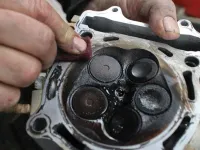
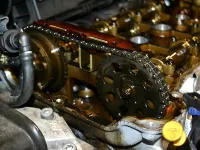
- Cylinder head — the top part that houses the camshaft, valves, and the fuel delivery system
These components operate under extreme conditions, with high pressures and temperatures, as well as numerous parts in constant motion. To maintain system integrity, the engine uses a complex network of gaskets and seals that ensure sealing.

Why oil leaks occur
Oil leaks are almost always the result of damaged gaskets or oil seals. These components work under extremely challenging conditions:
Factors accelerating wear
Extreme temperatures: During operation, the temperature in the combustion chambers can exceed 2000°C, and even in the oil pan the temperature can reach 120-150°C.

High pressures: Oil pressure in the lubrication system can vary between 2-6 bar, exerting a constant force on the seals.
Intense vibrations: Piston movement, explosions in cylinders, and crankshaft rotation generate strong vibrations that continually stress sealing materials.
Contamination: Metal debris produced by wear deposits on gaskets accelerates the wear process.
The deterioration process
Gaskets and oil seals are generally made from specialized rubber or elastomeric compounds. Over time, these materials:
- lose elasticity due to constant heat
- become brittle and start to crack
- contract, creating gaps through which oil can leak
- degrade chemically due to contact with oil and fuel
Once the sealing surface is compromised, leaks begin as small spots, but can quickly progress to large oil losses if not addressed.
Main leak zones
Oil pan gasket
One of the most common sources of leaks, continually stressed by the weight of the oil and engine vibrations.
Crankshaft oil seal
Located at the front and rear of the engine, this seal is crucial for sealing the crankshaft.
Valve cover gasket
Located at the top of the engine, it can allow leaks that drip directly onto the exhaust manifold, creating smoke and a distinctive odor.
Oil filter
An incorrect installation or a defective filter gasket can generate significant leaks.
Risks of a low oil level
Although everyone knows that an oil-less engine can fail within minutes, few understand the gravity of running with a low oil level.
Short-term effects
Increased temperature: Less oil means reduced cooling capacity, leading to overheating of components.
Deficient lubrication: Pumping an inadequate volume of oil leaves some components without proper protection.
Low pressure: The reduced level affects the pressure in the lubrication system, compromising the operation of hydraulic lifters and tensioners.
Long-term consequences
Wear of pistons and rings: Inadequate lubrication accelerates wear on these critical components, leading to reduced compression and higher oil consumption.
Bearing damage: These sensitive components can suffer serious damage, potentially requiring a full engine rebuild.
Sticking of tappets: The distribution system can suffer severe damage if the tappets are not properly lubricated.
Head gasket failure: Increased temperature can damage this vital gasket, causing oil to mix with antifreeze or a loss of compression.
Identifying and diagnosing leaks
Visible signs
- Oil spots under the car when parked
- Oil traces on the lower part of the engine
- Oil level dropping between oil changes
- Blue smoke from the exhaust (in case of internal leaks)
Diagnostic methods
- Cleaning the engine and monitoring leak areas
- Professional checks using fluorescent dyes
- Visual inspection of accessible seals
- Monitoring oil pressure
Preventive measures and solutions
Preventive maintenance
- Regular oil changes at the recommended intervals
- Using oil with the correct specification
- Periodic checks of the oil level
- Avoiding heavy engine loads when the engine is cold
Necessary repairs
Once the leak source is identified, repair should be performed promptly to avoid secondary damage. The cost of a sealing repair is always lower than the cost of a full engine rebuild.
Oil leaks should never be ignored. A quick intervention can save the engine from costly damage and significantly extend the vehicle’s life. At the first sign of a leak, consult a specialist for a precise diagnosis and appropriate repair.