- Proper preventive maintenance extends vehicle life and reduces costly failures.
- Tires are critical for safety, fuel economy, and handling.
- Check tire pressure monthly to prevent wear, higher fuel use, and blowouts.
- Spark plugs replacement intervals vary by type: copper 15k–30k, platinum 60k–80k, iridium 80k–120k.
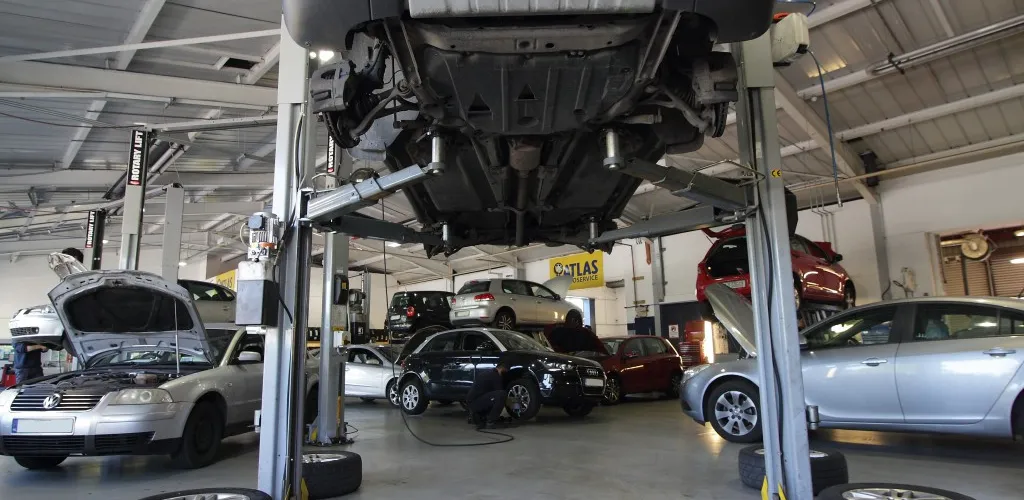
Maintaining your car in optimal running condition is not only about comfort—it’s a smart investment that can save you thousands of lei in the long term. Proper preventive maintenance can extend the vehicle’s life by many years and dramatically reduce the risk of costly failures. Time spent on maintenance is much shorter and less expensive than the time and cost of major repairs at a workshop.
Additionally, a well-maintained car is safer on the road, consumes less fuel, and preserves resale value better. The investment of time and energy in preventive maintenance always pays off with substantial savings and increased safety.
Tires - the foundation of road safety
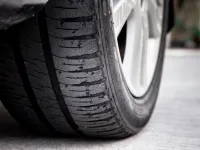
Tires are the only point of contact between the car and the road, responsible for transmitting power from the engine to the ground, controlling direction, and damping shocks while driving. Their condition directly affects safety, fuel consumption, and the overall handling of the vehicle.
Tires, when properly maintained, must be a top priority for any responsible driver. A monthly inspection of 5–10 minutes can prevent costly problems and dangerous situations on the road.
Checking tire pressure
Correct pressure is essential for optimal tire performance. Underinflation can cause:
- Accelerated wear on the outer edges of the tire
- Fuel consumption increases of up to 15%
- Risk of blowout at high speeds
- Unpredictable handling in corners
Overinflation can lead to:
- Wear along the center of the tread
- Reduced ride comfort
- Increased risk of punctures
Wear monitoring
Check the tread depth to ensure it is not below 1.6 mm (legal limit), but for maximum safety, replace tires when they reach 3–4 mm. Use the 1 lei coin method—if the golden edge is fully visible when inserting the coin into the tire grooves, it’s time to replace.
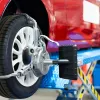
Visually inspect tires for:
- Cracks or bulges on the sidewalls
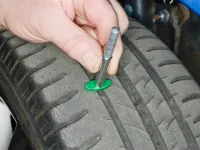
- Cuts or punctures in the tread
- Nails or other objects embedded
- Uneven wear that may indicate geometry problems
Tire rotation
Rotate tires every 10,000–15,000 km to ensure even wear. The standard pattern moves the rear tires to the front on the same side, while the front tires go to the rear diagonally.
Spark plugs - the heart of the ignition system
Spark plugs are essential components of a petrol engine, responsible for creating the spark that ignites the air–fuel mixture in the cylinders. Their proper operation directly affects starting, fuel consumption, and performance.
Signs of a faulty spark plug
A spark plug that is worn or faulty manifests as:
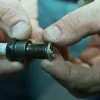
- Difficult starting, especially in the morning
- Rough engine operation at idle
- Increased fuel consumption
- Reduced power and weak acceleration
- Higher emissions
Replacement interval
The service life of spark plugs varies by type:
- Copper-core spark plugs: 15,000–30,000 km
- Platinum spark plugs: 60,000–80,000 km
- Iridium spark plugs: 80,000–120,000 km
Check the vehicle manual for the exact manufacturer specifications. If you notice signs of misfiring before the recommended interval, consult a mechanic for inspection.
Proper replacement
When replacing spark plugs, use exactly the type recommended by the manufacturer. Important parameters are:
- Thread size (diameter and length)
- Correct heat range for the engine
- Electrode gap
Brake pads - the guarantee of safety
The braking system is the most important safety system of the car. Pads wear down due to friction with the discs each time you press the pedal, and their life is relatively short compared with other components.
Visual inspection
Checking brake pads can be done in under 3 minutes, without removing the wheels. Through the wheel gaps you can see the pads as a piece of metal between the calipers and the discs.
Signs of critical wear
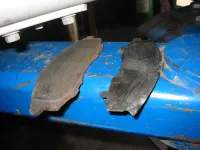
- Friction material thickness below 3–4 mm — urgent replacement required
- Squealing noises during braking — the wear indicator contact with the disc
- Pedals vibrating during braking — possible disc deformation
- Longer pedal travel — advanced wear or hydraulic air in the system
Replacement recommendations
When changing pads, consider the following:
- Always replace on complete axles for even braking
- Check wear sensors — if the car has them, new pads should come with new sensors
- Avoid sport pads on city cars with standard discs — they will wear the discs prematurely
- Check the discs — if they are scratched or warped, they must be replaced or resurfaced
Engine oil and oil filter - the lifeblood of the engine
Engine oil serves several vital functions: lubrication, cooling, cleaning, sealing, and corrosion protection. A quality oil, changed on time, can extend the engine’s life by tens of thousands of kilometers.
Essential functions of oil
- Lubrication – reduces friction between moving metal parts
- Cooling – dissipates heat from critical engine areas
- Cleaning – removes deposits and metallic particles
- Sealing – improves seal between pistons and cylinders
- Anti-corrosion protection – prevents internal component rust
Oil change interval
The change interval depends on several factors:
- Normal conditions: 10,000–15,000 km for synthetic oils
- Severe conditions: 7,000–10,000 km for:
- Predominantly urban driving with many stops
- Frequent towing
- Dusty conditions or extreme temperatures
- High-mileage cars
The importance of the oil filter
The oil filter removes impurities and metallic particles from the oil, keeping it clean. A clogged filter can cause:
- Lower oil pressure
- Accelerated engine wear
- Re-circulation of impurities through the engine
Golden rule: always change the filter together with the oil. Fresh oil with an old filter is a wasted investment.
Additional checks for complete maintenance
Automotive fluids
- Coolant – check level and color every 6 months
- Brake fluid – change every 2 years, regardless of mileage
- Power steering fluid – check level monthly
- Windshield washer fluid – top up with quality fluid, not plain water
Car battery
- Clean terminals from oxide
- Check electrolyte level (on maintenance-type batteries)
- Test capacity every 2–3 years
Belts and hoses
- Inspect the timing belt according to the manufacturer’s schedule
- Check hoses for cracks or bulges
- Proactively replace rubber components at 5–7 years
Preventive maintenance is not just about saving money—it’s about your safety and that of other road users. A consistent maintenance schedule will reward you with a reliable and high-performing car in the long run.