- 1598cc inline-4 K7M, SOHC 8V, 79.5mm bore, 80.5mm stroke.
- Power and torque: 75-90 hp at 5000-5500 rpm; 128 Nm at 3000 rpm.
- Generally reliable; timing belt requires regular replacement; head gasket failures can occur.
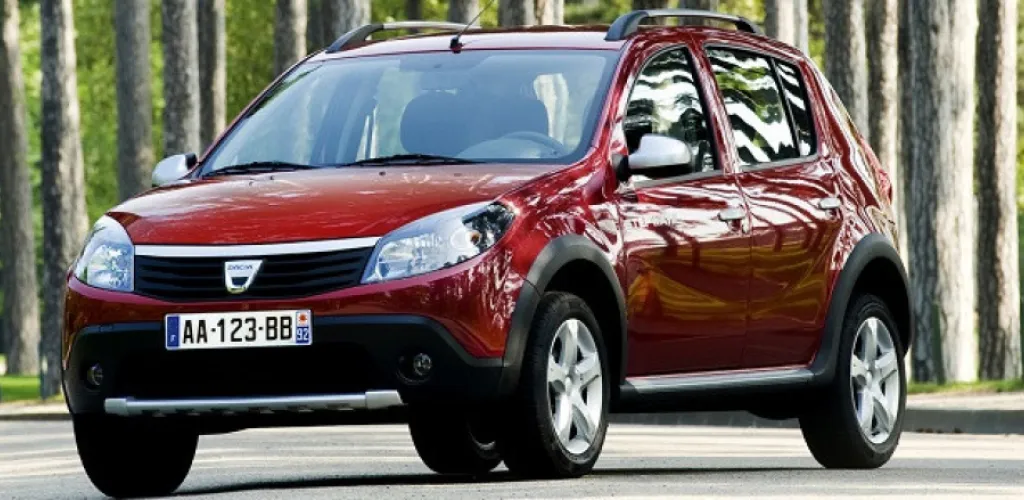
- Fits Renault Megane, Scenic, Clio II, and Dacia Logan/Sandero/Lodgy/Dokker.
The K7M engine is the 1.6-liter variant in Renault’s K7 engine family, essentially an evolution of the 1.4-liter K7J. This variant was developed to deliver more power and torque while maintaining reasonable fuel consumption and high reliability. Thanks to its excellent balance of performance and efficiency, the K7M has become a popular choice for many Renault and Dacia owners.
Technical architecture of the K7M engine
The K7M engine retains the core construction of its smaller sibling, the K7J, but introduces important modifications to accommodate the larger displacement. The main difference lies in the engine block height, which is 10.5 mm higher than the K7J. This increase was needed to house the modified crankshaft, which has a longer stroke.
Pistons of both engines share the same bore diameter of 79.5 mm, but the K7M pistons have a different compression height to accommodate the 80.5 mm stroke. This combination yields a displacement of 1598 cc, delivering an optimal balance between performance and efficiency.
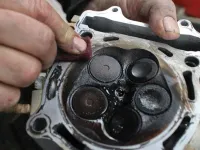
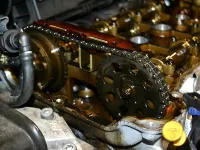
The other mechanical components remain largely identical to the K7J: aluminum cylinder head with 8 SOHC valves, connecting rods, oil pump, intake and exhaust manifolds. The timing is driven by a [timing belt] drives the camshaft and requires replacement at regular intervals.
Fuel delivery and emissions control system
The K7M uses a modern multi-point fuel injection system that ensures efficient atomization of gasoline and an optimal air-fuel mixture. This system contributes to better performance and lower emissions compared to older carburetor-based setups.
To meet emission standards, the engine is equipped with an [EGR (Exhaust Gas Recirculation)] system that reintroduces part of the exhaust gases into the intake, reducing combustion temperature and NOx emissions.
Complete technical specifications
General characteristics
- Manufacturer: Renault
- Production period: 1995 - present
- Block material: Cast iron
- Cylinder head material: Aluminum
- Fuel type: Gasoline
- Fuel system: Multi-point injection
- Configuration: Inline
- Number of cylinders: 4
- Valves per cylinder: 2
- Valve train: SOHC (single overhead cam)
Dimensions and capacity
- Bore diameter: 79.5 mm
- Stroke: 80.5 mm
- Displacement: 1598 cc
- Compression ratio: 9.5:1
- Engine type: Four-stroke, naturally aspirated
Performance
- Maximum power: 75-90 hp at 5000-5500 rpm
- Maximum torque: 128 Nm at 3000 rpm
Lubrication
- Recommended oil: 5W-40, 5W-30 (Elf Excellium 5W40)
- Engine oil capacity: 3.4 liters
Compatible models
- Renault Megane
- Renault Scenic
- Renault Clio II
- Dacia Logan
- Dacia Sandero
- Dacia Lodgy
- Dacia Dokker

Common problems and weak points
Although generally reliable, the K7M shows a few recurring issues that owners should be aware of:

Head gasket failure
The most serious issue seen on the K7M is head gasket failure, which can lead to coolant mixing with engine oil. This defect typically arises due to a weak cooling pump that fails to circulate coolant properly, causing engine overheating.
Symptoms include:
- Coolant in engine oil (milky oil appearance)
- Coolant level dropping without visible leaks
- White smoke from the exhaust
- Engine overheating
To prevent this problem, replace the water pump at the first signs of weakness and keep the cooling system in optimal condition.
Camshaft bearing wear
Another common problem is excessive engine noise, similar to a diesel, caused by wear of the camshaft bearings. This issue can appear relatively early, even around 60,000 km, especially if oil-change intervals were not respected or low-quality oil was used.
To minimize the risk:
- Always use high-quality oil according to the manufacturer’s specifications
- Strictly follow oil-change intervals
- Avoid high-rev regimes during warm-up
Reliability and lifespan
Despite the issues above, the K7M is considered very reliable when properly maintained. Its simple design, free from complex technologies, contributes to high durability and low maintenance costs.
With proper maintenance and service intervals, the K7M can easily reach 400,000 km or more. There are numerous documented cases of vehicles with this engine exceeding half a million kilometers with minimal mechanical intervention.
Key longevity factors:
- Regular oil changes at a maximum of 10,000 km
- Timing belt replacement according to recommendations (around 60,000 km)
- Keeping the cooling system in optimal condition
- Avoiding excessive loads when the engine is cold
Versions and engine codes
Over the years, the K7M engine has been produced in several versions, tailored to different models and market requirements:
K7M702/703/790
- Power: 90 hp (66 kW)
- Application: Renault Megane, Renault Scenic (1995-1999)
- First generation of K7M engines with maximum power
K7M720
- Power: 75 hp (55 kW)
- Application: Renault Megane, Renault Scenic (1995-1999)
- Detuned version for markets with different tax requirements
K7M744/745
- Power: 90 hp (66 kW)
- Application: Renault Clio II (1998-2003)
- Adapted for the second-generation Clio model
K7M710
- Power: 86 hp (64 kW)
- Application: Dacia Logan (2004-2010), Dacia Sandero (2008-2010)
- The version popularized the Dacia brand in the European market
K7M800
- Power: 83 hp (62 kW)
- Application: Dacia Logan, Dacia Sandero (2011-present)
- Modernized version with lower emissions
K7M812
- Power: 80 hp (60 kW)
- Application: Dacia Lodgy, Dacia Dokker (2012-present)
- Adapted for larger utility and family vehicles
Why choose the K7M engine
The 1.6-liter K7M engine is often preferred over the 1.4-liter variant for several reasons:
- More torque at low revs – 128 Nm at just 3000 rpm makes city driving more enjoyable
- Similar fuel consumption – the real-world difference versus the K7J is minimal
- Proven reliability – decades of production confirm the engine’s durability
- Affordable spare parts – excellent availability and reasonable prices
- Simple mechanics – easy to service even for independent workshops
These advantages explain why the K7M continues to be valued by Renault and Dacia owners, delivering a strong balance of performance, reliability, and operating costs.
Photo source: en.wikipedia.org, automaniac.org