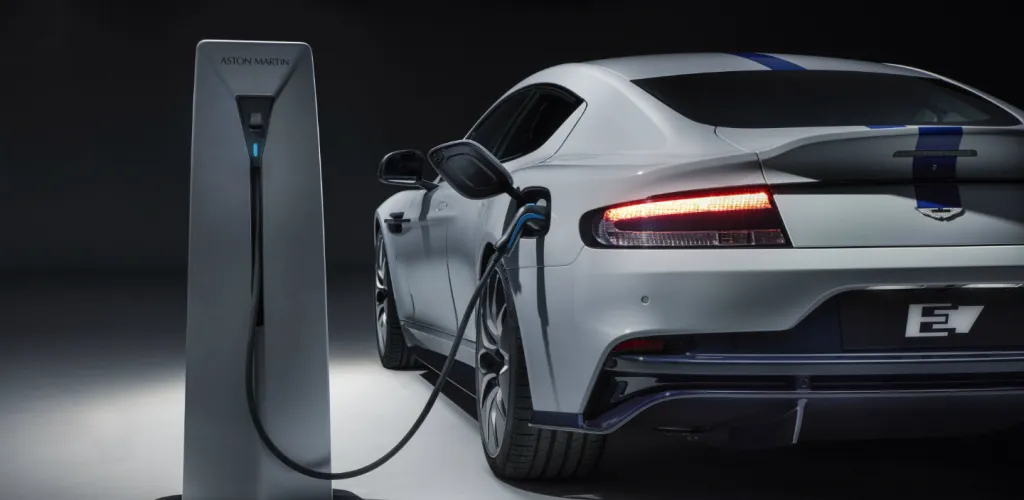
- Romania’s charging network remains insufficient to meet users’ needs.
- Charging times vary: 30 min to 1h at DC fast, 2-4h semi-fast, 8-12h slow.
- Most EVs deliver 250-400 km; premium models reach 630-770 WLTP.
- Uphill climbs and towing drain battery; high-speed driving lowers range.
Electric cars have gained popularity among Romanian buyers due to rising fuel prices and environmental concerns. However, electric technology is not yet perfect and presents a number of limitations every potential buyer should know.
Although electric vehicles offer numerous advantages—from reduced operating costs to zero local emissions—there are still significant obstacles that can influence the purchase decision. Many Romanians remain hesitant about switching to electric, mainly due to an incomplete understanding of the technology and of the infrastructure in our country.
Charging infrastructure challenges
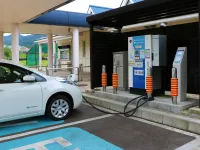
One of the biggest challenges facing electric car owners is the charging infrastructure. Although Romania’s charging network has expanded considerably in recent years, it still remains insufficient to fully cover users’ needs.
Charging time is a major issue. Unlike traditional fueling, which takes a few minutes, charging an electric car can take:
- 30 minutes - 1 hour at DC fast chargers (50-150 kW)
- 2-4 hours at semi-fast AC chargers (22 kW)
- 8-12 hours at slow AC chargers (3.7-7.4 kW)
This aspect becomes problematic especially for long trips, when planning becomes essential and flexibility is significantly reduced.
Limited range compared to conventional cars
Although battery technology has evolved dramatically, range remains a legitimate concern for many buyers. Most electric cars available on the Romanian market offer a real range of 250-400 km under mixed driving conditions.
Premium models can exceed this limit:

- Tesla Model S: up to 650 km WLTP range
- Mercedes EQS: up to 770 km WLTP range
- BMW iX: up to 630 km WLTP range
However, these figures can be significantly affected by:
- Weather conditions (especially cold temperatures)
- Driving style
- Use of climate control systems
- Traffic conditions
A petrol or diesel car can easily cover 600-800 km on a single tank, offering a greater range.

Performance in specific situations
Contrary to public perception, modern electric cars offer impressive performance. Electric motors deliver maximum torque from 0 rpm, which translates into rapid acceleration. Notable examples:
- Tesla Model S Plaid: 0-100 km/h in 2.1 seconds
- Porsche Taycan Turbo S: 0-100 km/h in 2.8 seconds
- Audi e-tron GT: 0-100 km/h in 3.3 seconds
The issue arises in specific situations, such as:
- Long uphill climbs: rapidly deplete the battery
- Sustained high speeds: range drops dramatically on the highway
- Towing: significantly reduces range
Additionally, regenerative braking is less effective on straight and flat roads.
Battery charging challenges
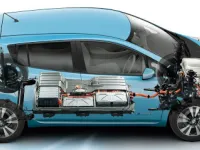
The lithium-ion battery is the heart of any electric vehicle, and its behavior differs fundamentally from traditional fuels. The main challenges include:
Degradation over time: Batteries gradually lose capacity, reducing their range by 2-3% annually under normal use.
Temperature sensitivity: In cold temperatures, batteries can lose up to 20-30% of range, and charging becomes slower.
Planning required: Unlike spontaneous fueling, electric charging requires planning and time.
Future technologies promise significant improvements:
- Solid-state batteries
- Ultra-fast charging (800V)
- Higher energy densities

High upfront costs
Prices of electric cars remain considerably higher than those of conventional equivalents, mainly due to battery costs. A 60-80 kWh battery can cost €15,000-€25,000 to replace, representing about 30-40% of the vehicle’s value.
Factors contributing to high costs:
- Lithium: a rare raw material with volatile prices
- Cobalt: an expensive element used in cathodes
- Manufacturing technology: still in the process of optimization
- R&D: massive investments by manufacturers
Battery warranties are generally 8 years/160,000 km, offering some security, but post-warranty costs remain high.
Environmental impact — a realistic perspective
Although electric cars do not produce local emissions, their environmental impact is not zero. The main concerns include:
Electricity production: In Romania, about 20% of energy comes from coal, which generates indirect emissions.
Battery manufacturing: The process requires energy-intensive steps and involves mining rare minerals from regions with questionable environmental standards.
Recycling: Battery recycling technologies are still developing, and material recovery is costly.
Studies show that an electric car becomes emission-neutral after roughly 50,000-70,000 km, depending on the energy source.

Excess weight and its implications
Electric cars are significantly heavier than their conventional counterparts due to battery packs. Comparative examples:
| Electric model | Weight | Conventional equivalent | Difference |
|---|---|---|---|
| Tesla Model 3 | 1,847 kg | BMW 3 Series (1,570 kg) | +277 kg |
| Audi e-tron | 2,565 kg | Audi Q7 (2,205 kg) | +360 kg |
| BMW iX3 | 2,260 kg | BMW X3 (1,955 kg) | +305 kg |
This extra weight has multiple implications:
- Energy consumption: the weight increases consumption, reducing range
- Tire wear: tires wear faster
- Dynamic behavior: higher inertia affects handling
- Infrastructure: bridges and parking structures have weight limits
Manufacturers are working on technological solutions to reduce weight:
- Higher energy density batteries
- Lightweight construction materials (aluminum, carbon)
- Vehicle architecture optimization
Future prospects
Despite current drawbacks, technological progress in electric vehicles is remarkable. The evolution of EVs is comparable to the evolution of mobile phones—the first Motorola DynaTAC from 1983 weighed almost 800 g and offered 30 minutes of talk time, while modern smartphones are incomparably more capable and lighter.
Similarly, electric cars are moving rapidly toward:
- Ranges of 1,000+ km
- Charging in under 15 minutes
- Costs comparable to conventional cars
- Batteries lighter and more durable
The decision to buy an electric car in 2024 should consider both current limitations and the rapid pace of technological improvements. For many Romanian users, the optimal time to switch to electric may still be a few years away, when infrastructure and technology are more mature.
Photo sources: driving.co.uk, hothardware.com, theatlantic.com, buyacar.co.uk