- Air filters protect the engine by removing over 98% of contaminants.
- Damaged or clogged filters reduce power and raise fuel consumption.
- Standard filters are affordable, widely available, with 95-98% filtration and 12–15k km life.
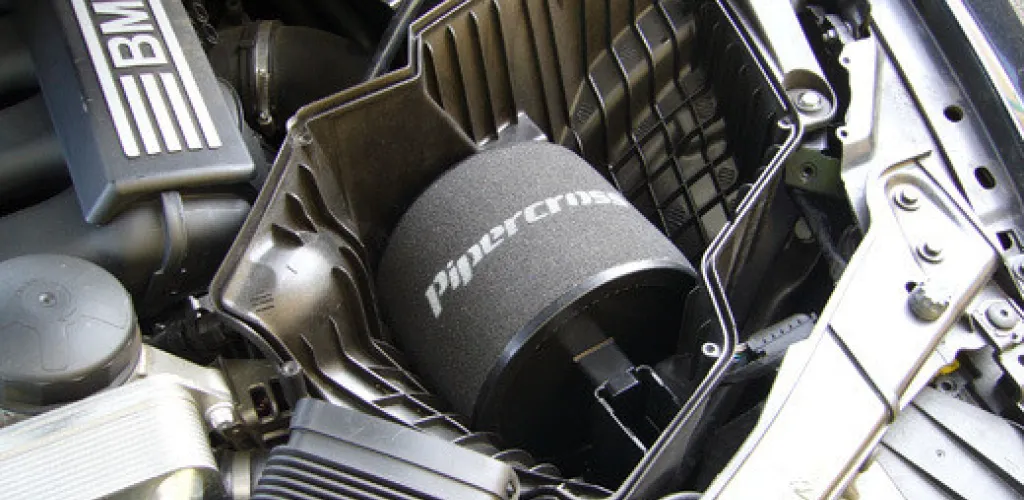
- Sport filters use oil cotton or synthetics for 15–30% more airflow and lower resistance.
Choosing the right air filter may seem like a minor detail, but its impact on engine performance and longevity is substantial. Between standard and sport filters, there are important differences that can influence your purchasing decision, from long-term costs to engine protection.
The Vital Role of the Air Filter in the Engine System
The air filter represents the first line of defense for the engine against atmospheric contaminants. Positioned at the start of the air intake path, it purifies the air involved in the combustion process.
Every day, the engine “breathes” thousands of cubic meters of air containing dust particles, pollen, insects, industrial residues, and other contaminants. An operating air filter eliminates over 98% of these impurities, protecting the engine’s sensitive internal components.
Signs of a Damaged or Clogged Air Filter
Recognizing air filter issues can prevent expensive damage:
- Reduced engine power – performance losses of 10-15%
- Increased fuel consumption – up to 15% in severe cases
- Hard starting – the engine feels starved for clean air
- Irregular idling – the air-fuel mix becomes suboptimal
- Unusual noises – rough air flow through a clogged filter
A completely blocked filter can allow large particles to enter the engine, leading to premature wear of cylinders, pistons, and valves.
Standard Air Filters: An Economic and Functional Solution
Paper Filter Characteristics
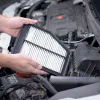
Standard filters, made from pleated paper, are a common choice for automakers due to cost and availability:
Advantages:
- Affordable price: 30-80 lei for most models
- High availability: readily found for any vehicle
- Easy replacement: does not require special technical knowledge
- Good efficiency: 95-98% particle retention
Disadvantages:
- Shorter service life: typically 12,000-15,000 km maximum
- Single-use: cannot be reused, must be replaced
- High air resistance over time: gradually restricts air flow
- Ecological impact: generates regular waste
Paper Filter Technology
The material used is a dense special paper with fine fibers that create a labyrinth for dirty particles. The pleats increase the filtration surface, but over time they can become irreversibly clogged.
Sport Air Filters: Long-Term Investment in Performance
Premium Materials and Advanced Technologies
Sport filters use superior materials that offer significant advantages:
Oiled cotton – the most popular material:
- Natural fibers with superior filtration properties
- Impregnation with special oil to capture fine particles
- Controlled porosity for optimal air flow
Synthetic materials:
- Extreme durability in harsh conditions
- Resistance to high temperatures and humidity
- Anti-static properties to repel dust
Concrete Advantages of Sport Filters
Superior mechanical performance:
- Increased air flow: 15-30% higher than standard filters
- Reduced resistance: the engine breathes more easily
- Multi-layer filtration: captures particles of various sizes
- Extended life: up to 60,000 km with maintenance
Long-term economic benefits:
- Initial investment of 200-500 lei amortizes over 4-5 years
- Reduction in regular maintenance costs
- Increased engine protection = lower repair costs
- Reduced environmental impact through reuse
Realistic Limitations of Sport Filters
It’s important to have realistic expectations:
- For naturally aspirated engines, power gains are modest (1-3 HP)
- It does not turn a standard engine into a high-performance unit
- Requires specialized maintenance to maintain efficiency
- The initial cost can be prohibitive for some owners
Technical Criteria for Evaluating Quality
Essential Performance Parameters
Filtration efficiency:
- Minimum 98% for 5-10 micron particles
- Standard test: ISO 5011 for road vehicles
- Retention capacity: grams of dust captured before saturation
Physical characteristics:
- Material density: number of fibers per square centimeter
- Thickness of the filtering layer: directly influences filtration capacity
- Number of pleats: increases the active filtration surface
- Adhesive quality: for pleated filters, temperature resistance
How to Identify a Low-Quality Filter
Warning signs:
- Suspiciously low prices (below 20 lei for standard filters)
- Thin paper, translucent when held to light
- Uneven pleats or poorly made edges
- Absence of certification markings
- Poor sealing gaskets
Buying Guide Based on Driving Profile
For Urban and Budget-Conscious Drivers
Profile: predominantly urban driving, under 15,000 km/year, priority on low cost
Recommendation: Standard branded filter
- Budget: 50-100 lei per replacement
- Interval: 12,000 km or 12 months
- Recommended brands: Mann, Mahle, Bosch, Fram
- Efficiency: 98% for most applications
For Performance Enthusiasts
Profile: dynamic driving, varying routes, over 20,000 km/year, priority on performance
Recommendation: Sport oil-impregnated cotton filter
- Budget: 250-500 lei initial investment
- Maintenance interval: 60,000 km
- Premium brands: K&N, BMC, Pipercross, ITG
- Benefits: higher flow, long-term protection
For Extreme Conditions
Profile: off-road, dusty environments, agricultural or industrial machinery
Recommendation: Sport filters with dual protection or pre-filtered filters
- Cascaded systems for multi-stage filtration
- Abrasion-resistant materials
- Possibility of frequent cleaning
Correct Maintenance Procedures
Standard Filter Maintenance
Regular checks:
- Visual inspection every 5,000 km
- Check the pleated state – they should not be crushed
- Inspect the sealing gasket for cracks
- Replacement mandatory at the recommended interval
Common mistakes to avoid:
- Shaking or banging the filter – damages the structure
- Using compressed air – can perforate the paper
- Exceeding the change interval by more than 20%
- Incorrect mounting that allows unfiltered air entry
Sport Filter Maintenance
Cleaning procedure (at 60,000 km):
- Careful disassembly and general condition check
- Wash with a special detergent (do not use household detergents)
- Thorough rinse with clean water until residues are fully removed
- Natural drying for at least 24 hours, no direct heat sources
- Uniform re-lubrication with oil specific for sport filters
- Check and replace the gasket if damaged
Maintenance kits:
- Specialized degreasing detergent
- Oil impregnation with specific properties
- Detailed procedural instructions
- Kit cost: 50-80 lei
Economic and Sustainability Aspects
Five-Year Cost-Benefit Analysis
Standard filter:
- Annual cost: 80 lei x 5 years = 400 lei
- Waste generated: 5 filters to landfill
- Protection: satisfactory for normal use
Sport filter:
- Initial cost: 350 lei + 80 lei maintenance kit = 430 lei
- Waste generated: minimal, only gaskets
- Protection: superior, plus performance benefits
Environmental Impact
Reusable filters significantly reduce waste. A sport filter can replace 10-15 standard filters over the vehicle’s lifetime.
Conclusion: A Smart Choice for Your Engine
Deciding between a standard and a sport filter should not be based solely on price. An air filter is an investment in the engine’s health, and initial savings can be costly over the long term.
For daily urban driving, a quality standard filter from a reputable maker offers the necessary protection at a reasonable cost. For performance enthusiasts or long-distance drivers, an oil-impregnated cotton sport filter represents an investment that pays off through durability and superior protection.
Regardless of the choice, always adhere to maintenance intervals and avoid quality compromises. A 300 lei filter is negligible compared to the cost of a major engine repair that can run into thousands of euros.
Remember: your engine breathes constantly, and the air quality you provide directly determines its performance and longevity.