- Off-center steering usually stems from misalignment due to suspension or steering faults.
- Wear in ball joints, tie rods, steering arms, and bushings creates steering play.
- Sudden impacts can instantly warp toe, camber, or caster, shifting wheel alignment.
- Regular checks help catch wear early and prevent costly, multiple repairs.
Both experienced drivers and those new to the road may encounter an annoying problem: the steering wheel no longer sits centered when the wheels are straight. This situation may seem puzzling at first, but it has clear causes and requires prompt intervention. In this article, we will explore all the reasons that can lead to this issue and how you can resolve it correctly.
The most common cause of an off-center steering wheel is misalignment of the vehicle’s geometry. This misalignment doesn’t appear on its own — it always stems from a fault or a modification to the suspension or steering system. To fix the problem definitively, you must first identify exactly what caused the misalignment, not just adjust the steering wheel.
Normal wear of components
The front end of a passenger car bears far greater loads than the rear. This has direct consequences for the durability of components in the steering and suspension system.
Components affected by wear
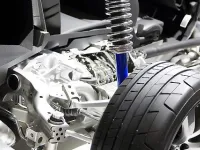
Front wheels not only support a large portion of the vehicle’s weight, but they are also responsible for steering, braking, and absorbing most of the road shocks. Ball joints, tie rods, steering arms, and bushings in the suspension system wear gradually over time.
When these parts reach an advanced degree of wear, play appears in the steering system. Initially this play may be invisible, but over time it becomes more evident and affects the wheel geometry. Once the geometry changes, the steering wheel can no longer stay centered when the wheels are straight.
Importance of preventive maintenance
It is essential to perform periodic checks of the steering and suspension system. The quicker you respond to the first signs of wear, the more you avoid cascading damage to other components. A worn part that is not replaced in time will force other components to operate under abnormal conditions, accelerating overall wear of the system.
Neglecting these checks can lead to much higher repair costs in the long term, as several parts may need replacement at once.

Sudden damage to components
Although less common than normal wear, sudden damage to steering or suspension components can have immediate and severe effects on alignment.
Common causes of damage
The most frequent situations that lead to sudden damage include:
- Hitting the curb at speed
- Driving over deep potholes without slowing down
- Impact with fixed objects on the road
- Aggressive driving on rough roads
When a component is already worn, even a shock that normally would not cause damage can be enough to ruin it. For example, a ball joint with play that hits a sudden bump can fail instantly.
Effects on geometry
Damage to any vital component of the steering system immediately affects the geometry of the front end. Toe, camber, and caster—the three fundamental angles of wheel geometry—change instantly. This modification makes the steering wheel no longer centered when the wheels are straight, and the car pulls to one side. Repairing these issues usually requires replacing the damaged parts entirely, not just repairing them.

Damage caused by an accident
Car accidents, especially frontal or side impacts, are a major cause of alignment problems.
Impact of accidents on the steering system
Even a seemingly minor accident can cause significant damage to steering and suspension components. The forces involved in an impact are often strong enough to deform structural elements such as the rim, knuckle, or suspension arms. After an accident, it is essential to perform a complete inspection of the entire system, not just the visibly damaged parts. Often there are hidden damages that are not obvious at first glance but will cause problems in the long term.
Importance of new parts
In accident-related damage, it is usually safer and more cost-effective in the long term to replace components with new parts rather than attempting repairs. Repaired parts may no longer have the same strength and safety characteristics as the originals.
Changes in ride height
Every car has steering and suspension settings calibrated for the standard ride height it left the factory with.
Effects of lift or lowering kits
When you install a lift kit (for off-road vehicles) or a lowering kit (for sport vehicles), you completely change the suspension geometry. This modification automatically affects:
- toe angle
- camber angle
- caster angle
- the vehicle’s roll center If a proper alignment is not performed after installing such a kit, the steering wheel will be off-center, and tire wear will be uneven and accelerated.
Need for alignment after modifications
Any change to ride height must be followed by a complete wheel alignment. A competent professional will not allow the vehicle to leave the workshop without performing this operation. Also, it is recommended to perform a wheel alignment after any suspension or steering system intervention, including tire changes. A correct alignment not only resolves the off-center steering issue but also extends tire life and improves the vehicle’s dynamic behavior.
How to fix the steering wheel off-center issue
Correctly solving the problem requires a methodical, multi-step approach.
Diagnosing the root cause
Before performing a wheel alignment, you must identify and remedy the cause that led to the misalignment. This includes:
- Visual inspection of all steering and suspension components
- Testing components to identify play
- Checking tire condition to identify uneven wear
- Inspecting structural elements for deformations
Replacing defective parts
After identifying worn or damaged components, they must be replaced with quality new parts. It is not advisable to economize on steering components, as they directly affect road safety.
Wheel alignment
After all defective parts have been replaced, you can proceed with wheel alignment. This operation must be performed on specialized equipment that precisely measures all wheel geometry angles and adjusts them according to the manufacturer's specifications. If after alignment the steering wheel remains off-center, it means either the root cause was not fully corrected, or there are other problems that were not identified initially. In this case, a thorough re-check is necessary.
Why proper alignment matters
A correct wheel alignment is not only a matter of aesthetics or comfort. It has direct implications for:
- Safety: A vehicle with misaligned wheels can behave unpredictably in emergencies
- Tire wear: Misalignment can reduce tire life by up to 50%
- Fuel economy: Misaligned wheels increase rolling resistance and fuel consumption
- Comfort: Vibrations and drift make driving tiring
In conclusion, an off-center steering wheel is always a sign of a problem that requires attention. Do not ignore this signal and do not try to fix it simply by adjusting the steering position. Identify the real cause, fix it, and then perform a correct alignment. Only then will you ensure the safety, comfort, and longevity of your vehicle's components.