- The steering rack converts wheel turns into linear motion of the front wheels.
- Road conditions in Romania accelerate wear on the rack, tie rods, pump, and seals.
- Stiff steering at low speeds indicates rack wear.
- Power steering fluid leaks signal cracks or damaged seals.
The steering rack is one of the vital components of any vehicle, responsible for transmitting steering commands from the steering wheel to the front wheels. Problems in this system not only affect driving comfort but can also threaten your safety and that of your passengers. Early recognition of symptoms can prevent serious accidents and costly repairs.
Every road you travel, every pothole or bump is transmitted through the suspension, the tie rods, and ultimately to the steering rack, gradually wearing out the components of this complex system.
What is the steering rack and how it works
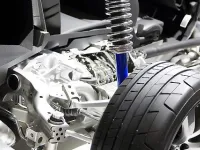
The steering rack is the central element of the steering system, tasked with transforming the circular motions of the steering wheel into linear movements of the front wheels. This transformation is achieved via a pinion gear working in tandem with a rack.
Types of steering racks
There are several types of steering racks, each with its own characteristics:
- Mechanical steering rack — the simplest variant, without assistance
- Hydraulic steering rack — uses oil pressure for assist
- Electro-hydraulic steering rack — combines hydraulic control with electronic management
- Electrically assisted steering — uses an electric motor for assistance
Positioned between the two front wheels, the steering rack is connected to them via the steering tie rods and tie rod ends.
Main causes of steering rack failures
The steering system endures heavy loads on every trip. Power steering is affected by every pothole, bump, or cobbled road. Under the road infrastructure conditions in Romania, wear on these components is accelerated.
The complexity of the steering system means faults can appear in several components:
- The steering rack itself
- Steering tie rods
- Power steering pump
- Tie rod ends
- Rack boots
- Power steering filter
- Bearings and bushings
- Steering wheel components
Most of the time, the pinion gear is the first element to wear and seize, leading to the appearance of power steering fluid leaks.
Main symptoms of a faulty steering rack
1. Stiff steering and heavy steering to maneuver
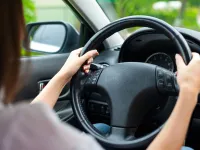
This is one of the most common and early symptoms of problems with the steering rack. The steering wheel becomes progressively harder to turn, requiring significant physical effort, especially at low speeds or during parking.
Possible causes:
- Loss of hydraulic pressure in the system
- Overheating of the steering rack
- Wear of the power steering pump
- Partial blockage of the pinion gear
This symptom should not be ignored, as it can lead to a complete loss of vehicle control in critical situations.

2. Power steering fluid leaks
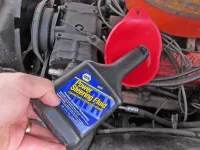
Power steering fluid leaks are a clear indicator of problems at the steering rack level. The hydraulic system is closed, so any drop in fluid level signals a crack or a damaged seal.
How to identify power steering fluid:
- Characteristic color: pink, red, or red-brown
- Distinct, sharp odor
- Oily consistency
- Location: usually under the front of the car
Components that can be affected:
- Seals of the steering rack
- Rack boots
- Power steering hoses
- Connections to the power steering pump
3. Squealing noises when turning the steering wheel
Metallic squeals or grinding noises when turning indicate insufficient lubrication of the moving components in the steering rack.
Characteristics of the sound:
- Occurs mainly when turning the wheel
- Intensifies when going over bumps
- More pronounced at low speeds
- May be accompanied by vibrations in the steering wheel
Technical causes:
- Direct contact between metal surfaces
- Lack of lubrication of the rack
- Wear of bearings in the steering rack
- Damage to the rack teeth
4. Burnt oil smell
Although less common, a burnt power steering fluid odor is a major warning sign. The overheated fluid develops a sharp odor far stronger than normal.
When this symptom appears:
- During prolonged driving
- After repeated parking maneuvers
- In heavy traffic with many steering turns
- When the steering rack operates without adequate lubrication
Recommended action: At the first sign of burnt oil smell, stop the vehicle immediately and contact a service. Continuing to drive can lead to complete steering rack failure.
Other symptoms to monitor
Uneven pulling
The car pulls to one side, even on straight and smooth roads. This symptom can indicate:
- Uneven wear of the rack
- Problems with one of the tie rods
- Deformation of the steering rack
Vibrations amplified in the steering wheel
Potholes and bumps are felt much more intensely in the steering wheel, indicating poor damping of impulses in the steering rack.
Shocks and jerks in turns
During cornering, especially at higher speeds, you may experience unexpected shocks transmitted through the steering wheel, a sign of excessive play in the steering rack.

Repair options and recommendations
When a steering rack fault is confirmed, you have several options:
Reconditioning the steering rack
Advantages:
- Lower cost than replacement
- Preservation of original compatible components
- Economic solution for older vehicles
Disadvantages:
- Lower durability
- Possibility of recurring problems
- Not all faults can be repaired
Full replacement
Advantages:
- Maximum reliability
- Warranty on the new part
- Optimal long-term performance
Disadvantages:
- Higher cost
- Longer installation time
Used steering rack
This option is not recommended, because:
- Unknown history of the part
- Higher risk of quick failures
- Lack of warranty
- Possible compatibility issues
The importance of quick intervention
Ignoring symptoms of a faulty steering rack can have serious consequences:
- Accident risk — loss of steering control
- Secondary damage — premature wear of tires and suspension
- Increased costs — damage to other steering system components
- Safety hazard — compromising vehicle stability
Therefore, at the first sign of trouble, consult a specialized mechanic to ensure your safety and that of other road users.
Photo sources: amazon.com, lifewire.com, blog.cardash.com