- Best of the Best honors engines dominating 20 years of Engine of the Year.
- Notable non-top: BMW’s 2.8L I6 from the E36 328i Sport.
- Places 12–9: Fiat TwinAir, BMW Valvetronic V8, Honda IMA, Toyota Aygo.
- Place 8–7: Mazda Renesis Rotary 1.3L, BMW 3.0L twin-turbo.
In 2018, the automotive industry celebrated two decades since the International Engine of the Year Awards were established. To mark this special milestone, the organizers created the ‘Best of the Best’ category, an award meant to recognize and celebrate the most remarkable engines that have dominated the rankings over the past twenty years.
Criteria for Selection and Ranking Challenges
Determining the best engine in the world is a complex task, given the diversity of technologies and applications in the automotive industry. Although there are hundreds of engines that deserve recognition, only a few can reach the top of the rankings. A notable example of an engine that did not make the top is the renowned 2.8-liter inline-six BMW engine, fitted to the legendary E36 328i Sport — a unit appreciated for efficiency, reliability, and performance.
Places 10–12: trio of exceptional engines
Fiat 875cc TwinAir
A compact two-cylinder engine that demonstrates that efficiency can come in small packages, being an innovative solution for urban mobility.
BMW 4.4-liter Valvetronic
A sophisticated V8 that incorporates Valvetronic technology, allowing precise control of intake without the traditional throttle, optimizing fuel consumption and engine response.
Honda 1.0-liter IMA
The Integrated Motor Assist (IMA) system from Honda, which combines a small gasoline engine with electric assistance, foreshadowing the hybrid era.
Place 9: Toyota Aygo 1.0-liter
In ninth place we find the 1.0-liter three-cylinder engine used by Toyota on the Aygo. This unit demonstrates the Japanese ability to extract decent performance from a small displacement, making it ideal for urban traffic.
Place 8: Mazda Renesis Rotary 1.3-liter
The Renesis rotary engine represents the latest evolution of Mazda’s famous Wankel engine. Introduced in 2003 on the RX-8, this 1.3-liter engine could produce over 200 hp, offering a unique driving experience due to its distinct operation compared with conventional piston engines. Unfortunately, production of this engine type was stopped, marking the end of an era in Mazda’s history.

Unique technical characteristics
The Wankel engine is distinguished by using a triangular rotor instead of pistons, resulting in smoother operation and an exceptional power-to-weight ratio. While it had clear advantages in terms of performance and compactness, fuel consumption and emissions posed challenges that led to abandoning the technology.
Place 7: BMW 3.0-liter inline-six twin-turbo
This 3.0-liter inline-six engine marked BMW’s dramatic return to turbocharging technology. The unit was so successful that it won the Engine of the Year award in 2007 and again in 2008, setting new standards for performance engines.
Technology and performance
The combination of an inline-six configuration and twin turbochargers provides an excellent balance of power, torque, and efficiency. This engine became the foundation for many high-performance BMW models in its lineup.
Place 6: BMW i8 1.5-liter hybrid
At sixth place lies the BMW i8’s hybrid propulsion system, which combines a 1.5-liter gasoline engine with an electric motor. This innovative configuration earned the Engine of the Year award in 2015, demonstrating the future of efficient sports mobility.
Innovation in the sport segment
The i8 proved that sports cars can be efficient, blending the performance of a supercar with the fuel economy of a conventional car. The internal combustion engine drives the rear wheels, while the electric motor acts on the front axle, creating intelligent all-wheel drive.
Place 5: Toyota Prius 1.5-liter Hybrid Synergy Drive
The Toyota Prius with its 1.5-liter Hybrid Synergy Drive takes fifth place. This engine revolutionized the auto market by popularizing hybrid technology and became extremely popular among ride-sharing services thanks to its reliability and exceptional efficiency.
Industry impact
The Prius was the first mass-market hybrid car and demonstrated the commercial viability of this technology. Its propulsion system intelligently combines the gasoline engine with one or more electric motors, optimizing fuel consumption based on driving conditions.
Place 4: Volkswagen 1.4-liter TSI twin-charger
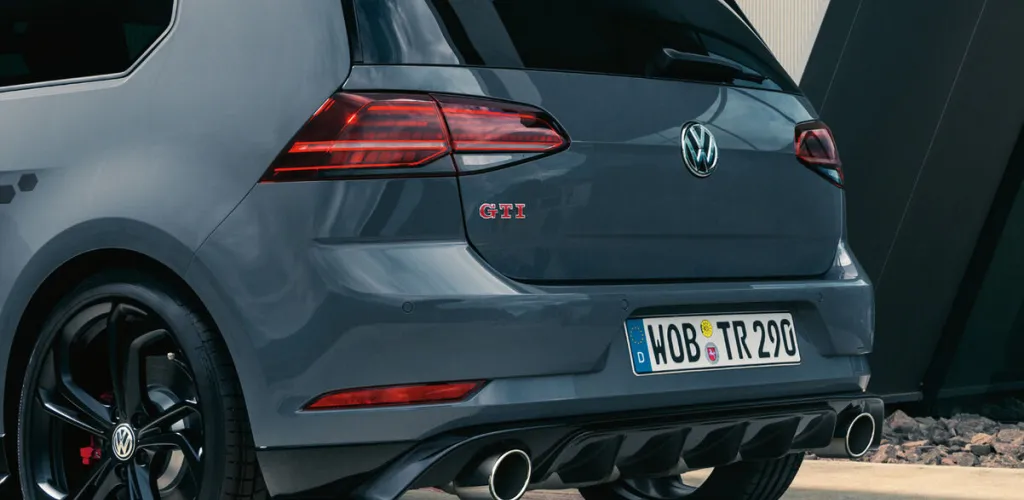
The Germans at Volkswagen take fourth with the 1.4-liter four-cylinder engine, equipped with both a turbocharger and a supercharger (twin-charger). Although initially used in the VW Polo GTI, this engine delivers remarkable performance for its capacity.
Twin-charger technology
The combination of a supercharger (to remove lag at low revs) and a turbocharger (for power at high revs) practically eliminates the drawbacks of traditional forced induction systems, delivering instant response and steady power across the entire rev range.
Place 3: BMW M3 E46 3.2-liter inline-six
On the podium, third place is occupied by the BMW M3 E46’s 3.2-liter inline-six. This engine components long been considered one of the best for a sports car, setting performance and refinement standards that remain relevant today.
A benchmark in the world of sports engines
With roughly 343 hp and a rev range extending to 8,000 rpm, the S54 engine in the M3 E46 delivers a pure and captivating driving experience. The inline configuration ensures perfect balance, and the high-rev sound remains unmistakable.
Place 2: Ford EcoBoost 1.0-liter
Silver goes to the Americans at Ford with the 1.0-liter three-cylinder EcoBoost, introduced in 2013. This small but efficient engine proves you can have both performance and fuel economy in a compact package.
Efficiency and versatility
The Ford EcoBoost 1.0-liter is available across multiple models, from Fiesta and Focus to Mondeo, delivering power ranging roughly from 100 to 140 hp depending on variant. Direct injection and turbocharging enable this three-cylinder engine to offer performance similar to a 1.6-liter four-cylinder naturally aspirated engine, but with significantly lower fuel consumption.
Place 1: Ferrari V8 3.9-liter twin-turbo
The overall winner is Ferrari’s 3.9-liter twin-turbo V8, considered the pinnacle of automotive engineering. This engine powers all Ferrari V8 models and peaks in the 488 Pista version.
Italian excellence
Ferrari’s 3.9-liter V8 is a technical masterpiece that combines brute power (over 700 hp in some versions), impressive torque, and an unmistakable sound. The two turbochargers are placed within the V to reduce inertia and improve response, while advanced engine-management technologies ensure consistent performance even in extreme conditions.
Unmatched performance
In the 488 Pista, this engine delivers 720 hp and 770 Nm of torque, accelerating from 0 to 100 km/h in just 2.85 seconds. But it’s not only about numbers—the way this engine delivers power, the linearity of response, and its distinctive sound place it in a class of its own.
Conclusion
This ranking demonstrates the extraordinary diversity of the automotive industry and the fact that excellence can come in many forms—from small three-cylinder engines to high-performance V8s. Each of these engines has contributed to the evolution of automotive technology, whether through innovation, raw performance, or remarkable efficiency. In the next twenty years, electrification will likely fundamentally change these rankings, but the legacy of these internal combustion engines will remain forever in the history of the automobile.