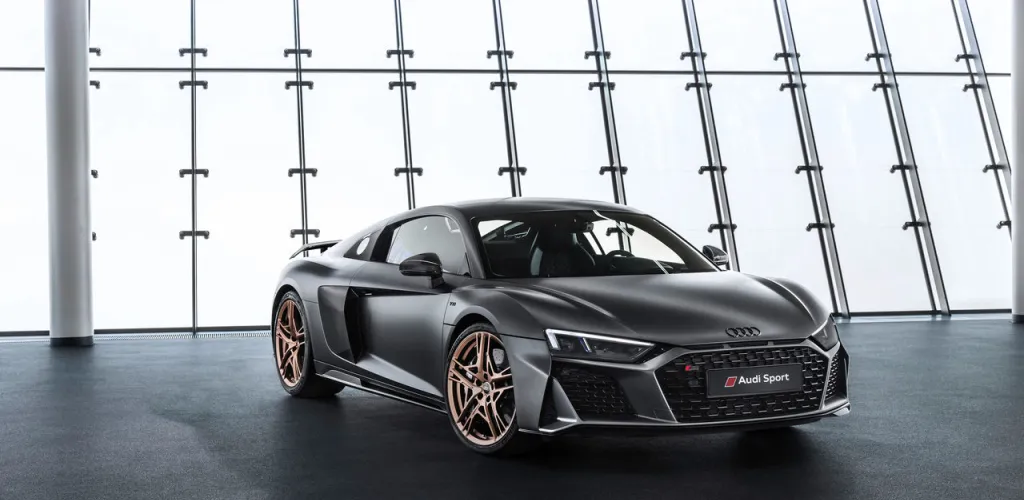
- Audi’s best engines mix turbo-era legends with modern V8s and diesels
- 2.2L 5-cylinder turbo in RS2 Avant produces 315 hp and 410 Nm
- 4.2L V8 debuted in 1988, later RS4 twin-turbo with intercoolers
- 3.0 TDI: from 204 to 320 hp, 650 Nm, bi-turbo, high-pressure common-rail
Audi has established itself over decades as one of the premium car manufacturers that know how to build memorable engines. From the early turbocharged powerplants of the ’80s to modern V10 units, the German brand has consistently shown that technical excellence and reliability can go hand in hand with sporty performance. Behind every iconic model—from Quattro to RS6, from R8 to RS3—there is an engine that has marked the history of motoring.
Although there have been missteps (the early TFSI generations had their issues), Audi’s engine lineup remains one of the most impressive in the industry. The following seven powerplants represent the pinnacle of the brand’s technical and engineering evolution with four rings.
7. 2.2-Liter 5-Cylinder Turbo Engine – Quattro Legend
Technical specifications and evolution
With a displacement of exactly 2,226 cm3, the engine used a KKK turbocharger and a Bosch K‑Jetronic mechanical injection system. In the RS2 Avant — developed together with Porsche — the engine delivered 315 hp at 6,500 rpm and a torque of 410 Nm available between 3,000 and 4,000 rpm. The cast-iron block and aluminum head with 20 valves provided a robust and efficient construction.
Over its career, the 2.2 turbo powered models such as S2, S4 (B3), S6 (C4), Audi 80 and 100. Naturally aspirated versions were also available for base models, but the real magic happened when the turbocharger kicked in. The distinctive sound of the five cylinders and the strong torque delivery made this engine a legend among enthusiasts.
6. 4.2-Liter V8 Engine – The German Monster
Cutting-Edge Technology for Its Era
The V8 4.2-liter engine debuted in 1988 in the Audi V8 and quickly set the benchmark for German luxury performance.
Early versions developed 250-280 hp, but the engine evolved constantly. The 40-valve system (5 per cylinder) was a technical rarity for its time. Later versions, such as the RS4 B7, received twin-turbochargers mounted in a V configuration with two separate intercoolers for each bank.
The engine was known for its remarkable flexibility — substantial torque available at low revs and a linear power delivery up to beyond 7,000 rpm in RS versions. Timing chains instead of belts, and dry-sump lubrication on RS variants, gave the 4.2 V8 a symbol-like durability in German engineering.
5. 3.0 TDI – Performance Diesel
Audi revolutionized diesel engine perception with the launch of the TDI lineup. The 3.0-liter V6, introduced in 2004, proved that a diesel can be as refined and capable as a petrol engine.
From 204 to 320 hp – Continuous Evolution
The first generation produced 204 hp thanks to a BorgWarner variable-geometry turbocharger. The common-rail system with pressures up to 2,000 bar ensured precise fuel atomization and reduced emissions. Over the years, through successive optimizations and the adoption of bi-turbo, power rose dramatically.
Modern versions in the Audi A7 and SQ5 offer up to 320 hp and 650 Nm of torque, available over an incredibly wide range — from 1,000 to 5,000 rpm. This trait makes daily driving quiet and relaxed, while overtaking becomes a simple press of the accelerator. Low consumption and extended range complete the package, making the 3.0 TDI the perfect choice for long distances.
4. 5.2-Litre FSI V10 – The Natural Symphony
Few automakers dared to build V10 engines for street cars. Audi took the concept from the Lamborghini Gallardo (which used a 5.0-liter V10) and adapted it to create one of its most memorable engines.

The Pure, Naturally-Aspirated Spirit
With a displacement of 5,204 cm3, the V10 FSI is a naturally aspirated engine that epitomizes engineering perfection. Unlike many modern turbo engines, this powerplant delivers a completely linear power delivery from 1,000 to 8,700 rpm (in the R8 V10 Plus).
Power ranges from 518 hp (early S6 and S8 variants) to 610 hp (R8 V10 Performance), with a torque of 540-560 Nm. The sound is absolutely spectacular — a piercing howl that grows with revs, culminating in a mechanical symphony at high revs. The FSI direct injection, variable valve timing on both camshafts, and individual throttle bodies for each cylinder ensure instant throttle response.
3. 2.5 TFSI 5-Cylinder Engine – The Renaissance of the Legend
Compact and Efficient Performance
With a displacement of 2,480 cm3, the engine uses a single centrally mounted turbocharger for optimal response. Power ranges from 340 hp (TT RS) to 400 hp (RS3 Sportback/Sedan, latest generation), with an impressive 480 Nm of torque available from just 1,700 rpm.
What makes this engine truly special is the combination of compact size and brute performance. Mounted on lightweight platforms such as TT RS and RS3, it propels these cars from 0 to 100 km/h in just 3.7-4.1 seconds. The distinctive five-cylinder sound — a unique blend between the growl of a four and the refinement of a six — adds an emotional dimension to the driving experience. Audi’s variable valve lift system on the intake cam and the electrically actuated turbo wastegate ensure a smooth power delivery and minimal lag.
2. 2.7 V6 Biturbo – Sporty Reliability
Sturdy Construction and High Potential
With a displacement of 2,671 cm3, the engine uses two KKK K03 turbochargers arranged in a V between the cylinder banks. In stock form, it develops 250-265 hp and 400 Nm of torque, but the interesting part begins here. Cast-iron block with reinforced threads, forged pistons and robust connecting rods allow substantial power increases with relatively simple modifications.
The tuning community values this engine for its ability to reach 400-450 hp with only ECU remapping, intake improvements, and larger turbochargers. With more serious investment in internal components, the engine can easily exceed 600 hp while maintaining good reliability. The cooling system is generously sized, and the design allows decent access for maintenance despite the tight engine bay.
1. The 5.0-Litre TFSI V10 – Absolute Supremacy
Uncompromising Power
At the top of this hierarchy sits the legendary 5.0-liter V10 from the RS6 C6 — an engine that redefined the performance wagon concept and remains one of the most sought-after Audi powerplants of all time.
With 5,000 cm3 and twin turbochargers mounted in a V between the banks, this engine develops 580 hp and a monstrous 650 Nm of torque. Compared with the naturally aspirated 5.2-liter V10, the turbo version offers a completely different character — the torque surge at low revs turns the RS6 into a four-wheel rocket.
The engine powers the RS6 Avant C6 (2008-2010), turning a spacious family wagon into a car capable of 0-100 km/h in 4.6 seconds and topping over 300 km/h with the limiter removed. The combination of quattro all-wheel drive, a six-speed Tiptronic automatic, and this brutal engine makes the RS6 C6 one of the fastest practical cars in history.
Why It Remains Legendary
Although Audi moved to a 4.0-liter twin-turbo V8 for later RS6 generations, many enthusiasts feel the V10 had a unique character that no V8 can replicate. The fuller sound, the power delivery, and the rarity of the V10 configuration keep it high on enthusiasts’ lists. It is an engine that perfectly encapsulates Audi’s philosophy: extreme performance hidden beneath the guise of a practical and discreet car.
Conclusion
These seven engines demonstrate Audi’s ability to innovate and continually perfect propulsion technology. From the legendary turbo five-cylinder that dominated world rallying to the refined naturally aspirated V10 that peaks above 8,000 rpm, each propeller contributed to building the German brand’s reputation.
The reliability, performance, and versatility of these engines have transformed Audi from a mere premium automaker into a symbol of engineering excellence. Whether we talk about the V6 diesel revolutionizing efficiency, or the twin-turbo V10 delivering supercar power in a family wagon, each engine on this list represents a remarkable technical achievement that continues to command respect from car enthusiasts worldwide.