- Redline marks the danger zone; exceeding it risks overheating and major engine damage.
- Manual transmissions use gear ratios; higher gears lower engine RPM for efficiency.
- Modern automatics protect engines by limiting idle and preventing revs toward redline.
- Diesel engines have lower redlines; gasoline engines tolerate higher revs.
Every engine has a redline marked on the tachometer, and exceeding this zone can cause serious engine damage. This red area is not merely a suggestion — it is a critical warning that can save your car’s engine from destruction.
Understanding this limit and how the transmission works in relation to engine speed is essential for every driver, especially for those who drive manual transmission cars.
What the red line on the tachometer represents
The red line on the tachometer marks the danger zone for engine RPM. When the tachometer needle enters this zone, the internal components of the engine — pistons, connecting rods, crankshaft — operate at the limit of their strength.
Exceeding this limit can lead to:
- Engine overheating
- Breaking of the connecting rods
- Piston seizure
- Damage to the crankshaft
- Complete engine failure
How the transmission system works
Main components
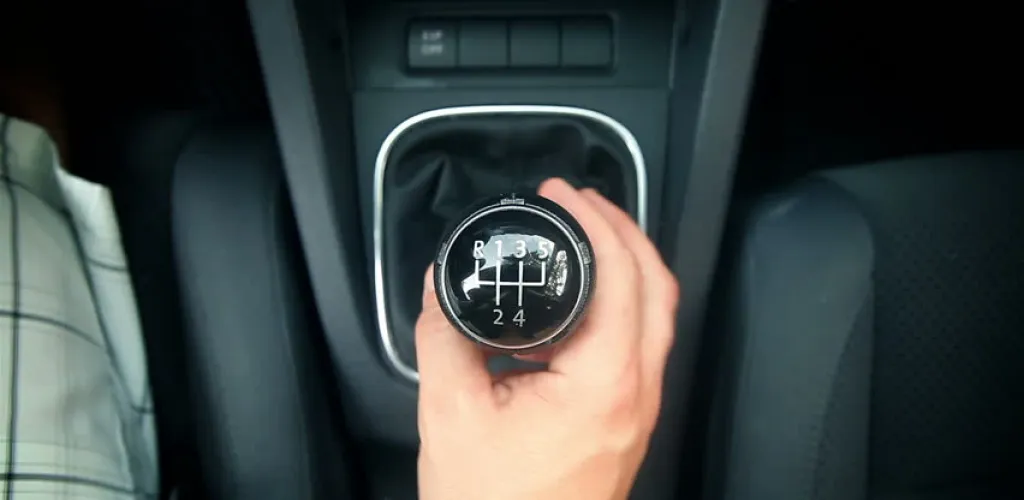
The gear shifter controls the lever that selects the gear in the gearbox, moving the gears inside the box to obtain the desired gear ratios.

Classic gearboxes have two main shafts:
- The primary shaft - must always rotate at the same speed as the engine (rpm)
- The secondary shaft - transmits power to the wheels through the differential and then through two planetary gears, one for each wheel
Gear ratios
In a five-speed manual transmission, the box has five different gear ratios, plus one for reverse.
First gear: Gear ratio ~4.05:1

- At 4.05 rotations of the input shaft, the output shaft turns once
- It requires the most power to overcome the friction with the ground
- Maximum torque for starting from a stop
Second gear: ~2.50:1 Third gear: ~1.60:1 Fourth gear: ~1.20:1 Fifth gear: ~1.00:1
For six- or more-speed gearboxes:
- Ratios drop below 1:1 (0.8:1, 0.7:1, 0.6:1)
- These are the “overdrive” gears for reduced consumption at high speeds
Reverse: Similar to first gear, ratio ~4:1
Engine protection and performance
Gasoline engines

Gasoline engines typically perform best as they approach the red line. Beyond this limit, the electronic system cuts acceleration to protect the engine from overexertion.
Modern protection systems
Automatic transmission cars have advanced protection systems:
- They limit idle speed to a maximum of 4,000 rpm
- Manufacturers consider it unnecessary and harmful to “rev up” the engine to the redline
- Electronic protection against overrevving
Differences between engine types
Diesel engines:
- Lower maximum RPM (4,000-5,500 rpm)
- Maximum torque at low RPM
- Redline starts earlier
Gasoline engines:
- Higher maximum RPM (6,000-8,000+ rpm)
- Maximum power at high RPM
- Better tolerance for high revs
Consequences of exceeding the redline
Immediate damage
- Overheating of moving components
- Piston seizure in cylinders
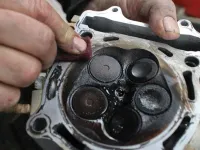
- Breaking of connecting rods due to excessive centrifugal forces
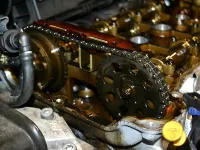
- Damage to valves and the camshaft
Long-term damage
- Premature wear of components
- Decreased performance
- Increased oil consumption
- Reduced engine life
Tips to protect the engine
For manual cars
- Constantly monitor the tachometer while driving
- Shift gears before the needle reaches the red zone
- Avoid abrupt accelerations from low RPM
- Do not keep the engine at high RPM for long
For automatic cars
- Let the transmission do its job — modern systems are optimized
- Avoid excessive kickdown in normal situations
- Use sport modes in moderation
Conclusion
Exceeding the redline on the tachometer is not mere decoration — it is a critical warning that can save your car’s engine from destruction. Respecting this limit, understanding transmission ratios, and using the gear selector correctly are essential for engine longevity.
Revving the engine can be fun, but the costs of major repairs far outweigh the momentary pleasure. A well-maintained engine and responsible driving will provide years of reliable operation and optimal performance.
Photo sources: yourmechanic.com, shutterstock.com, motor1.com, grimmermotors.co.nz