- Volvo introduced the first Check Engine indicator (MIL) in 1981 for safety.
- MIL/ECU monitors engine systems: fuel, ignition, intake, exhaust, emissions.
- OBD-II in the 1990s standardized fault codes, connector, and monitoring.
- Adoption reduced on-road stalls and boosted environmental protection.
In 1981, the automotive industry witnessed a historic moment when the Swedish manufacturer Volvo introduced a simple yet revolutionary innovation: the world’s first Check Engine indicator. This small warning light would become one of the most important safety and diagnostic tools in automotive history, radically changing how drivers and mechanics approach maintenance and repairs.
Volvo’s decision to implement this system was not accidental. The Swedish company was already renowned for its safety innovations, pioneering the three-point seatbelt in 1959. The introduction of the Check Engine indicator fit perfectly with the company’s philosophy of prioritizing safety and reliability.
Technical operation of the Check Engine light
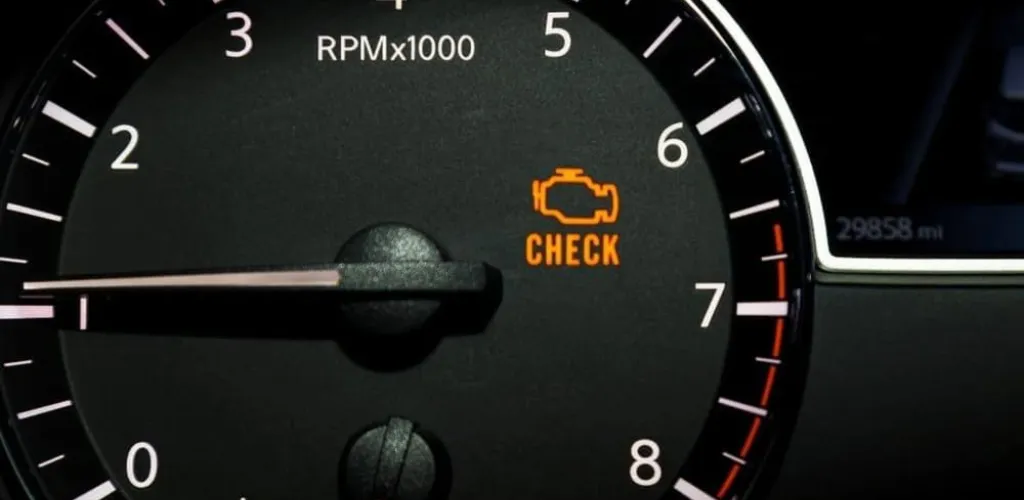
The Check Engine light, technically known as MIL (Malfunction Indicator Light), works in tandem with the vehicle’s ECU (Electronic Control Unit). This sophisticated electronic system monitors hundreds of engine and related systems parameters in real time.
Systems monitored by the Check Engine light
- Fuel system: fuel pump pressure, injectors and pressure regulation
- Ignition system: spark plugs, ignition coils and ignition timing advance
- Intake system: Mass Air Flow (MAF) sensor, Absolute Pressure (MAP) sensor
- Exhaust system: Catalytic converter, oxygen sensors (lambda sensors) and the EGR system
- Emissions control system: EVAP (Evaporative Emission Control System)
Evolution of OBD technology and standardization
The first generation On-Board Diagnostics (OBD-I) systems implemented by Volvo were relatively rudimentary compared with current standards. They could detect major engine problems and display simple codes through the intermittent Check Engine light.
The real revolution came in the 1990s with the introduction of OBD-II, which became mandatory in the United States for all vehicles manufactured after 1996. This new standard brought:
- Standardized fault codes: The P0XXX codes allow precise identification of problems
- Standard connector: 16-pin trapezoidal connector located within 60 cm of the steering wheel
- Continuous monitoring: Real-time monitoring of critical emissions-related systems
- Universal compatibility: Any diagnostic device can read the codes regardless of vehicle make
Impact on the auto industry and the environment
The introduction of the Check Engine indicator by Volvo had broad consequences for the entire automotive industry. This innovation forced manufacturers to invest heavily in the development of electronic monitoring systems, accelerating the digitization of cars.
Benefits for road safety
Statistics show that widespread adoption of OBD systems significantly reduced the number of unexpected engine stalls on the road. Drivers are warned in advance about issues that develop gradually, allowing them to schedule repairs before the fault becomes critical.

Impact on environmental protection
A crucial aspect of the Check Engine indicator is its role in reducing pollution. The system detects catalytic converter faults, EVAP leaks, or lambda sensor problems that could lead to excessive emissions. EPA studies show that vehicles equipped with functional OBD systems emit 20-30% fewer pollutants than vehicles with undetected faults.
Correct procedure when the indicator lights up
Immediate checks required
- Assess the vehicle’s behavior: Observe whether the engine runs roughly, consumes more fuel or loses power
- Check the fuel cap: A loose or faulty seal can trigger the EVAP system
- Check fluid levels: Engine oil, coolant and brake fluid
- Monitor engine temperature: Overheating can cause severe damage
When is an immediate stop necessary
A flashing Check Engine light indicates a serious problem that requires an immediate shutdown of the engine. This may indicate:
- Severe misfires that can damage the catalytic converter
- Lubrication system issues
- Engine overheating
Professional diagnostics and fault codes
Correct interpretation of fault codes requires specialized technical knowledge. A code P0171 (system too lean) can have multiple causes: air leaks in the intake, low fuel pressure, clogged injectors, or a defective MAF sensor.
Main OBD-II code categories
- P0XXX: Generic codes for engine and transmission
- P1XXX: Manufacturer-specific codes
- P2XXX: Codes for injectors, fuel system and intake
- P3XXX: Codes for the ignition system
The future of the Check Engine indicator in the electric mobility era
The transition to electric vehicles does not remove the need for monitoring systems, but transforms them. Modern electric vehicles use similar systems to monitor:

- Electric propulsion system: Electric motors, inverters and controllers
- Cooling system: Lithium-ion batteries require precise thermal management
- Charging system: Monitoring the charging process and the battery’s state
- Safety systems: Airbags, ABS, and ADAS
Volvo’s innovation legacy
Four decades after introducing the first Check Engine indicator, this Swedish innovation continues to save lives, protect the environment and save billions in avoided repairs. From a simple warning light, the system has evolved into a sophisticated diagnostic platform that allows mechanics to identify problems with a precision of up to 95%.
Volvo earned its place in automotive history not only for this innovation but for its vision of making safety and sustainability priorities in vehicle design. The Check Engine indicator remains one of the most important contributions to the evolution of automotive technology, showing that sometimes the biggest revolutions begin with the simplest ideas.