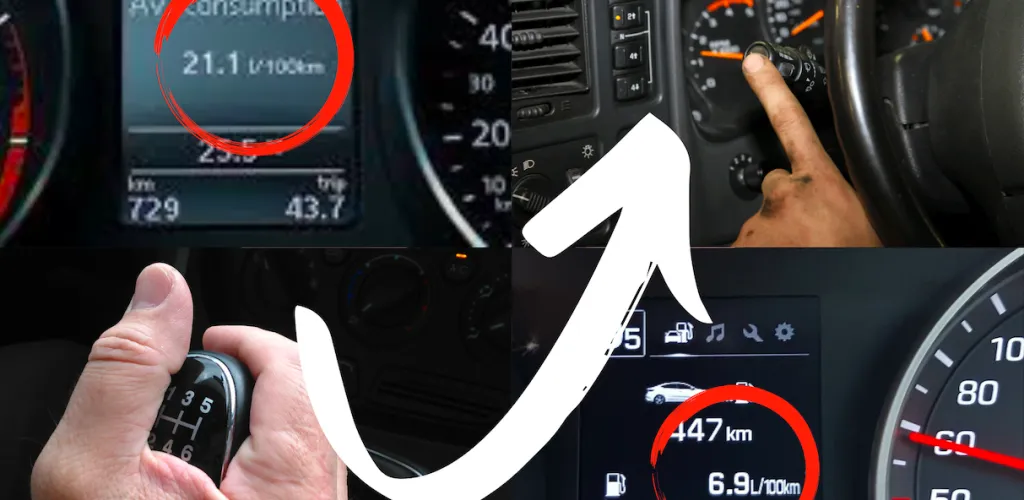
- Gasoline engines: shift around 1800-2000 RPM to maximize efficiency.
- Diesel engines: shift around 2000-2200 RPM to develop torque and avoid lugging.
- For gasoline engines (1.0-2.0L): 1-2 at 1800, 2-3 1800-1900, 3-4 1900-2000, 4-5 at 2000.
- Apply these tips mainly to manuals; automatics shift automatically.
Reducing fuel consumption remains a constant concern for most drivers in Romania, especially after fuel prices reached record levels. While prices have eased slightly from their yearly peak, the cost of owning and operating a car remains high, and optimizing fuel use becomes essential.
Less known to many drivers is the fact that the correct way to shift gears can significantly reduce fuel consumption. By applying the right techniques, you will notice not only savings at the pump but also a longer vehicle life by reducing wear on the transmission and other engine components.
Fundamental principles of gear shifting
Differences between manual and automatic transmissions
These recommendations are primarily aimed at drivers of manual transmission vehicles. For cars with automatic gearboxes, the system handles shifting automatically based on throttle input, and the driver can influence consumption only indirectly by maintaining a steady and moderate acceleration.
Gasoline vs diesel engine specifics
There are important differences between gasoline and diesel engines regarding optimal shifting RPMs:
Gasoline engines:
- Optimal shift at 1800-2000 RPM
- Quicker response at low revs
- Torque available across a wider range of revs
Diesel engines:
- Optimal shift at 2000-2200 RPM
- Requires slightly higher revs to develop peak torque
- Risk of engine lugging if shifted too early
Optimal RPMs for gear changes
Recommendations from specialists
Experienced mechanics and auto professionals are united: the speed should be shifted as quickly as possible, without compromising engine operation. The faster you shift, the less stress on the system and the lower the fuel consumption.

Practical guide for each engine type
For gasoline engines (1.0-2.0L):
- 1st → 2nd: at around 1800 RPM
- 2nd → 3rd: at 1800-1900 RPM
- 3rd → 4th: at 1900-2000 RPM
- 4th → 5th: at 2000 RPM
For diesel engines (1.4-2.0L):
- 1st → 2nd: at around 2000 RPM
- 2nd → 3rd: at 2000-2100 RPM
- 3rd → 4th: at 2100-2200 RPM
- 4th → 5th: at 2200 RPM
Myths debunked about gear shifting
The old misconception
In the past, when cars were more rudimentary, drivers tended to rev the engine hard before shifting, fearing the engine would stall. This practice is completely outdated on modern vehicles.
Modern intelligent systems
Most contemporary vehicles are equipped with:
- Gear shift indicators on the instrument cluster
- Optimized engine management systems
- Sensors that detect the optimal moment to shift
Advanced techniques for reducing consumption
The principle of accelerating in higher gears
It is far more efficient to accelerate in higher gears than in lower ones. Although starting will be slower, acceleration will be:
- Smoother for the engine
- More fuel-efficient
- Less demanding on components
Adapting to road conditions
Even when the goal is to reduce consumption, gear shifting must be adapted to:
- Traffic conditions
- Road type (urban, rural, highway)
- Vehicle load
- Weather conditions
Indicators that the engine is requesting a gear change
Auditory signals
The engine emits characteristic sounds when it needs a gear change:
- Constant revs without additional acceleration
- The sound becomes sharper
- Vibrations in the pedal area intensify
Instrument cluster indicators
- The RPM contour shows the optimal zone
- The gear change indicator (if present)
- The on-board computer displays rising instantaneous fuel consumption
Benefits of correct gear shifting
Economic advantages
- Fuel reduction of 10-15% through optimal shifting
- Lower wear on transmission components
- Longer clutch life
- Reduced maintenance costs
Mechanical advantages
- Engine protection by avoiding over-revving
- Optimal cooling system operation
- Lower tailpipe emissions
- Improved driving comfort
Conclusion
Shifting gears at the optimal RPMs (1800-2200 RPM depending on engine type) is not just a driving technique but an effective method to reduce fuel consumption and protect the vehicle. By adopting a defensive driving style and staying attentive to the signals the engine provides, you will notice significant improvements in fuel economy and a more enjoyable driving experience.
Note that each vehicle has its own peculiarities, and experience and listening to the engine remain key elements in optimizing fuel consumption through the correct gear-shifting technique.