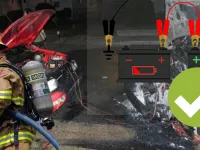
- Parasitic drains drain the battery after the engine is off, possibly overnight
- First check battery condition; batteries last about 5–6 years and may fail earlier
- If battery is fine, test the alternator; faults cause insufficient charging or internal drains
- Normal loads include ECU memories, clock, and essential systems
Parasitic drains are one of the most frequent electrical problems drivers face: you wake up in the morning and the car won’t start, even though it ran fine the night before. This situation not only disrupts your plans but can also affect your wallet by shortening the battery’s life.
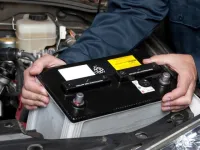
A parasitic drain is any electrical component that continues to draw energy from the car battery [battery] even after the engine is off and the key is removed. Normally, certain systems need to stay active to preserve settings (radio, clock, onboard computer), but their current draw should be minimal.
What are parasitic drains and how they occur
When the engine is off, the alternator no longer functions and cannot recharge the battery. In this situation, any component that consumes energy in excess will gradually discharge the battery. If the draw is large, the battery can be completely discharged overnight.
Even in cases where the battery does not discharge completely and the car starts the next day, repeated deep discharge cycles will significantly shorten the battery’s life, forcing you to replace it prematurely.
The problem becomes even more inconvenient when a discharged battery prevents you from starting the car, in which case you’ll need external help for jump-starting or recharging the battery.
First check — Battery condition
Before hunting for parasitic drains, it’s essential to verify the battery’s condition. This is a consumable part with a life expectancy of about 5-6 years, depending on:
- Frequency of car use
- Storage and maintenance conditions
- Battery quality
- Climatic conditions in your area
A battery near the end of its life may no longer hold the charge overnight, even if there are no issues in the electrical circuit.

Testing the battery at a specialized auto service or at an auto parts store is the logical first step. If the battery is fine, then the problem lies elsewhere.
Battery replacement cost
Replacing the battery is a simple operation that any driver can perform without special equipment. Costs range from 400 to 2000 RON, depending on:
- Type and size of the car
- Required battery capacity
- Brand and quality of the battery chosen
- Technology used (conventional, AGM, EFB)
Checking the alternator
If the battery is in good condition, the next step is to test the alternator. It should properly charge the battery when the engine runs. A faulty alternator can cause two types of problems:
Insufficient charging: The alternator does not produce enough energy to fully recharge the battery while driving.
Internal drains: A defective diode in the alternator can create a closed circuit that rapidly drains the battery when the engine is off. This problem must be resolved immediately to avoid battery damage.
Normal consumption vs. parasitic consumption
It’s important to understand that certain systems must consume energy even when the car is off:
Normal consumption
- On-board computer and ECU memories
- Dashboard clock
- Radio and multimedia settings
- Alarm systems
- Key fob receiver
Normal consumption: 0.05-0.1 amps, allowing the car to be left off for up to two weeks.
Parasitic consumption that is problematic
- Interior/exterior lights left on
- Aftermarket equipment installed incorrectly
- Relays stuck in the closed position
- Issues with electronic modules
Parasitic consumption: over 1 amp, can discharge the battery in a few hours.
Identifying parasitic drains
Tracking down the source of the problem is done by elimination, starting with simple checks:
Quick visual checks
- Interior lighting: check that all interior lights are off
- Trunk light: ensure it goes off when you close the trunk
- Dashboard illumination: check that the lighting switches are in the correct position
- Aftermarket equipment: radios, amplifiers, navigation systems installed recently
Testing with a multimeter
For accurate diagnostics you need:
- Multimeter capable of measuring up to 20 amps
- Car manual/service manual for wiring diagrams
- Knowledge of fuse positions and functions
Testing procedure:
- Turn off the engine and remove the key from the ignition
- Wait 15-30 minutes for all systems to enter standby
- Disconnect the negative battery cable
- Connect the multimeter in series between the negative cable and the battery terminal
- Measure the total draw
- Remove fuses one by one to identify the problematic circuit
Consequences of battery discharge
When the battery is fully discharged, you’ll not only need help to start the car, but you’ll also lose:
- Radio settings
- The correct time on the dash clock
- Custom onboard computer settings
- Access codes for security systems
Therefore, it is important to promptly resolve the issue of parasitic drains, not just recharge the battery and hope it won’t happen again.
Preventive tips
- Regularly check that all lights are off when you leave the car
- Have aftermarket equipment installed only at specialized service centers
- Test the battery annually, especially after 3-4 years of use
- In cold periods, check the battery condition more often
- Use the car regularly — long-term parking damages the battery
Identifying and remedying parasitic drains is essential for maintaining a healthy electrical system and avoiding morning surprises when the car won’t start.