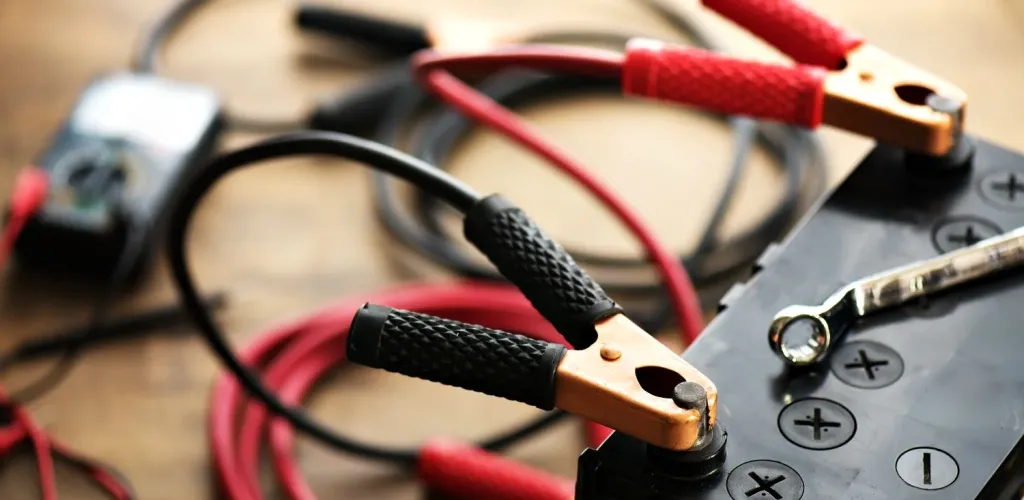
- The battery powers starting and electrical systems; the alternator recharges it.
- The starter draws 200-400 amps to start the engine.
- Typical battery life is 4-5 years; harsh conditions can drop to 3.
- Short trips, inactivity, parasitic loads, and extreme temperatures cause discharge.
The car battery is the heart of the vehicle’s electrical system. Without it, all electronic systems—starting, lighting, and comfort features—become useless. Although it is a robust component, the battery is a consumable part that requires periodic replacement. Understanding how it works and how to intervene in case of a fault can save you from uncomfortable situations.
Role and operation of the car battery
The battery performs several essential roles in the operation of a modern vehicle. Its primary function is to supply the electrical current required by the starter motor to start the engine—a process that consumes a significant amount of energy in a very short time. When starting the engine, the starter can draw between 200-400 amps, depending on the engine type and size.
Once the engine is running, the battery continues to power all electrical systems of the vehicle: lights, audio system, climate control, onboard computers, and sensors. While driving, the alternator takes on the role of the main power source, generating current for both active loads and for recharging the battery. A functional alternator can produce between 13.8-14.4 volts, keeping the battery continually charged.
The battery works on the principle of electrochemical reactions between lead plates and diluted sulfuric acid. This process is reversible—the battery discharges when supplying energy and recharges when receiving current from the alternator.
Cauzele principale ale epuizării bateriei
Natural wear and aging
The most common reason a battery dies is natural wear. A car battery has an average lifespan of 4-5 years, but in harsh operating conditions this period can drop to 3 years. As the battery ages, its ability to hold a charge declines gradually, and the internal resistance increases, reducing charging and discharging efficiency.
Long periods of inactivity
Even when the car is not in use, the battery continues to discharge gradually. Onboard computers, alarm systems, and other standby loads continuously consume energy, a phenomenon known as parasitic discharge. A car left unused can have a completely discharged battery in 2-3 weeks, depending on its age.
Short trips and frequent driving
Trips over very short distances (under 10 km) are harmful for the battery. When starting a cold engine, the battery consumes a large amount of energy, and during a short trip the alternator does not have enough time to fully recharge the battery. Repeating this cycle leads to gradual battery discharge.
Loads left on
Leaving interior lights, headlights, or other loads on is a common cause of battery discharge. Even a small draw left on overnight can discharge the battery enough to prevent the engine from starting in the morning.
Extreme weather conditions
Extreme temperatures significantly affect battery performance. At temperatures below 0°C, battery capacity can drop by up to 35%, and engine oil becomes more viscous, requiring more energy to start. In summer, at temperatures above 35°C, chemical reactions speed up, leading to electrolyte evaporation and degradation of the internal plates.
Electrical system problems
A defective alternator that doesn’t generate enough current, a faulty voltage regulator, or current leaks in the electrical system can lead to premature battery discharge. Corrosion on the battery terminals also increases resistance and reduces charging efficiency.
Cum să pornești mașina cu bateria descărcată
Jump-start method (cables)
This is the fastest way to start a car with a dead battery and requires only a set of jump-start cables and another car with a functioning battery. Jump-start cables should have a large cross-section (minimum 25 mm²) and sturdy clamps.
Steps for proper connection:
- Position the two cars close enough for the cables to reach both batteries, but without the vehicles touching
- Turn off all loads on both cars (radio, lights, climate control)
- Identify the positive (+) and negative (-) terminals on both batteries
- Connect the red cable to the positive (+) terminal of the discharged battery
- Connect the other end of the red cable to the positive (+) terminal of the good battery
- Connect the black cable to the negative (-) terminal of the good battery
- Connect the other end of the black cable to a grounded metal surface on the car with the discharged battery (a bolt or metal engine support), NOT directly to the negative terminal of the discharged battery - this reduces the risk of sparking near the battery
- Start the donor car’s engine and let it run for 2-3 minutes at a higher idle (1500-2000 rpm)
- Try to start the car with the discharged battery
- If it starts, keep both engines running for another 2-3 minutes
- Disconnect the cables in reverse order: first the black from the ground, then the black from the good battery, then the red from the good battery, and finally the red from the discharged battery
Important: After starting, do not switch the engine off for at least 30-40 minutes, and if possible, drive on the highway or main roads where engine speed is constant and higher. This allows the alternator to recharge the battery sufficiently for the next start.
Charging with a battery charger
If you have access to a power outlet and time, charging with a battery charger is the safest method and best for the long term.
Charging procedure:
- Disconnect the battery from the car (first the negative terminal, then the positive)
- Clean the terminals of any deposits or corrosion
- Connect the charger: red to positive, black to negative
- Set the charging current — ideally 10% of the battery capacity (for a 60Ah battery, the optimal current is 6A)
- For a completely discharged battery, charging takes 6-12 hours
- Modern microprocessor-controlled chargers automatically stop charging when the battery is full
Semne că bateria trebuie înlocuită
- Difficult engine start: The starter turns slowly, and the engine starts with difficulty, especially in the morning or in cold conditions
- Dim lights: Headlights and interior lights are dimmer than normal, especially at idle
- Intermittent electrical problems: Systems like power windows operate more slowly
- Battery is over 4-5 years old: Even if it seems to work, an old battery can fail suddenly
- Advanced terminal corrosion: White or green deposits on terminals indicate acid leaks
- Battery is swollen: The battery case is deformed — sign of internal overheating
- Smell of rotten eggs: Indicates sulfuric acid leaks
Testarea stării bateriei
Before deciding on replacement, you can test the battery state:
- Voltage test: With the engine off, use a multimeter to measure the battery voltage. A healthy battery should read between 12.4-12.8V. Below 12.2V means the battery is discharged, and below 12V the battery is in a critical state.
- Load test: With the engine running, voltage should rise to 13.8-14.4V, indicating the alternator is charging the battery. If voltage stays below 13.5V, the alternator has problems.
- Professional test: Most auto service centers and parts stores offer free battery tests that measure cold-cranking amps (CCA) and the internal condition of the battery.
Prelungirea duratei de viață a bateriei
Întreținere preventivă
- Verificări regulate: Check monthly the condition of the terminals and the electrolyte level (on maintenance batteries)
- Curățare: Remove corrosion from terminals with a wire brush and a baking soda solution
- Strângere: Ensure terminals and clamps are securely fastened
- Protecție: Apply technical grease on terminals after cleaning to prevent corrosion
Obiceiuri bune de condus
- Evită parcursurile foarte scurte: Combine several short trips into one longer one
- Rulează periodic pe distanțe mai mari: At least once a week, take a trip of at least 30 minutes
- Limitează consumatorii la pornire: Do not turn on air conditioning, radio, or other systems until the engine has started
- Oprește consumatorii înainte de a opri motorul: This reduces the load at the next start
În perioade de inactivitate
- Perioade scurte (1-2 săptămâni): Start the engine and let it run for 15-20 minutes
- Perioade lungi (peste o lună): Disconnect the negative terminal or use a battery maintainer
- Depozitare pe termen lung: Remove the battery from the car, charge it fully, and store it in a cool and dry place
Protecție în condiții extreme
Winter:
- Check the cold-cranking amps (CCA) rating — it should be adequate for your climate
- Ensure the battery is fully charged — a discharged battery can freeze
- Consider using a battery blanket in areas with very harsh winters
Summer:
- Check the electrolyte level more often — heat accelerates evaporation
- Keep the car in shade when possible
- Ensure the engine cooling system works properly to prevent overall overheating
Ce să ai mereu în mașină
To be prepared for a dead battery, it is recommended to always have in the car:
- Quality jump-start cables: thick cross-section (minimum 25 mm²) and at least 3-4 meters long
- Digital multimeter: for quick electrical diagnostics
- Flashlight: essential for low-visibility interventions
- Protective gloves
- Small wire brush: for cleaning terminals
- Useful phone numbers: auto services, roadside assistance
Când să apelezi la ajutor profesional
- The battery repeatedly discharges, even after charging or replacement
- You notice acid leaks or case deformations
- Flickering lights or erratic electrical systems
- The car won't start even after a jump-start
- You lack experience handling batteries or electrical components
O baterie auto descărcată nu este sfârșitul lumii, dar poate fi extrem de neplăcut dacă te prinde nepregătit. Cu cunoștințele și uneltele potrivite, poți rezolva majoritatea situațiilor rapid. Totuși, cel mai bun mod de a evita problemele este întreținerea preventivă și înlocuirea bateriei la intervale recomandate. O baterie nouă costă semnificativ mai puțin decât inconvenientele și costurile asociate cu o pană în momentul cel mai nepotrivit.