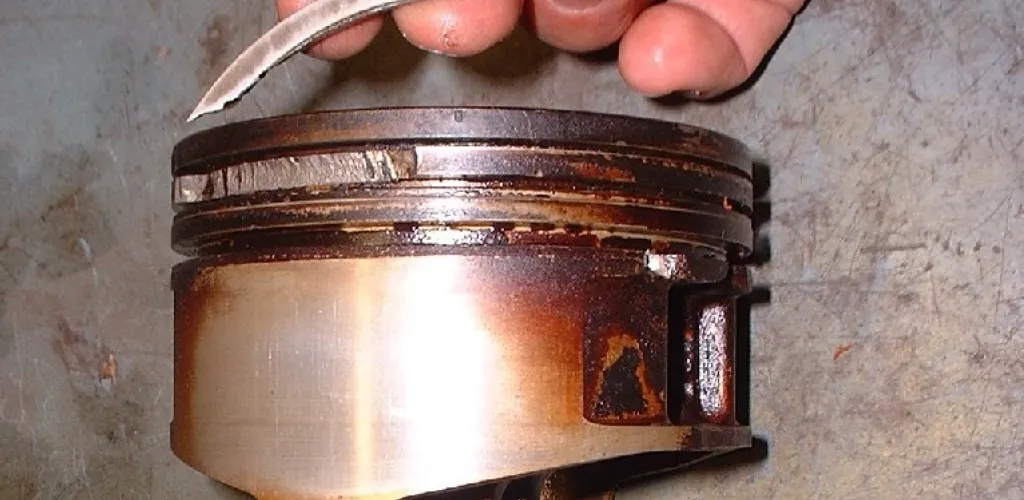
- Excessive oil consumption signals worn piston rings.
- White/gray or black exhaust smoke indicates ring wear.
- Power loss and rough running point to worn rings.
- Diagnosis uses compression tests, oil tests, and visual inspection.
Piston rings are essential components for the engine’s proper operation, ensuring a seal between the piston and the cylinder wall. When they wear, several issues can arise that significantly affect the vehicle’s performance and reliability.
Excessive oil consumption, exhaust smoke, and progressive power loss are the main signs that at least one piston ring has worn and needs immediate attention.
The role of piston rings in engine operation
- Sealing the combustion chamber - prevents combustion gases from entering the oil pan
- Oil film control - regulates the amount of oil that reaches the cylinder walls
- Heat transfer - facilitates piston cooling by transferring heat to the cylinder wall
Typically, each piston has three rings:
- Two compression rings (upper)
- One oil scraper ring (lower)
Main symptoms of worn piston rings
Excessive engine oil consumption
When the rings no longer seal properly, oil from the oil pan enters the combustion chamber and burns with the fuel. This shows as:
- Frequent need to top up engine oil
- Oil level drop between changes
- Accelerated oil wear
Smoke from the exhaust
The color and intensity of the smoke provide important clues about the rings’ condition:
- White or gray smoke - indicates burning of engine oil in the combustion chamber
- Black smoke from the exhaust - can indicate fuel delivery problems, but also ring wear
- Smoke is more intense at cold starts and during sudden accelerations
Loss of power and reduced performance
Worn rings directly affect engine performance:
- Acceleration becomes weaker
- The engine loses power, especially in high RPM ranges
- Fuel consumption increases
- The engine knocks on acceleration
Changes in engine sound
An engine with worn rings may exhibit:

- Metallic noise on acceleration
- Tapping sounds in the engine, especially on cold starts
- Uneven running at idle
Diagnosing problems with rings
Compression test
This is the most accurate method for identifying piston ring problems. The mechanic will:
- Measure compression in every cylinder
- Compare results to the manufacturer’s specifications
- Identify cylinders with low compression
Low compression may indicate:
- Worn or damaged rings
- Leaky valves
- Faulty head gasket
Oil test
To confirm that the issue is with the rings and not the valves:
- A small amount of oil is introduced into the problematic cylinder
- The compression test is repeated
- If compression increases, the issue is with the rings
Visual inspection
Checking the oil condition and exhaust smoke provides important clues:
- Dark, thick oil may indicate ring problems
- Presence of metal particles in the oil
- Exhaust gas analysis
Causes of premature wear of the rings
Normal wear
Piston rings are wear parts that wear out naturally over time due to:
- Constant friction with the cylinder wall
- High temperatures and pressures
- Repeated cycling of expansion and contraction
Factors accelerating wear
Poor maintenance:
- Infrequent engine oil changes
- Using an unsuitable oil
- Clogged oil filter
Operating conditions:
- Frequent operation at high loads
- Engine overheating
- Use of low-quality fuel
Technical problems:
- Faulty cooling system
- Incorrect engine settings
- Problems with the fuel delivery system
Consequences of ignoring the issue
Ignoring worn rings can lead to:
- Cylinder bore damage - excessive wear of the bores
- Piston problems - sticking or breaking
- Valve damage - due to carbon deposits
- Catalytic converter failure - due to burnt oil
- Major repairs - up to a full engine rebuild
Solutions and repairs
Replacing the rings
This involves:
- Partial or complete removal of the engine
- Replacing worn rings
- Checking and possibly reconditioning the cylinders
- Replacing gaskets and other wear parts
Repair costs
Cost depends on:
- The complexity of the intervention
- Overall condition of the engine
- Need for cylinder honing
- Make and model of the vehicle
Preventive measures
To prevent premature wear:
- Follow the recommended oil change intervals
- Use high-quality engine oil according to specifications
- Avoid overloading the engine
- Perform periodic checks
- Keep the cooling system in good condition
Conclusion
Early identification of worn-ring symptoms can prevent costly repairs and extend the engine’s life. Excessive oil consumption, exhaust smoke, and power loss are warning signs that should not be ignored. A professional diagnosis through a compression test will confirm the rings’ condition and guide toward the most suitable repair solution.