- Overloading the roof can deform the structure and raise crash risk.
- Skipping scheduled maintenance accelerates wear and increases long-term costs.
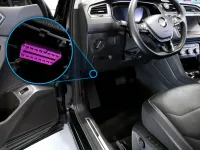
- Ignoring warning lights can cause irreversible damage; seek prompt service.
The car has become an essential part of daily life for most people. Whether we use it for professional duties or personal needs, we rely heavily on our vehicle. Yet many drivers treat the car as something to take for granted and do not adopt a preventive approach to protect it in the long term.
Moreover, some owners push their vehicles to the limit, without considering their clear technical limits. In this guide, we will analyze in detail six major mistakes you should avoid to prevent harming your car.
Overloading the car roof
The car roof is not designed to support substantial weights. According to auto manufacturers’ specifications, most roofs have a weight limit of about 165 kg. This limit includes both the weight of the roof cargo box and the items being carried.
Exceeding this capacity can lead to:
- Structural deformation of the roof
- Compromised body integrity
- Damage to the suspension system
- Increased accident risk during hard braking or abrupt maneuvers
Before loading anything on the roof rack, check the car manual specifications and ensure the mounting system is homologated and properly installed.
Neglecting the maintenance schedule
Each car comes with a clear maintenance program developed by the manufacturer. These intervals are not random—they are calculated based on extensive testing and are meant to prevent premature wear of components.
The maintenance program includes:
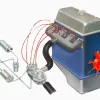
- Regular engine oil changes (usually every 10,000–15,000 km for gasoline and 15,000–20,000 km for diesel)
- Checking and replacing filters (air, oil, fuel, cabin)
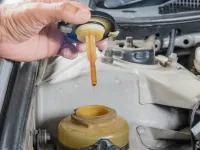
- Monitoring fluid levels (brake, cooling, power steering)
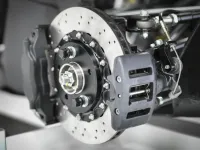
- Inspecting the braking system and tires
- Checking the battery and electrical system
Postponing these interventions can cause:
- Accelerated engine wear due to degraded oil
- Overheating from insufficient cooling fluid
- Reduced performance and higher fuel consumption
- Costly damage that could have been prevented
Even if it seems like a disruption to daily life, following service intervals can save you thousands of euros in the long run.
Ignoring dashboard warning lights
Modern cars are equipped with dozens of sensors that constantly monitor the state of different systems. The warning lights on the dash are the first alert system and should never be ignored.
Types of warning lights and their meaning
Yellow/amber lights:
- Indicate a problem that requires attention in the near future
- You can continue driving, but schedule a service visit in the coming days
- Examples: service light, tire pressure, windshield washer fluid level
Intermittent orange lights:
- Require intervention as soon as possible
- You can still drive a few more kilometers to reach a service safely
- Examples: ABS system issue, sensor fault
Red lights:
- Stop the car immediately in a safe place!
- Continuing to drive can cause irreversible and costly damage
- Examples: engine overheating, low oil pressure, braking system problem
Ignoring these warnings can turn a minor repair of 200–300 EUR into a major failure of 5,000–10,000 EUR or more.
Shifting gears before the car comes to a full stop
One of the most damaging practices for the transmission is shifting the direction of travel before the vehicle has fully stopped. This mistake is extremely common when parking or performing turning maneuvers.
Why this practice is so harmful
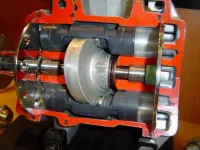
The transmission is one of the most complex and costly components of a car. When you shift from Drive to Reverse (or vice versa) while the car is still moving, you force internal components to fight against the vehicle’s inertia.
Consequences can include:
- Accelerated wear of the discs and plates in automatic transmissions
- Damage to synchronizers in manual transmissions
- Damage to the torque converter
- In extreme cases, complete transmission failure
A new transmission can cost between €5,000 and €15,000, depending on the car model. Gold rule: Always wait for the vehicle to come to a complete stop before changing direction.
The importance of parking indoors
Although it may seem like a luxury to some, parking your car in a garage or under shelter has significant long-term benefits. Environmental factors can seriously deteriorate your car if it is constantly exposed.
Effects of environmental exposure
UV rays:
- Fade and crack upholstery
- Damage interior plastics
- Affect the paint, especially on the hood and roof
- Dry out rubber seals, leading to water leaks
Humidity and rain:
- Accelerate body corrosion
- Promote rust on metal components
- Can infiltrate the electrical system, causing short circuits
- Affect the braking system by rusting discs
Extreme temperature variations:
- Cause material expansion and contraction
- Accelerate battery deterioration
- Affect the car fluids
Solutions if you don’t have a garage
- Use a quality protective cover
- Install a windscreen sunshade
- Apply protective wax to the body 2–3 times per year
- Avoid parking under trees (sap, bird droppings)
- Wash the car regularly, especially in winter when salt is used on roads
The risk of underutilizing the car
Contrary to intuition, not driving the car enough can be as harmful as overuse. Vehicles are designed to be used regularly, and prolonged stasis can cause multiple issues.
Problems caused by not using it
- The battery discharges and loses capacity
- Tires can develop flat spots
- Fluids degrade and lose properties
- Gaskets dry out and become brittle
- The braking system can rust
- Moving components can seize
Recommendations for correct use
For daily use:
- Start the car at least every 3–4 days
- Let it run until the engine reaches operating temperature (minimum 10–15 minutes)
- Move the car a few meters to prevent tire flat spots
For cars used only in the city:
- Take at least one long trip (50+ km) every 2–3 weeks
- Keep the engine at mid-to-high revs for 30–40 minutes
- This helps the exhaust system self-clean
The importance of long trips for diesel engines
Modern diesel engines are equipped with a particulate filter (DPF) that requires periodic regeneration. This regeneration happens automatically when:
- The engine reaches optimal operating temperature
- The car travels at a constant speed for at least 20–30 minutes
- The engine RPM is sufficiently high
If you use a diesel car only for city trips, the particulate filter will clog, and replacement costs can exceed 5,000 RON.
Conclusion: Prevention is the key to longevity
Proper car care is about balancing what you do to protect it with what you avoid doing to prevent damage. Each of these six aspects may seem minor on its own, but the cumulative effect can determine whether a car starts showing problems after 5 years or runs reliably for 15–20 years.
Investing in preventive maintenance and adopting correct usage habits will save you time, money, and frustration in the long run. Treat your car with respect and care, and it will reward you with performance and reliability.