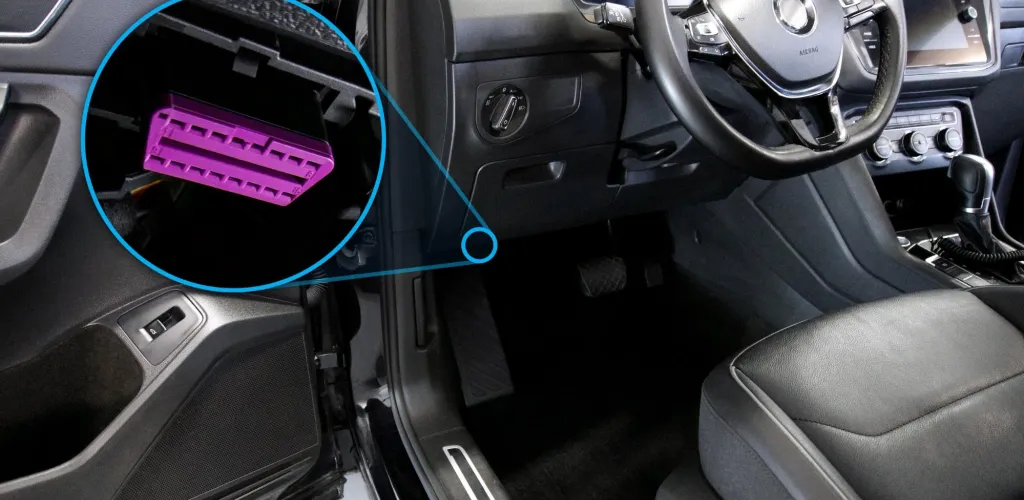
- OBD monitors engine and emissions faults, triggering MIL for critical issues.
- EOBD introduced in 2000 for Europe, expanded to diesels from 2003.
- System checks deviations, pollutant increases, and potential engine or catalytic damage.
- Advantages: standardization, universal access, universal tools, and uniform codes.
On-Board Diagnostics (OBD) represents one of the most important innovations in modern automotive engineering, transforming how we identify and resolve technical issues in vehicles. This sophisticated system continuously monitors the engine’s performance and the components that influence emissions, providing precise information about potential faults.
What is the OBD system and how it works
OBD is an integrated electronic device that detects, records, and displays faults in the systems related to exhaust gases. It activates when a component in the engine assembly or a sensor is not functioning properly. The main role of this system is twofold: on one hand, to prevent serious damage to engine components, and on the other hand, to reduce environmental impact by controlling emissions.
When faults relevant to exhaust gases occur, this is indicated immediately by the Malfunction Indicator Light (MIL) on the dashboard. The indicator will flash rapidly if there are critical faults, such as a misfire that could cause cylinder shutdown or damage the catalytic converter in case of strong ignition misfires. This warning allows the driver to intervene in time and address the problem before it worsens.
Evolution of the system: from OBD to EOBD
The European On-Board Diagnostics (EOBD) system was introduced in January 2000 in response to EURO III emission standards and applies to passenger cars and light commercial vehicles with spark-ignition internal combustion engines. This implementation marked an important step in harmonizing European emission standards.
From 2003 onward, the system was expanded to cover diesel-powered vehicles as well, recognizing the importance of monitoring emissions for all types of powertrains. Legislation does not specify exact methods for monitoring a module or a component; this can be performed in different ways depending on the manufacturer. What matters is that the module is effectively monitored, and the system checks the following critical aspects:
- Deviations from a clearly defined reference point or from a standard value
- Significant increases in pollutants emitted from the exhaust gases released to the environment
- Potential damage to the engine or to the catalytic converter
Advantages of implementing the OBD system
The introduction of EOBD brought several significant benefits for vehicle manufacturers, end users, and auto technicians alike:
- Complete standardization: Creating a standardized diagnostic system with a fault code memory in every vehicle ensures a uniform approach to diagnostics.
- Universal access: Unrestricted access to emission-related systems through a standardized interface that accurately indicates issues, regardless of vehicle make.
- Universal tools: Scan tools usable for all passenger cars, eliminating the need for brand-specific equipment.
- Uniform codes: Uniform error codes for all cars, easily identifiable and interpretable by any qualified mechanic.
- Accessible information: Free availability of all data needed for maintenance, diagnostics, and repairs, facilitating maintenance services.
Differences between OBD, OBD II, and EOBD
Most drivers get confused when it comes to using the terms correctly and do not properly differentiate OBD from EOBD. In practice, this is a distinction to be made between the standards that set the maximum permissible exhaust gas values and the on-board diagnostics regulations in force.
In the case of OBD I and OBD II, these establish the American requirements for the diagnostic system. On the other hand, EOBD is the European version for the OBD II standards, adapted to European legislation.
For emission classes from Euro I to Euro VI, these form the legal requirements that must be met regarding emission control and the maximum permissible levels. For the OBD II system, it monitors exhaust gas recirculation with the help of EGR, as well as how this system works in detail. In the case of EOBD, its proper functioning is monitored, but not necessarily the complete effectiveness of the system. Depending on the car manufacturer, they may comply with the US OBD II standards or only with the European EOBD standards, or sometimes both.
The diagnostic process via OBD
To perform a full diagnosis, a special tester (OBD scanner) is used and connected to a diagnostic socket known as the CARB port. This represents the physical interface between the OBD system and the scan tool used to read error codes.
Given that both the way the tester is connected and the data transfer and interpretation are standardized, the protocol is identical for all car manufacturers. This is extremely important because it allows using the same tester to identify diagnostic codes for any type of vehicle, saving time and money.
Locating the diagnostic port
In general, the diagnostic port is installed inside the cabin, in an easily accessible place. It is usually found near the steering wheel, either under it or on the left side of the driver, under the dashboard. In some cases, especially on older vehicles, the port may be located in other places within the cabin, but always in an area accessible without disassembly.
What the OBD diagnostic checks
When performing an OBD diagnostic, its role is not to directly verify the quality or quantity of exhaust gases, but to check how the components within this system operate and how they perform under real operating conditions.
If a fault exists, it will be very easy to identify because the tester will display a unique code (DTC - Diagnostic Trouble Code), assigned specifically to each component. These codes are structured in a standardized format:
- P - Powertrain (propulsion system)
- B - Body (car body)
- C - Chassis (chassis)
- U - Network (communications)
Followed by four digits identifying the system and the specific problem.
Interpreting error codes
When the OBD device identifies an error code, it is not mandatory that this is the only problem present. Often faults in this system can be caused by the faulty operation of sensors that provide incorrect information to the engine control unit (ECU). For example, a faulty oxygen sensor can generate false errors related to the fuel–air mixture, when the real issue lies with the sensor itself.
It’s important to understand that an error code is a starting point in diagnostics, not necessarily the final problem. An experienced mechanic will always check the related components, test suspect sensors, and analyze live engine data before making costly replacements.
The importance of preventive maintenance
The OBD system not only identifies problems as they occur but can also help prevent major failures through early detection of anomalies. Regular monitoring of stored codes and sensor data can reveal components that are beginning to wear and require attention before failing completely.
Additionally, following the manufacturer’s recommended maintenance schedule and periodic OBD checks can substantially extend the life of the engine and related components, while reducing long-term repair costs.