- Common causes: human error, parasitic draw, charging system faults, and alternator failure.
- Signs of a weak battery: slow crank, dim lights, flickering dash, clocks reset.
- Parasitic draw: normal 20-50 mA; abnormal draw indicates wiring or module faults.
- Defective alternator causes poor charging, battery drain, and related electrical issues.
The car battery is the heart of the vehicle’s electrical system, delivering the energy needed to start the engine and power all electronic components. When the battery discharges unexpectedly, it can turn a routine day into a frustrating experience. Understanding the causes of battery drain is essential for any driver who wants to avoid this common problem.
Recognizing the signs of a weak battery
Before exploring the causes of drain, it is crucial to identify the warning signs of a battery that is starting to deteriorate:
- Difficult starting — the engine cranks slowly or only clicks
- Dim headlights — especially at idle
- Dashboard lights flicker
- Weak alarm system with reduced audible Signals
- Air conditioning fans start slowly
- The digital clock resets frequently
1. Human error - the number one cause
The most frequent cause of battery drain is driver negligence. Typical situations include:
- Headlights left on overnight or for extended periods
- Trunk not fully closed — interior light remains on
- Interior lights left on
- Radio or multimedia system left on with the engine off
- Phone chargers left plugged in continuously
Although many modern cars have headlight alert systems, they do not always cover all electrical components.
Solution: Develop the habit of checking all electrical systems before leaving the vehicle.
2. Parasitic draw (current drain)
Parasitic draw refers to components that continue to consume energy after the ignition is off. There is normal draw and abnormal draw:
Normal acceptable draw:
- Dashboard clock (1-5 mA)
- Radio presets (2-10 mA)
- Alarm system (10-25 mA)
- On-board computer memory (5-15 mA)
- Total acceptable: 20-50 mA
Abnormal draw caused by:
- Damaged wiring with compromised insulation
- Aftermarket electrical installations installed incorrectly
- Faulty fuses allowing leakage
- Electronic modules stuck in active mode
- Relays that do not fully disengage
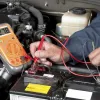
Diagnosis: Use a multimeter to measure the draw in amperes. A draw over 100 mA indicates a serious problem.
3. Defective charging system
Even if the battery and the alternator are functioning, an issue in the charging system can prevent proper recharging:
Critical components:
- Voltage regulator – controls output voltage
- Blocking diode – prevents reverse discharge
- Connections between the alternator and the battery
- Ground wiring – must be clean and tight
Symptoms of problems:
- Incorrect charging voltage (below 13.5V or above 15V)
- Voltage fluctuations with engine speed changes
- Overcharging (electrolyte boiling)
4. Defective or failing alternator
The alternator recharges the battery and powers electrical systems while driving. Failures here are a major source of battery problems.
Signs of a faulty alternator:
- Battery warning light on the dashboard
- Headlights flicker at low RPM
- Unusual noises (squealing, grinding) from the engine area
- Battery drains even while driving
- Electrical systems operate intermittently
Common causes of failures:
- Defective diodes in the rectifier bridge
- Worn carbon brushes lose contact
- Worn bearings causing excessive friction
- Worn, stretched, or broken drive belt
- Burned windings in the stator or rotor
Testing the alternator:
- At idle: 13.5-14.5V
- At 2000 rpm: voltage should stay steady
- Load test: connect high-demand loads (headlights, fans)
5. Extreme temperatures - climate factor
Both excessive heat and extreme cold dramatically affect battery performance through different mechanisms.
Effects of heat (above 30°C):
- Electrolyte evaporation – concentration increases, plates deteriorate
- Accelerated corrosion of internal plates
- Self-discharge increases up to 10% per month
- Plate deformation due to thermal expansion
- Lifespan can reduce by up to 50%
Effects of cold (below -10°C):
- Capacity reduces by 20-50%
- Engine oil thickens — harder to start
- Lead sulfate crystallization – recovery difficult
- Electrolyte can freeze if the battery is very discharged
Solutions:
- Summer: Park in shade, check electrolyte level
- Winter: Park in a garage, use maintenance chargers
- Year-round: Thermal insulation for the battery
6. Short trips - urban routine
The battery delivers the most power at starting. Short trips (under 10 km) do not allow full recharge.
Why it happens:
- Starting draws 100-200A for a few seconds
- The alternator needs time to compensate for energy
- Idle operation charges inefficiently (10-20A)
- Electrical systems (AC, radio, headlights) continue to draw
Energy calculation:
- Energy used at startup equals 5-10 minutes of driving
- Full recharge requires 20-30 minutes of driving
- Trips under 5 km guarantee an energy deficit
Solutions:
- Combine short trips into one longer trip
- Occasionally take 30-minute or longer trips
- Use a battery charger for occasional use
7. Corroded cables and loose connections
Battery connections must be clean and tight to transfer high current efficiently.
Common issues:
- Corrosion – white/green deposits on terminals
- Loose cables – increased resistance
- Damaged terminals – poor contact
- Worn wires – internal breaks
- Rusty bolts – insufficient tightness
Effects of corrosion:
- Increased resistance – voltage drops
- Connections overheat – fire risk
- Difficult starting – insufficient voltage at start
- Poor charging – alternator cannot charge effectively
Maintaining connections:
- Disconnect the battery (negative first, then positive)
- Clean with baking soda and water
- Scrub terminals with a wire brush
- Apply dielectric grease for protection
- Reconnect (positive first, then negative)
- Check tightness – firm but not excessive
8. Worn or defective battery
The lifespan of a car battery is generally 3-5 years, but can vary significantly depending on usage conditions.
Factors that shorten lifespan:
- Improper maintenance – low electrolyte
- Frequent deep discharges – below 10.5V
- Overcharging – constant above 15V
- Excessive vibrations – plates loosen
- Frequent charge-discharge cycles
Battery condition testing:
Voltage test:
- 12.6V+ – battery charged (engine off)
- 12.4V – about 75% charged
- 12.2V – about 50% charged
- 12.0V – discharged (needs charging)
- Below 11.8V – critically discharged
Load test:
- Connect a 100A load for 15 seconds
- Voltage must not drop below 10.5V
- Recovery to above 12.4V within 30 seconds
Specific gravity test (for flooded lead-acid batteries):
- 1.265-1.280 – fully charged
- 1.230-1.250 – partially discharged
- Below 1.200 – discharged
- Maximum cell-to-cell difference 0.050
Professional diagnosis of problems
Specialized equipment:
- Digital battery tester – analyzes internal state
- Oscilloscope – analyzes the alternator waveform
- Digital multimeter – precise voltage/current measurements
- Parasitic draw tester – identifies leaks
Diagnostic procedure:
- Battery testing – capacity and internal state
- Checking the charging system – alternator and regulator
- Measuring parasitic draw – identify leaks
- Inspecting connections – wiring and terminals
- Testing electronic modules – software and hardware
Preventing problems - proactive measures
Monthly maintenance:
- Check battery voltage with the engine off
- Visually inspect connections and wiring
- Clean terminals if you see corrosion
- Check electrolyte level (for vented batteries)
Semiannual maintenance:
- Full battery test with specialized equipment
- Check the alternator – charging voltage
- Inspect the serpentine belt – tension and wear
- Thorough cleaning of the battery compartment
Healthy driving practices:
- Avoid very short trips repeatedly
- Do not leave the car unused for more than 2 weeks
- Use a maintenance charger for long-term parking
- Turn off accessories before engine off
Costs associated with battery problems
Battery replacement:
- Standard battery (60-70Ah): 400-600 lei
- Premium battery (70-90Ah): 600-800 lei
- AGM/EFB battery (start-stop): 800-1200 lei
- Labor: 50-100 lei (or DIY in 20 minutes)
Alternator repairs:
- Carbon brushes: 100-200 lei + labor
- Voltage regulator: 150-300 lei + labor
- Full rebuild: 400-600 lei
- New alternator: 800-1500 lei (model dependent)
Specialized diagnostics:
- Battery testing: 50-100 lei
- Electrical system diagnostic: 150-300 lei
- Parasitic draw identification: 200-400 lei
When to consult a specialist
Consult a qualified mechanic if:
- The battery drains constantly in less than a week
- The charging voltage is outside normal parameters
- Parasitic draw exceeds 100 mA
- Error codes appear on the diagnostic system
- Problems persist after battery replacement
What to expect from a professional diagnosis:
- Comprehensive testing of the battery and charging system
- Precise identification of parasitic draw
- Verification of electronic modules with diagnostic equipment
- Clear repair recommendations
- Cost estimates before any intervention
Understanding these 8 main causes of battery drain allows you to adopt effective preventive measures and quickly identify problems. Regular maintenance and proper driving practices can significantly extend battery life, saving time and money in the long run.