This is not the only nor the last article that we start by telling you that nowadays, cars require more attention, all because of the equipment, gadgets, and hundreds of sensors that didn’t exist 20 years ago.
After the Check-Engine light, the ABS light is, in our opinion, the second most frightening. This article is written with the purpose of helping you diagnose and quickly resolve the issue when the ABS light stays on in the Mercedes-Benz Vito dashboard.
What is the significance of the ABS light in Mercedes-Benz Vito?
We’ll start the article by defining the indicator, and to do that, we need to understand what the ABS system does or what it is. And then, in the end, we will understand why the light stays on all the time.
What does the ABS system do?
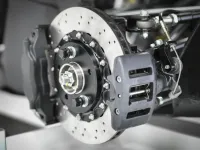
ABS, or Anti-lock Braking System, is a system that prevents the Mercedes-Benz Vito’s wheels from locking when you apply the brakes suddenly and with great force. It does this to minimize the braking distance in cases where you need this system the most.
The ABS system of your car consists of several components:
Speed sensors placed on each wheel individually. They are crucial because they allow the engine to see when a wheel has locked up.
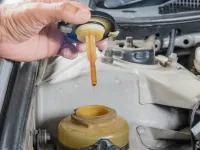
A hydraulic system that controls the braking force on the brake pads.
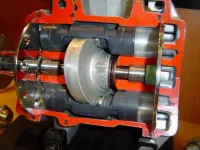
A central module, the ABS module, that controls all the components of the system and turns on the indicator on the dashboard.
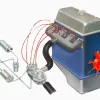
We’ve all felt how the ABS system works, and it’s pretty easy to understand what it does. When you press hard on the brake, when the ABS system takes control, you’ll feel like you can’t press the brake pedal anymore, and it will feel like someone is pushing back and not allowing you to press the pedal hard.
Precisely because, under normal circumstances, when the car skids or you need to brake suddenly, the instinct is to press the brake pedal to the floor. In this case, the wheels lock up, and the tires lose grip with the asphalt, moving forward through friction like a sled. The ABS system in the Mercedes-Benz Vito prevents the wheels from locking, thus reducing the braking distance considerably.
What does it mean when the ABS indicator appears on the Mercedes-Benz Vito dashboard?
Now that we understand exactly how the system works, we need to find out why the indicator lights up. The ABS indicator is yellow and appears when the system has a problem and is no longer functioning. It must be understood from now on that from the moment the indicator lights up on the dashboard, the ABS system will no longer work.
What are the different problems that can illuminate the ABS light on the Mercedes-Benz Vito?
In this case, we can think of a short circuit, a broken wire, or even a blown fuse. Also, if a single speed sensor no longer transmits data, the entire system will fail. The hydraulic ABS system that locks the brake pedal can also be defective.

The ABS module can also be defective; it can take on water or become defective on its own. Remember, if the ABS light is on in the dashboard, the entire system will no longer function.
How to clear the ABS indicator on the Mercedes-Benz Vito?
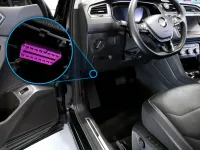
Now we need to find a solution to clear the indicator by resolving the issue that caused it to light up in the first place. It is self-evident that the solution is different depending on the problem that initially triggered it. First, you need to put the car on a diagnostic tool to see what errors are present in the brake and ABS system. Once the source of the problem is identified, here are the steps to resolve it and clear the ABS indicator on the Mercedes-Benz Vito:
Problems with the computer or locking system: if they are not damaged, they can be fixed at a professional service, but if both need to be replaced, it can cost up to 1500 euros.
Electrical problems: if you have found an issue with a relay or fuse, the repair will cost you 10 euros. If they are not at fault, the entire wiring needs to be checked, and the labor will cost much more than 10 euros.
A defective sensor: try cleaning the sensor and the contact area first. If it doesn’t recover, it needs to be replaced, and you’ll only have to pay a few hundred lei for the replacement.