- Front collision systems use cameras, radars, and sensors to warn and brake automatically.
- AEB monitors distance and applies brakes automatically to prevent collisions.
- Lane Departure Warning and Lane Keeping Assist help avoid unintended lane changes.
- Lane Centering Assist maintains lane position; parking cameras improve visibility during parking.
Being involved in a road accident can be a traumatic experience that shakes your confidence behind the wheel. The following process—calling the police, contacting your insurer, arranging repairs—can be extremely stressful and costly. More importantly, the fear of driving again can linger long after the accident.
Modern automotive technology offers concrete solutions to prevent such unpleasant situations. Advanced active safety systems not only reduce the risk of accidents but can restore your confidence behind the wheel. Here are the most effective safety technologies to look for in your next car purchase.
Front collision warning and prevention systems
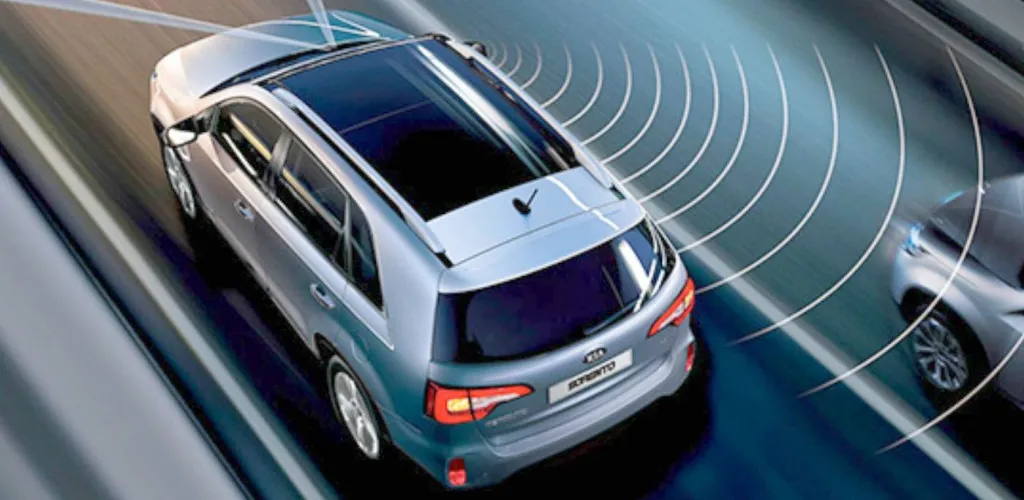
Front collisions are among the most dangerous types of crashes, responsible for many fatalities on Romanian roads. Modern front collision detection systems use a combination of cameras, radars and sensors to continuously monitor traffic ahead.
These systems operate in several stages:
- Detection - identifies vehicles, obstacles or pedestrians ahead
- Calculation - evaluates closing speed and probability of impact
- Warning - emits audible and visual signals to the driver
- Intervention - in critical cases, can automatically apply the brakes
Most modern systems can detect pedestrians as well, making them especially useful in dense urban traffic.
Autonomous Emergency Braking (AEB)
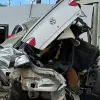
Human reaction time is limited — on average, from perceiving danger to pressing the brake pedal is about 1.5 seconds. At 50 km/h, you cover almost 21 meters in this time. This is where Autonomous Emergency Braking (AEB) comes into play.
How AEB works:
- Continuously monitors the area in front of the vehicle
- Calculates in real time distance and closing speed
- Automatically applies the brakes when it detects an imminent collision
- Can apply full braking force, even if the driver does not react
Studies show that AEB can reduce rear-end crashes by up to 50% and can completely prevent collisions at low speeds.
Lane Departure Warning and Lane Keeping Assist
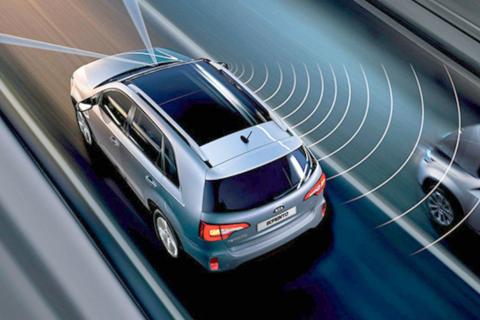
Unintentional lane departure is the cause of many accidents, especially on highways where speeds are high. Contributing factors include:
- Driver fatigue
- Distraction (phone, conversations)
- Adverse weather conditions
- Reduced visibility
Types of systems available:
Lane Departure Warning (LDW) - emits audible or visual warnings when it detects the vehicle leaving the lane without signaling.
Lane Keep Assist (LKA) - actively intervenes, applying gentle steering corrections to keep the vehicle in the lane.
Lane Centering Assist - the most advanced system, which maintains the vehicle centered in the lane for extended periods.
Complementary solutions:
- Convex or aspheric rear-view mirrors for an expanded field of view
- Camera-based systems with central display
- Additional mirrors for specific blind spots
Parking cameras and sensors
Parking cameras have become almost standard on new cars, but the technology has evolved considerably. Modern systems offer:
Multiple cameras:
- Rear-view camera for maneuvering into a parking space
- Side cameras for viewing blind spots
- Front camera for maneuvering in tight spaces
- Bird’s Eye View system that combines images for an overhead view
Ultrasonic sensors and radar:
- Detect obstacles even in low visibility conditions
- Provide exact distance to obstacles
- Function in all weather conditions
Blind spot detection and monitoring
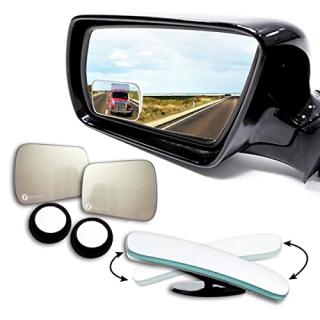
Blind spots are areas around the vehicle that cannot be observed directly through mirrors. These zones vary depending on the car’s design, driver position, and mirror adjustment.
Sistemul Blind Spot Monitoring (BSM) includes:
- Radar sensors mounted in the rear bumper that detect vehicles in blind spots
- Visual indicators in the side mirrors that illuminate when a vehicle is detected
- Audible warnings when you use signaling with a vehicle in the blind spot
- Cross Traffic Alert for crossing traffic when reversing out of parking spots
Complementary solutions:
- Convex or aspheric rear-view mirrors for an extended field of view
- Camera systems with central display
- Additional mirrors for specific blind spots
Adaptive Cruise Control (ACC)
Traditional cruise control maintains a constant speed, forcing you to intervene manually when traffic slows. Adaptive Cruise Control (ACC) represents a major evolution.
ACC functionalities:
- Distance keeping - automatically maintains the set distance from the vehicle ahead
- Automatic acceleration and deceleration - adjusts speed to traffic
- Stop & Go - in advanced versions, can stop completely and restart in traffic
- GPS integration - in some systems, automatically reduces speed in tight curves
Safety benefits:
- Reduces fatigue over long distances
- Maintains constant safe following distances
- Reacts faster than a human driver
- Performs well at night
LED lighting technology and adaptations
Proper lighting is crucial to road safety, especially since about 50% of fatal crashes occur at night, while nighttime traffic accounts for only 25% of the total.
Advantages of LED headlights:
Superior performance:
- Luminous intensity 300% higher than halogen
- White light similar to daylight, improving contrast
- Instant-on
- More controlled and uniform beam
Durability and efficiency:
- Lifespan up to 50,000 hours (vs 1,000 hours for halogen)
- Energy consumption 80% lower
- Vibration and shock resistance
- Consistent performance at extreme temperatures
Adaptive lighting systems push the technology further:
- Matrix LED - selectively deactivates individual LEDs to avoid dazzling oncoming traffic
- Cornering lights - illuminate in the direction of the turn
- Highway assist - extends the beam on highways
- Weather assist - adapts illumination to weather conditions
Implementing safety systems: practical tips
When buying a new car:
- Prioritize safety packages even if they cost more
- Test all systems during a test drive
- Check for software update availability
- Learn about maintenance costs of sensors
For existing vehicles:
- Many systems can be retrofit (cameras, parking sensors)
- Check compatibility with your model
- Consult authorized specialists for installation
- Understand the limitations of aftermarket systems
Modern safety technologies are not just gadgets - they are life-saving tools. In Romania, where road infrastructure isn’t always up to standard, these systems become even more important. Investing in safety always pays off, whether we’re talking about preventing accidents or regaining confidence after a traumatic experience behind the wheel.