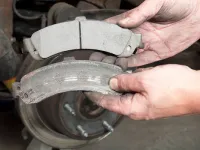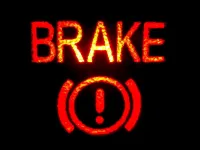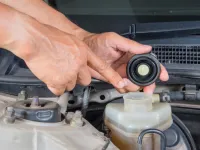
- Always engage the parking brake on automatics, including on slopes, to protect the transmission.
- Maintain safe following distances: 1-2m urban, 3 seconds national, 70-100m highway.
- In emergencies, brake firmly, don’t pump, keep steering steady; modern cars have ABS.
Even the most experienced drivers can develop faulty habits at the wheel that not only reduce driving comfort but can also become dangerous. Many of us picked up these habits during driver education or developed them over the years, often without realizing the risks they entail. Identifying and correcting these mistakes can make the difference between a safe journey and a road accident.
In Romania, statistics show that the majority of road crashes are caused by human error, and many of them could be avoided by following a few simple safe-driving rules.
Neglecting the parking brake on automatic transmission vehicles
One of the most common faulty habits is neglecting the parking brake on vehicles with an automatic transmission. Many drivers believe that the “P” (Park) position is sufficient to immobilize the vehicle.
Why it is important to use the parking brake:
- The automatic transmission has a mechanism called the parking pawl that locks rotation, but this is not designed to support the vehicle’s full weight
- On steep slopes, this mechanism can be overloaded and even damaged
- The parking brake distributes the load and protects the transmission system
- In case of a hydraulic system failure, the parking brake remains functional
Even some modern automatic transmissions with advanced features do not automatically engage the parking brake when the engine stops. Adopt the habit of always engaging the parking brake, regardless of the vehicle’s transmission type.
Maintaining an insufficient following distance in traffic
Following distance is one of the most important rules in defensive driving, but many accidents occur precisely due to its neglect.
The safe following distance rule:
- In urban areas: minimum 1-2 meters at low speeds
- On national roads: the 3-second rule (the distance covered in 3 seconds at your driving speed)
- On highways: minimum 70-100 meters at speeds of 130 km/h
- In adverse weather conditions: double the normal distance
This distance not only allows you to react in time but also to perform evasive maneuvers if necessary. Many drivers think they are leaving space for others to cut in, but personal safety must be the top priority.
Improper braking in emergency situations
In emergency situations, many drivers do not use the full potential of the braking system, either out of fear or due to a lack of knowledge.
How to brake correctly in an emergency:
- Press the brake pedal firmly and decisively – modern systems are designed to operate at maximum capacity
- Do not pump the brakes – ABS handles this automatically
- Keep the steering wheel steady – avoid abrupt steering during braking
- All cars from 2014 onward have ABS as standard, plus Electronic Brakeforce Distribution (EBD) and ESP/ESC and Brake Assist
Safety systems that help you:
- ABS (Anti-lock Braking System) – prevents wheel lock-up
- EBD (Electronic Brakeforce Distribution) – distributes braking force to the axles
- ESP/ESC – stability control
- Brake Assist – automatic braking amplification
Ignoring steering wheel controls
The buttons on the steering wheel are not just for convenience – they were developed with safety in mind. Using them reduces the time you take your eyes off the road.
Essential functions available on the wheel:
- Volume control and radio station changes
- Accepting/rejecting phone calls
- Activating cruise control
- Controls for the trip computer
- Voice assistant commands
Invest time in learning the positions of these buttons so you can use them without taking your eyes off the road.
Neglecting tire checks
Tires are the only contact between the vehicle and the road, yet they are often the most neglected components.
What to check on tires:
Tire pressure:
- Check the pressure monthly with cold tires
- Under-inflation increases fuel consumption and wear
- Over-inflation reduces grip and comfort
- Pressure differences can cause instability
Tread depth:
- Legal minimum in Romania: 1.6 mm
- Recommended for safety: at least 3 mm
- In winter: at least 4 mm
- Use a 1-leu coin for a quick check
Uneven wear:
- May indicate suspension problems
- Incorrect wheel alignment
- Imbalance or bearing problems
Tire age:
- The manufacturing date is stamped on the sidewall (4 digits: week and year)
- Replace after 6-8 years, regardless of wear
- Rubber degrades over time, even when not in use
The blind spots of other vehicles
Blind spots are areas that the driver in front cannot see through the mirrors. Prolonged stay in these zones increases the risk of a crash.
How to avoid blind spots:
- Accelerate or decelerate to exit the hazard zone quickly
- If you cannot exit immediately – keep a hand on the horn to warn quickly
- On highways – decisively overtake, don’t stay alongside other vehicles
- With trucks – the unseen area is much larger, keep greater distance
Incorrect seating position behind the wheel
A proper seating position is not only about comfort – it directly affects vehicle control and the effectiveness of safety systems.
Correct seat adjustment:
For the pedals and clutch:
- Press the clutch (or brake on automatics) all the way down
- The leg should remain slightly bent at the knee
- The heel should rest lightly on the floor
For the steering wheel and arms:
- Rest your wrists on the top of the wheel
- Arms should be slightly bent at the elbows
- Do not reach to the wheel
- Correct hand position: 9:15
For height and visibility:
- See the entire instrument cluster
- Have clear visibility in all directions
- Distance between chest and airbag: at least 25 cm
For the headrest:
- The top of the headrest should be at head level
- Distance from chest to headrest: maximum 6-7 cm
- Prevents cervical injuries in a rear impact
Inadequate looking during driving
Most road accidents on rural roads are caused by insufficient looking and poor anticipation.
Correct visual technique:
Raising the line of sight:
- Look as far ahead as possible on the road you are on
- Do not fix your gaze on the area directly in front of the car
- Continuously scan the horizon to anticipate changes
In curves:
- Identify the apex of the curve
- Visualize the ideal trajectory before entering the turn
- Maintain a constant speed through the bend
- Accelerate only when you see the exit from the turn
Preparing for turns:
- Choose the correct speed before entering
- Brake on the straight portion, before the turn
- Steer progressively, not abruptly
- Avoid hard braking in the middle of the curve
Dangerous door opening
Careless door opening causes hundreds of accidents each year, most of which can be avoided by following simple rules.
Safe exiting procedure from the vehicle:
Check in mirrors:
- Check the mirrors for approaching vehicles
- Watch for cyclists weaving between cars
- Observe the speed of vehicles behind you
The Dutch reach technique:
- Use the hand opposite to the door to open it (right hand for the driver’s door)
- This forces you to turn your body and check the blind spot
- Open only a crack initially to recheck
For passengers:
- Teach children to wait for confirmation before exiting
- Always check the passenger side before letting them out
- On busy roads, always exit toward the curb side
Additional tips for safe driving
Vehicle maintenance:
- Check fluids monthly (engine oil, brake fluid, antifreeze)
- Inspect lighting at least weekly
- Replace air and fuel filters on time
- Follow the manufacturer’s recommended service schedule
Adapting to road conditions:
- Reduce speed in rain by 10-20%
- In fog, use fog lights, not parking lights
- In winter, gradually warm up the engine and check winter tires
- On unpaved roads, reduce speed and increase the following distance
Managing fatigue:
- Take breaks every 2 hours of driving
- Do not drive more than 8 hours per day
- Recognize signs of fatigue: yawning, frequent blinking, lane deviation
- Stop and rest if you feel fatigued; do not try to push through
Avoiding these common mistakes will not only make you a better driver but also contribute to the safety of all road users. Defensive driving and adhering to basic rules can prevent the vast majority of road accidents.