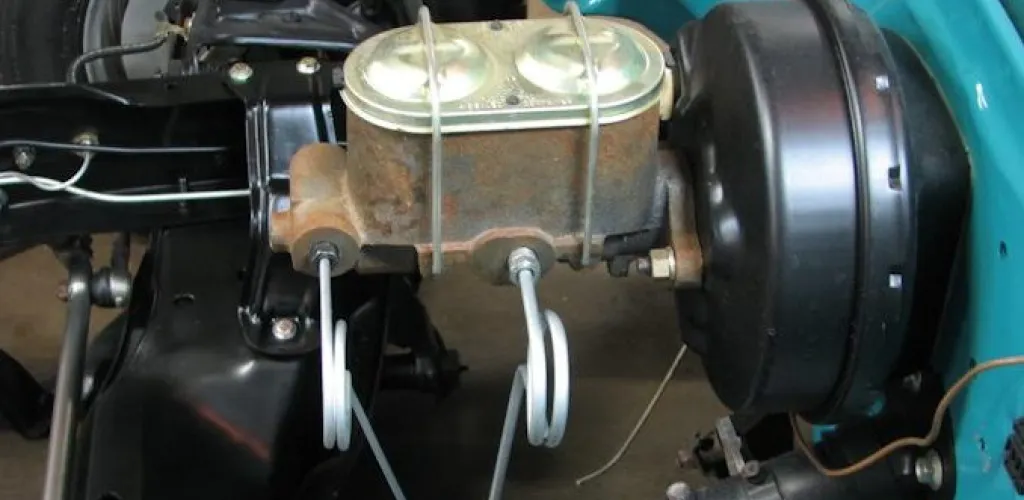
- Brake booster amplifies pedal force; failure makes braking stiffer and harder.
- Abnormal high pedal position confuses driver and delays response.
- Increased stopping distance raises safety risk, especially on hills and in rain.
- Quick test: press brake six times with engine off, then start engine.
The modern braking system relies on a key component for your safety—the brake booster. This vital part amplifies the force you apply to the brake pedal, allowing you to stop the vehicle with minimal effort. When the booster fails, the consequences can be serious for road safety.
A brake booster in good condition enables efficient braking with reduced pedal effort. When this component loses its efficiency, symptoms may seem minor at first but worsen progressively. Early recognition of these warning signs can prevent accidents and major repair costs.
What is the brake booster and how it works
The brake booster (servo brake) uses the vacuum from the intake manifold to amplify the force applied to the brake pedal. This system significantly improves the efficiency of the brake system, reducing the effort required from the driver by up to 6-8 times.
The component works by the pressure difference between the vacuum chamber and the atmospheric chamber, creating additional force that helps activate the master brake cylinder.
Main symptoms of a defective brake booster
1. Brake pedal stiffness
The most evident symptom of a defective booster is the stiffness of the brake pedal. Instead of yielding easily to pressure, the pedal becomes extremely hard and requires substantial force to produce the braking effect.
This stiffness is due to the loss of assist provided by the booster, forcing the system to operate only with the driver's muscular force. In these conditions, the stopping distance increases dramatically, and in emergency situations, the reaction time may be insufficient.
2. Abnormal high pedal position
A defective booster causes the pedal to remain in a higher-than-normal position. This change in pedal geometry can create confusion in critical situations when the driver must react quickly.

Unusual pedal positions can lead to:
- Delays in reaction time
- Accidentally pressing the wrong pedal
- Premature fatigue of the right foot
- Discomfort during long drives

3. Increased braking distance
Even applying a considerable force to the brake pedal, the vehicle does not respond promptly to braking commands. The distance required to come to a full stop increases significantly, representing a major safety risk.
This symptom becomes critical in situations such as:
- Emergency braking in traffic
- Stopping on hilly roads
- Maneuvers in adverse weather (rain, snow)
- Driving in crowded urban areas
Brake booster check method
There is a simple test you can perform to determine the state of the brake booster:
Test procedure:
- With the engine off, press the brake pedal 6 times in a row
- This action removes the vacuum from the system
- Start the engine
- Press the brake pedal lightly
Result interpretation:
- Functional booster: The pedal moves down smoothly and progressively
- Defective booster: The pedal remains stiff and requires excessive force
Common causes of brake booster failure
Membrane deterioration
The membrane inside the booster can suffer cracks or perforations due to:
- Aging of the material
- Temperature fluctuations
- Contamination with oil or other substances
Vacuum problems
The booster relies on vacuum generated by the engine. Problems can arise from:
- Leaks in the vacuum lines
- Failure of the vacuum pump (on diesel engines)
- Issues with the check valve
Wear of mechanical components
Movable parts in the booster can wear over time:
- Control shafts
- Seals
- Return springs
Costs and considerations for replacement
Component prices
The average cost for a new brake booster varies between 600-1000 lei, depending on:
- Vehicle make and model
- Quality of the component (OEM vs aftermarket)
- Complexity of the braking system
Labor costs
Labor to replace the brake booster can add 200-400 lei to the final bill, depending on:
- The complexity of access to the component
- The need to bleed the system
- Additional checks required
Additional considerations
When replacing the brake booster, it's advisable to also check:
- The condition of the master brake cylinder
- The level and quality of brake fluid
- The operation of the entire braking system
- The integrity of vacuum lines
Preventive measures and maintenance
Regular checks
- Test the brake booster monthly
- Monitor symptoms of deterioration
- Check the brake fluid level
- Inspect the vacuum lines
Preventive maintenance
- Replace the air filter according to the schedule
- Avoid exposure to extreme temperatures
- Use only the recommended brake fluid
- Perform periodic service on schedule
Importance of road safety
A defective brake booster is not just a mechanical issue — it is a major safety risk. Any suspicious symptom should be investigated immediately by a specialist. Delaying repairs can lead to:
- Serious accidents due to increased braking distance
- Damage to other components of the braking system
- Much higher repair costs
- Risks to the safety of passengers and other road users
The brake booster is a vital component that should not be neglected. Timely replacement is always cheaper than the cost of an accident or a major brake system failure.
Photo credit: m.roadkillcustoms.com