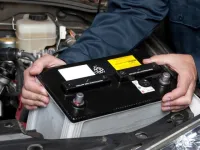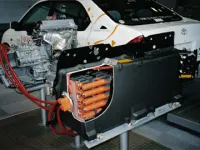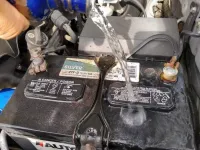
- Revving the engine can charge a battery faster, but it’s not recommended.
- The alternator isn’t a designed battery charger; it powers electronics and maintains charging.
- High-idle charging wastes fuel, wears the alternator, and costs more; use a charger.
- Long highway drives can charge the battery; slightly discharged batteries may recover.
That’s a question many drivers have asked at some point: if you let the engine run at higher revs, will the battery charge faster? The short answer is yes, but the full explanation and practical implications are much more nuanced than they appear at first glance.
How the battery charging system works
To understand this phenomenon, we first need to look at how a car’s charging system works. Regardless of vehicle type—new or old, diesel or gasoline—the basic principle remains the same.
When the engine starts, the crankshaft begins to rotate. This rotation is transmitted via the accessory belt to the alternator, the component responsible for generating electrical energy. The higher the engine speed, the faster the crankshaft turns, driving the accessory belt at a greater speed. The result? The alternator spins faster and produces more electrical energy, leading to a quicker battery charge.
Why this method is not recommended
Although technically revving the engine can lead to a faster charge, this practice is not at all recommended for recovering a weak or fully discharged battery. Here are the main reasons:
The real role of the alternator
The alternator was not designed to function as a battery charger. Its primary role is to keep the battery at an optimal charging level during normal driving and to power the vehicle’s electrical consumers — headlights, air conditioning, the audio system, onboard computers. It compensates for the current drawn, so the battery does not discharge.
When we try to use the alternator to bring a completely discharged battery back to life, we subject it to intense and prolonged stress for which it was not sized.
The real cost of this practice
Let’s analyze the financial impact of charging the battery by revving the engine:
- Fuel consumption: Leaving the engine running at high idle or driving specifically to charge the battery consumes significant amounts of fuel
- Accelerated wear of the alternator: Intense and prolonged loading dramatically reduces the alternator’s lifespan
- Opportunity cost: A new alternator can cost between 500-2000 lei, depending on the model, much more than a new battery or a charger
The recommended solution: the charger
With an investment of only 100-150 lei, you can purchase a quality battery charger. It allows you to charge the battery:
- Efficiently and with control
- Without wear on auto components
- From a home outlet in your garage
- Whenever needed
- Without additional fuel costs
When charging by driving can be acceptable
There are still situations where charging the battery by driving makes sense:
Long planned trips: If you already have a long highway drive planned, where you will naturally run at higher RPMs for extended periods, the battery will charge efficiently without extra effort.
Slightly discharged batteries: When the battery is only partially discharged (for example after a difficult start on a cold morning), normal driving will be enough to recharge it.
Correctly diagnosing the problem
Before you rush to charge or replace the battery, it’s crucial to identify the real cause of the issue. Battery discharge can have multiple causes:
Electrical causes
- Electrical consumers left on (headlights, dome light, radio)
- Current leaks in the electrical system
- Battery at the end of its life cycle
- Alternator or voltage regulator failures
Mechanical causes
- Worn or loose accessory belt
- Defective alternator bearing
- Problems with the electrical connection between the alternator and the battery
If the problem is mechanical rather than electrical, forcing the alternator to work against a healthy battery won’t solve anything. On the contrary, you’ll prematurely wear out the alternator and end up needing to replace two components instead of one.
The correct diagnostic procedure
When you suspect a problem with the battery or the electrical system, follow these steps:
-
Visual check: Inspect the battery terminals for corrosion, cables for cracks, and the accessory belt for wear
-
Voltage test: Using a multimeter, check the battery voltage (it should be 12.6V with the engine off and 13.5-14.5V when the engine is running)
-
Professional diagnosis: If the problem persists, consult a car service for a full electrical system inspection
-
Remedy the cause: Repair or replace the faulty component
-
Controlled charging: Only after you have remedied the cause, charge the battery with a charger
Conclusion
Although revving the engine theoretically leads to faster battery charging, this method is not practical, efficient, or economical for recovering a discharged battery. Investing in a quality charger and correctly diagnosing electrical problems are the recommended approaches for maintaining your car’s electrical system health.
Preventive care and prompt intervention at the first signs of trouble will save you money and nerves in the long run, avoiding more serious and costly breakdowns.