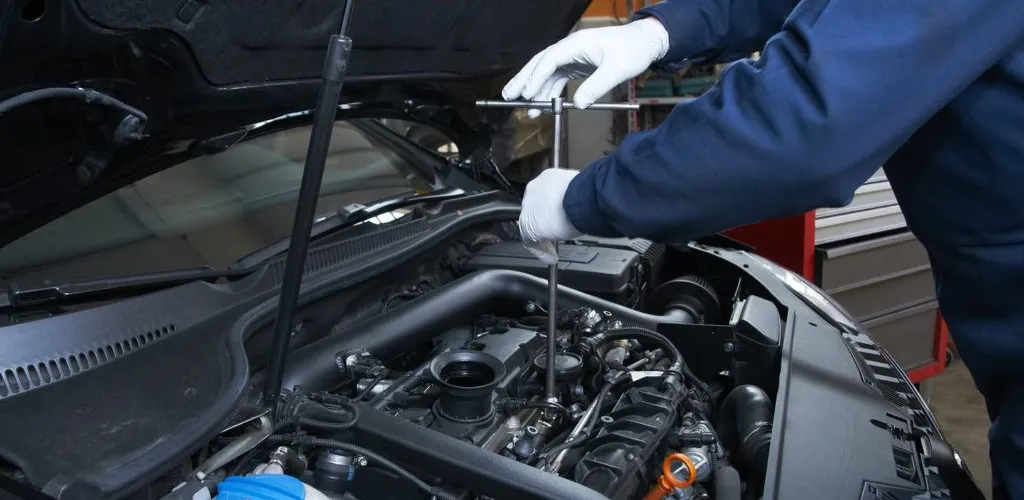
- First service at 10,000 km covers oil, air filter, cabin filter, coolant, brakes, transmission oil.
- Second service at 15,000–20,000 km replaces the fuel filter; checks ignition, wheels, tires, exhaust.
- Third service at 30,000 km replaces air and cabin filters; checks belts, suspension, lighting.
- Fourth service at 40,000–50,000 km includes transmission oil, differential oil, and power steering fluid checks.
Owning a car has become a common habit for many of us, and for this reason we often fail to fully appreciate the luxury a vehicle provides. The ability to get from point A to point B quickly, to carry luggage for a picnic, or to haul heavy objects with ease—these conveniences have become part of our daily routine.
To preserve this convenience and to avoid costly repairs, regular maintenance through scheduled inspections is essential. But when and how often should you perform these inspections on a new car?
First service at 10,000 km
Most manufacturers specify in the owner’s manual when the first general service should be performed. While the interval may vary by make and model, the first service is usually conducted at 10,000 km or after one year from purchase, whichever comes first.
- Engine oil and oil filter — the initial change is crucial for removing metal debris generated during break-in
- Air filter — inspection and replacement if necessary
- Cabin air filter — for interior air quality
- Coolant level — essential for protecting the engine
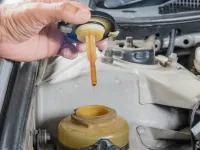
- Brake fluid — check level and condition
- Transmission oil — check level and condition
This service is crucial for maintaining the warranty and for identifying potential early issues.
Second service — at approximately 15,000-20,000 km
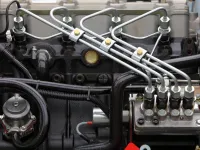
During the second service, in addition to standard checks, special attention is paid to the fuel filter. The fuel filter plays a vital role in protecting the fuel injection system, trapping impurities before they reach injectors or carburetor.

Operations specific to this service:
- Replacing the fuel filter
- Checking the ignition system
- Rotating the wheels for even wear
- Checking tire pressure
- Inspecting the exhaust system
Wheel rotation is particularly important to ensure even wear and to extend the life of the tires.
Third service — at 30,000 km
At this stage, the air filter and cabin filter are usually significantly worn, which can affect engine performance and passenger comfort.
Filtration system
- Air filter — replacing this improves engine performance and reduces consumption
- Cabin filter — provides protection against pollen, dust, and noxious gases
Additional checks
- Climate control system check
- Drive belts check
- Inspect suspension components
- Lighting system check
These changes are essential for maintaining good air quality inside the cabin and for optimal engine operation.
Fourth service — at 40,000-50,000 km
This service is one of the most complex, involving checking and replacing several vital fluids for the vehicle’s operation.

Fluids requiring attention:
Transmission fluids
- Transmission oil — acts as a lubricant and cooling agent for the gearbox
- Differential oil — essential for proper differential operation
- Power steering fluid — for easy-assisted steering
Other important checks
- Brake fluid — periodic replacement prevents corrosion and ensures braking efficiency
- Coolant — protects the engine from overheating and freezing
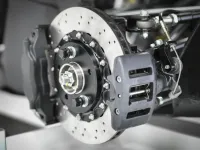
- Braking system check — pads, discs, and calipers
Major service — at 100,000 km
This service marks an important milestone in the vehicle’s life and involves deeper checks of components that wear over time.
Main components to check:
Cooling system
- Coolant must be replaced completely to maintain protection against freezing, overheating, and corrosion
Ignition system
- Spark plugs
- Ignition coils
- Ignition wires
Braking system
- Brake pads
- Brake discs
- Brake caliper
Ongoing checks between services
Besides scheduled services, some systems require regular attention for safety and optimal vehicle operation.
Braking system
Datorită fenomenului de frecare inherent, componentele sistemului de frânare se uzează constant. Signs of problems:
- Noises when braking
- Pedal vibration
- Increased stopping distance
- Brake warning light on
Steering system
Common issues requiring immediate attention:
- Strong shocks transmitted to the steering wheel
- Hard steering effort
- Noise when turning
- Excessive play in the steering
Other regular checks
Suspension system:
- Shock absorbers — for comfort and grip
- Springs — for correct vehicle support
- Steering links — for directional stability
Electrical system:
- Battery — voltage and terminals
- Lights — headlights, tail lights, indicators
- Alternator and starter — proper operation
Tires:
- Tire pressure — including the spare
- Tread wear
- Cracks in sidewalls
- Tread depth
Importance of following the service schedule
Neglecting scheduled services can have serious consequences:
Financial consequences
- Loss of manufacturer warranty
- Costly repairs that could have been avoided
- Decreased vehicle resale value
Technical consequences
- Premature wear of components
- Reduced engine performance
- Increased fuel consumption
- Higher risk of major failures
Road safety
- Braking system malfunctions
- Steering system problems
- In-field failure during driving
Conclusion: Never neglect scheduled service or any unusual signals from the car—strange noises, warning lights, or abnormal behavior. A seemingly minor problem can evolve into a major breakdown if not addressed promptly. Investing in preventive maintenance is always cheaper than major repair costs.