- Heats engine coolant to warm air, cabin quickly while the engine is off
- Diesel engines reach operating temp in 5–6 minutes, then the system stops automatically
- Two main types: stationary (independent) and parallel (engine-started) systems
- Can be retrofitted to older cars by workshops
On a winter morning, when you step from the biting cold into a frozen car, you want the cabin to be warm and ready to go. More and more vehicles benefit from an auxiliary heating system, commonly known in Romania as “webasto” or “sirocou”, which solves this problem in just a few minutes.
Auxiliary heating systems have become a standard feature on premium cars and are available as an option on most new vehicles. For older cars, they can be retrofitted by specialized workshops, offering the same level of comfort and engine protection.
What the Webasto system is and how it emerged
Webasto is the pioneer company in the field of auxiliary heating systems for vehicles. Founded in 1901 in Germany, this company launched the first auxiliary heating system in 1955, initially for buses. In 1960, the technology became available for passenger cars, and the Porsche 356 was the first car model equipped with such a system.
Today, the main manufacturers of auxiliary heating systems are Webasto, Eberspächer and Airtronic, all offering reliable and efficient solutions for various vehicle types.
How the auxiliary heating system works
An auxiliary heating system’s main purpose is to heat quickly the engine and the cooling liquid to produce warm air in the cabin, even with the engine off. This process is achieved in just 5 minutes, during which the coolant reaches the engine’s normal operating temperature.

Step-by-step how it works
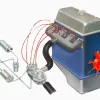
The system uses fuel from the tank (diesel or petrol) through an ingenious process:
- Fuel extraction: A small pump draws fuel from the tank
- Atomization: Fuel is sprayed onto a glow plug
- Controlled combustion: Fuel ignites inside an insulated housing
- Heating the coolant: The coolant circulating outside the housing heats up
- Heat distribution: A pump circulates the heated coolant through the engine and the heater core
- Cabin heating: The interior air is heated as it passes through the heater core
Types of auxiliary heating systems
There are two main categories:
- Stationary systems: Operate independently of the engine, can be started with a remote control or digitally programmed
- Parallel systems: Start automatically with the engine, commonly found on diesel engines, aiding rapid heating
With a Webasto system, any diesel engine reaches operating temperature within 5-6 minutes after startup, after which the system automatically stops.
Benefits of the auxiliary heating system
Increased comfort
On cold mornings, you can start the system 10 minutes before getting into the car. This way you will find:
- A warm and comfortable cabin
- Snow melted off the bodywork
- Windows automatically defogged/defrosted
- The engine already at the optimal temperature
Engine protection
The highest wear of an engine occurs at cold starts when the oil is viscous and lubrication is insufficient. The auxiliary heating system:
- Heats the engine before starting
- Reduces wear on mechanical components
- Improves lubrication at startup
- Extends the engine’s life
Fuel efficiency
Although it may seem counterintuitive, the system can reduce overall fuel consumption by:
- Starting the engine directly at the optimal temperature
- Reducing warm-up time
- Allowing the engine to operate more efficiently
- Lower emissions in the first minutes of operation

Consumption and operating costs
Fuel consumption
A auxiliary heating system consumes:
- 0.6-1 liter/hour at maximum capacity
- 0.1-0.2 liters for daily use of 10 minutes
- Approximately 0.5-1 RON per use
In practice, the cost is partially offset by the savings from starting the engine already warmed.
Purchase and installation costs
For aftermarket systems, prices vary:
- New systems: a few thousand euros (OEM)
- Used systems: a few hundred euros
- Professional installation: required through an authorized service
Maintenance and possible issues
Preventive maintenance
Auxiliary heating systems require periodic maintenance:
- Checking the glow plug
- Inspecting the coolant circulation pump
- Verifying the programming system
- Inspecting the electrical wiring
Signs of wear
Main indicators that the system needs service:
- White smoke from the exhaust (incomplete combustion)
- Slow or inefficient heating
- Unusual noises from the pumps
- Intermittent operation
System safety
The risk of fire is practically nonexistent thanks to:
- Perfectly insulated combustion chambers
- High production standards
- Integrated safety systems
- Complete sealing of components
Aftermarket installation
For vehicles that do not have a factory-installed auxiliary heating system, aftermarket installation is possible on:
- All passenger cars
- Vans and trucks
- Buses and commercial vehicles
- Agricultural and construction equipment
Installation recommendations
Mandatory through an authorized service for the following reasons:
- Complexity of the electrical installation
- Connection to the fuel system
- Integration with the cooling circuit
- Compliance with safety standards
- Warranty of operation
Is investing in a Webasto system worth it?
When is it justified
The auxiliary heating system is recommended if:
- You live in regions with harsh winters
- The car is often left outside
- You have a diesel engine (it heats up slowly)
- You value comfort and engine protection
- You use the car daily during the cold season
Long-term benefits
- Maximum comfort: A warm cabin in any condition
- Economy: Reduced engine wear
- Time saved: No more manual snow removal
- Safety: Perfect visibility through defrosted windows
- Ecology: Reduced emissions at cold start
Conclusion
The Webasto auxiliary heating system represents a valuable investment for any driver seeking greater comfort and engine protection during the cold season. With operating costs of a few RON per day and significant benefits for the engine and passengers, this system becomes practically indispensable in regions with harsh winters.
Even though it involves a considerable upfront investment and periodic maintenance, the long-term advantages—from engine protection to daily comfort—more than justify the expense. The important thing is to choose a quality system and have it installed by specialized service centers to enjoy all the benefits with complete safety.