- Low refrigerant or leaks are the most common AC failures.
- Compressor replacement costs between 1,500 and 3,000 RON, depending on the car.
- Condenser fan failure and refrigerant leaks dramatically reduce cooling.
- Diagnosing and recharging require specialized equipment and expert service.
When the outside temperature becomes unbearable and air conditioning refuses to produce cool air, the situation becomes truly frustrating. Open windows are no longer enough, and the journey becomes a nightmare.
The car’s climate control system is a complex component that can develop a range of problems over time. From refrigerant leaks to compressor failures, the causes can be multiple. Understanding these issues and the methods to resolve them can help you make the right decisions for repairing or maintaining the system.
Most common AC system problems
The majority of air conditioning system failures fit into a few main categories:
Low refrigerant level or leaks
The most common reason for an AC not cooling is an insufficient refrigerant level. This may result from:
- Leaks at connections
- Damage to pressure hoses
- Normal wear over time (small losses)
The solution involves checking the system at a specialized service, identifying leaks, and recharging with the proper refrigerant.
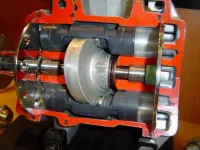
Faulty compressor
The compressor is the heart of the AC system. When it fails, the entire system becomes inoperative. Signs of a faulty compressor include:
- Unusual noises on startup
- The electromagnetic clutch does not engage
- Complete absence of cool air
Replacing the compressor can cost between 1,500 and 3,000 RON, depending on the vehicle’s make and model.
Diagnosing cooling problems
Proper car maintenance includes periodic checks of the AC system. Here are the main causes of failures:
Condenser fan not working
The condenser must be cooled continuously for optimal operation. Check:
- The operation of the electric fan
- The state of fuses and relays
- Electrical connections
- The correct positioning of the fan
A faulty fan prevents heat from being expelled from the system, dramatically reducing cooling efficiency.
Significant refrigerant leaks
Modern AC systems require a precise level of refrigerant for optimal operation. Testing with specialized equipment can determine:
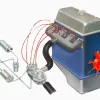
- The exact amount of refrigerant
- The location of leaks
- The condition of internal components
If the system regularly loses refrigerant, a detailed inspection of hoses and ancillary components becomes essential.
Need for refrigerant recharge
Recharge is normal periodically, but excessive frequency indicates a problem. A correct recharge requires:
- Complete evacuation of the old refrigerant
- Checking the system’s hermeticity
- Refilling with the exact quantity specified by the manufacturer
This operation requires specialized equipment and precise technical knowledge.

Checking initial pressure
With the engine running and the AC on, read the pressure on the gauge:
- Below 25 PSI: the system is almost empty
- 25-40 PSI: needs topping up
- 40-45 PSI: optimal level
- Above 50 PSI: possibly overcharged
Adding refrigerant
Press the distributor anchor for 5-10 seconds, then stop and check the pressure. Repeat until the pressure reaches 40-45 PSI. Do not exceed this value to avoid damaging the system.

Costs associated with AC repairs
In an increasingly hot climate, the climate control system is essential for travel comfort. Investment in repairs or replacement is justified by long-term benefits.
Cost estimates
Maintenance operations:
- Freon recharge: 80-150 RON
- Cabin air filter replacement: 50-100 RON
- AC system disinfection: 100-200 RON
Component repairs:
- Replacing the compressor: 1,500-3,000 RON
- Repairing leaks: 200-800 RON
- Replacing condenser: 800-1,500 RON
- Replacing evaporator: 1,200-2,500 RON
A completely new system: The cost of a completely new AC system varies between 2,000 and 5,000 RON, depending on:
- The vehicle’s make and model
- System complexity (single-zone vs. multi-zone)
- The quality of chosen components
- The service labor cost
Investing in a functional AC system not only improves comfort but can also increase the vehicle’s resale value, making it a wise long-term choice.